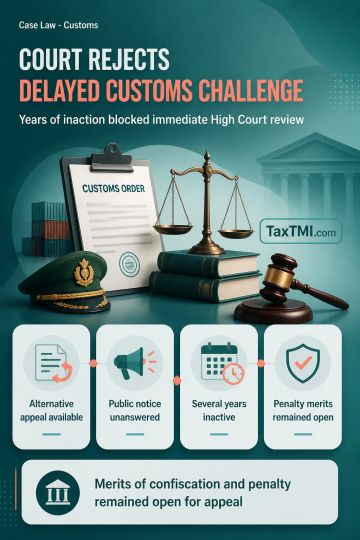
Alternative statutory remedy and unexplained delay barred writ review of customs confiscation adjudication, leaving merits for appellate consideration...
Authorised courier due diligence protects against penalties where declared exports conceal prohibited goods despite proper documentation and customs p...
Customs-controlled container movement now extends to DP World facilities, subject to segregation, inspections, reconciliation, and EXIM cargo priority...
The ITAT held that the CIT(E) erred in prematurely invoking Section 13(1)(c) and cancelling the provisional registration u/s 12AB without duly considering the charitable objects of the assessee. Relying on judicial precedents, the ITAT clarified that the applicability of Section 13 should only be examined during assessment and not at the registration stage u/s 12A. The CIT(E)'s order was flawed in its interpretation of the assessee's objects and premature invocation of Section 13(1)(c) and 13(3). The ITAT set aside the CIT(E)'s order and restored the matter for de novo consideration, directing the CIT(E) to evaluate the application for registration afresh, focusing solely on the charitable nature of the assessee's objects, without invoking Section 13(1)(c) or Section 13(3) at this stage, and providing the assessee a reasonable opportunity of being heard.
The ITAT held that the CIT(E) erred in prematurely invoking Section 13(1)(c) and cancelling the provisional registration u/s 12AB without duly considering the charitable objects of the assessee. Relying on judicial precedents, the ITAT clarified that the applicability of Section 13 should only be examined during assessment and not at the registration stage u/s 12A. The CIT(E)'s order was flawed in its interpretation of the assessee's objects and premature invocation of Section 13(1)(c) and 13(3). The ITAT set aside the CIT(E)'s order and restored the matter for de novo consideration, directing the CIT(E) to evaluate the application for registration afresh, focusing solely on the charitable nature of the assessee's objects, without invoking Section 13(1)(c) or Section 13(3) at this stage, and providing the assessee a reasonable opportunity of being heard.
Note: It is a system-generated summary and is for quick reference only.
 TaxTMI
  TaxTMI
 of 4828











 Join Channel


