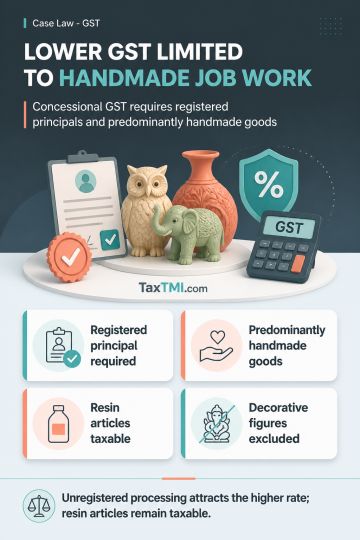
Handicraft job work receives concessional GST only for registered principals and predominantly handmade goods; commercial resin articles remain taxabl...
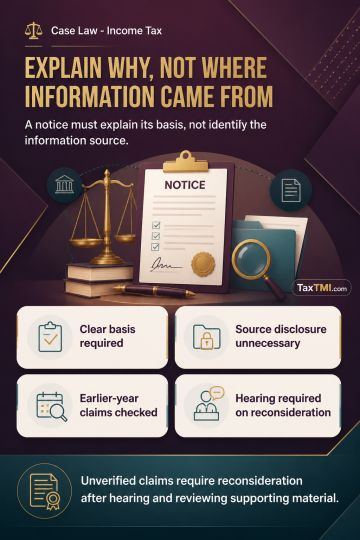
Reassessment disclosure requirements permit stated reasons without revealing information sources, but prior-taxation claims require full examination b...
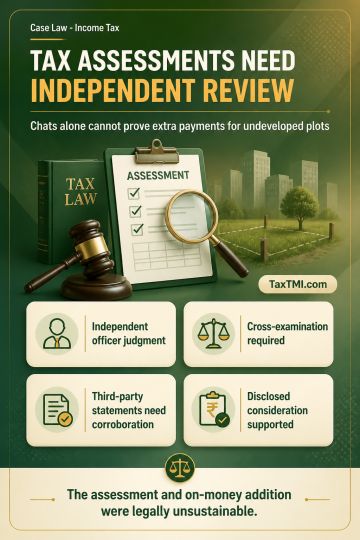
Independent assessment discretion and corroborated electronic evidence determine validity of on-money additions and undisclosed-consideration assessme...
The appellant was found guilty of bid rigging and cartelization in a tender process initiated by SBIIMS, contravening Sections 3(3)(c), 3(3)(d), and 3(1) of the Competition Act, 2002. The issue pertained to whether the penalty imposed on the appellant was proportionate to the offense, considering the criteria laid down in Excel Crop Care Ltd. vs CCI. The CCI differentiated the present case from Excel Crop Care, stating that the appellants were engaged in the supply of printed advertising/marketing materials, including signages, which constituted different varieties of the same product rather than multiple products. The CCI imposed a lenient penalty of 1% of the average relevant turnover for three financial years, despite the Act allowing up to 10%. The order was upheld by the Tribunal and the Supreme Court, attaining finality. The appeal was dismissed as lacking merit.
The appellant was found guilty of bid rigging and cartelization in a tender process initiated by SBIIMS, contravening Sections 3(3)(c), 3(3)(d), and 3(1) of the Competition Act, 2002. The issue pertained to whether the penalty imposed on the appellant was proportionate to the offense, considering the criteria laid down in Excel Crop Care Ltd. vs CCI. The CCI differentiated the present case from Excel Crop Care, stating that the appellants were engaged in the supply of printed advertising/marketing materials, including signages, which constituted different varieties of the same product rather than multiple products. The CCI imposed a lenient penalty of 1% of the average relevant turnover for three financial years, despite the Act allowing up to 10%. The order was upheld by the Tribunal and the Supreme Court, attaining finality. The appeal was dismissed as lacking merit.
Note: It is a system-generated summary and is for quick reference only.
 TaxTMI
  TaxTMI
 of 4828













 Join Channel


