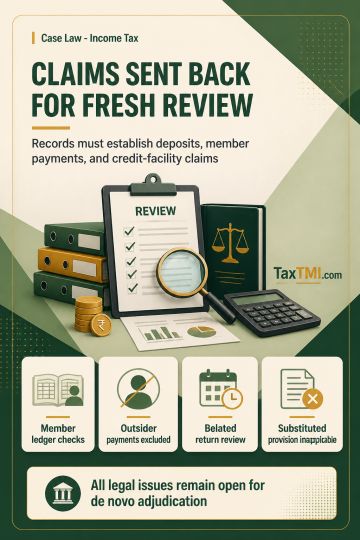
Cooperative society deposits, member-interest TDS exemption and credit-facility deduction claims require verification through records and supporting e...
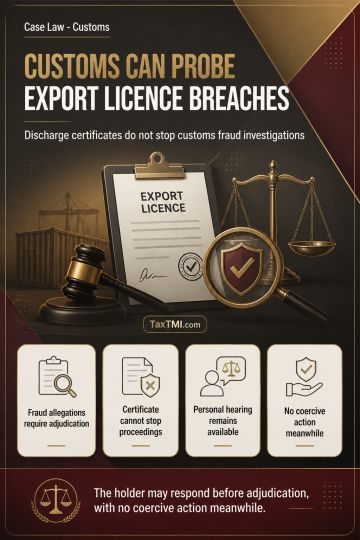
Customs jurisdiction over EPCG condition breaches survives export-obligation discharge certificates, requiring alleged fraud and misdeclaration to be ...
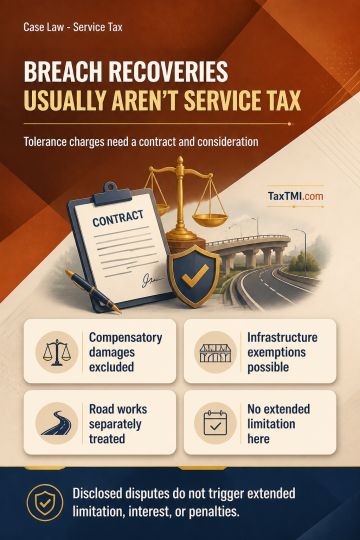
Contractual tolerance requires consideration; breach recoveries, qualifying public infrastructure services and road works escape service tax liability...
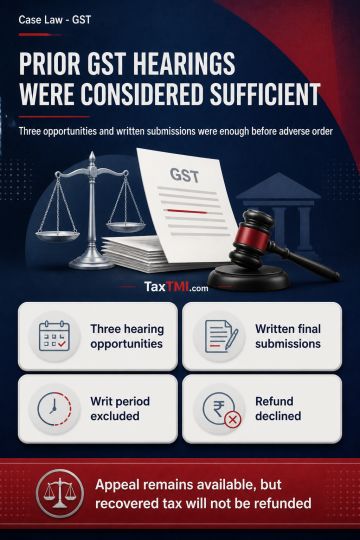
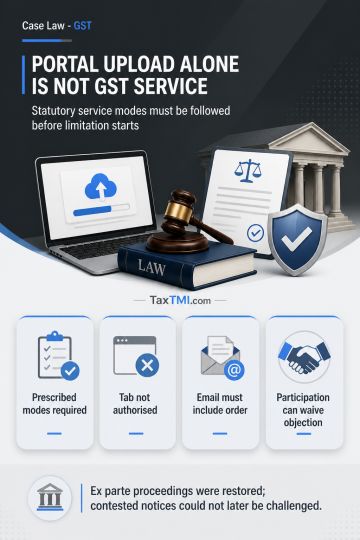
Personal hearing requirements in GST adjudication were satisfied by prior opportunities and written submissions; appellate limitation received writ-pe...
Page of 4790
Press 'Enter' after typing page number.
581 to 600 of 95794 Results
❮
❯
❯❯
0 / 200
Expand Note
Add to Folder
No Folders have been created
+
Are you sure you want to delete "My most important" ?
The Negotiable Instruments Act, 1881 was enacted to define and amend laws relating to promissory notes, bills of exchange, and cheques. Section 138, introduced through the Banking, Public Financial Institutions and Negotiable Instruments Laws (Amendment) Act, 1988, provides penalties for dishonor of cheques due to insufficient funds. Subsequent amendments aimed to expedite cases through summary trials and make offenses compoundable. The Supreme Court highlighted the objective of instilling faith in banking operations and preventing dishonesty in drawing cheques without sufficient funds. The Bengal Money Lenders Act, 1940 and Chapter XVII of the Negotiable Instruments Act operate independently with distinct objectives. There is no conflict between provisions, and civil remedies for unlicensed money lenders are not barred by criminal penalties u/s 138. The High Court dismissed the revision application, finding no merit in claims of abuse of process.
The Negotiable Instruments Act, 1881 was enacted to define and amend laws relating to promissory notes, bills of exchange, and cheques. Section 138, introduced through the Banking, Public Financial Institutions and Negotiable Instruments Laws (Amendment) Act, 1988, provides penalties for dishonor of cheques due to insufficient funds. Subsequent amendments aimed to expedite cases through summary trials and make offenses compoundable. The Supreme Court highlighted the objective of instilling faith in banking operations and preventing dishonesty in drawing cheques without sufficient funds. The Bengal Money Lenders Act, 1940 and Chapter XVII of the Negotiable Instruments Act operate independently with distinct objectives. There is no conflict between provisions, and civil remedies for unlicensed money lenders are not barred by criminal penalties u/s 138. The High Court dismissed the revision application, finding no merit in claims of abuse of process.
Note: It is a system-generated summary and is for quick reference only.
 TaxTMI
 of 4790



 Join Channel


 TaxTMI