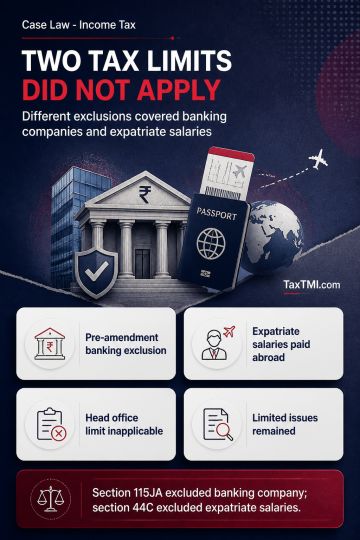
Minimum alternate tax exclusions for pre-amendment banking companies and expatriate Indian branch salaries remain outside head office expenditure limi...
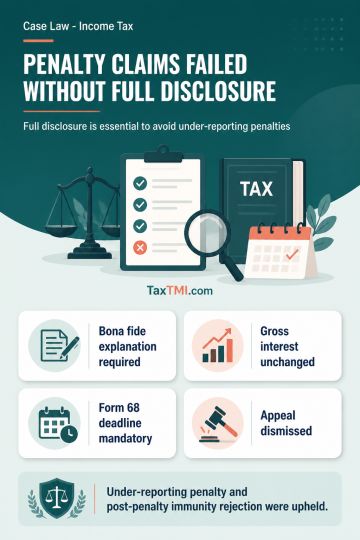
Bona fide disclosure requirements govern under-reporting penalties, and post-penalty immunity applications cannot secure available statutory protectio...
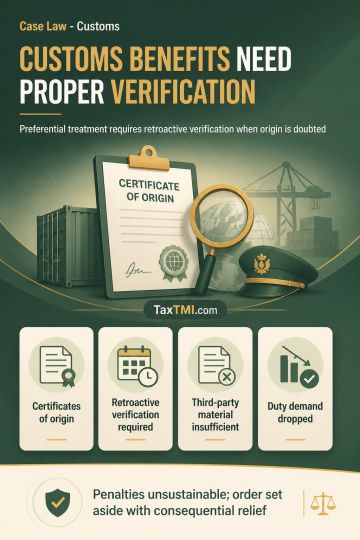
Certificate-of-origin verification procedure governs preferential customs benefits; denial without retroactive verification was set aside with consequ...
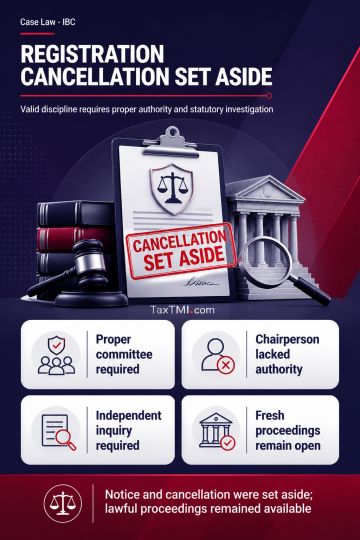
Disciplinary Committee jurisdiction and mandatory investigation requirements invalidated cancellation of an insolvency professional's registration and...
The High Court held that once the Income Tax Appellate Tribunal (ITAT) found no cogent or convincing evidence from the Revenue to allege bogus purchases, it was wrong to expect the assessee to prove its innocence. The ITAT erred in upholding the Commissioner of Income Tax (Appeals) (CIT-A)'s ad hoc disallowance of 10% of the total purchases as bogus, without analyzing the reasonableness or justification for such disallowance. The ITAT's approach of adopting a middle ground by endorsing the 10% disallowance, despite finding no cogent evidence from the Revenue, gave credence to the proposition that the law can demand proof of the negative from the assessee. The High Court opined that such an approach is repugnant and cannot be endorsed as a process known to law to disallow expenses on the premise of being bogus. Consequently, the High Court ruled in favor of the assessee and against the Revenue.
The High Court held that once the Income Tax Appellate Tribunal (ITAT) found no cogent or convincing evidence from the Revenue to allege bogus purchases, it was wrong to expect the assessee to prove its innocence. The ITAT erred in upholding the Commissioner of Income Tax (Appeals) (CIT-A)'s ad hoc disallowance of 10% of the total purchases as bogus, without analyzing the reasonableness or justification for such disallowance. The ITAT's approach of adopting a middle ground by endorsing the 10% disallowance, despite finding no cogent evidence from the Revenue, gave credence to the proposition that the law can demand proof of the negative from the assessee. The High Court opined that such an approach is repugnant and cannot be endorsed as a process known to law to disallow expenses on the premise of being bogus. Consequently, the High Court ruled in favor of the assessee and against the Revenue.
Note: It is a system-generated summary and is for quick reference only.
 TaxTMI
 of 4801



 Join Channel


 TaxTMI