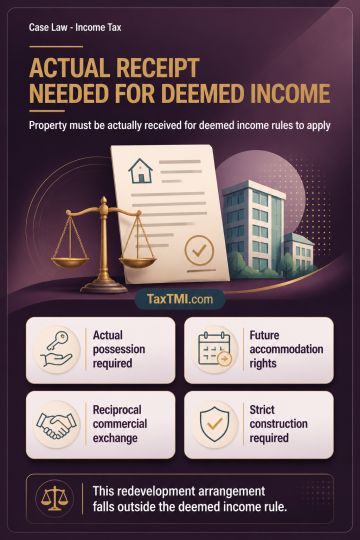
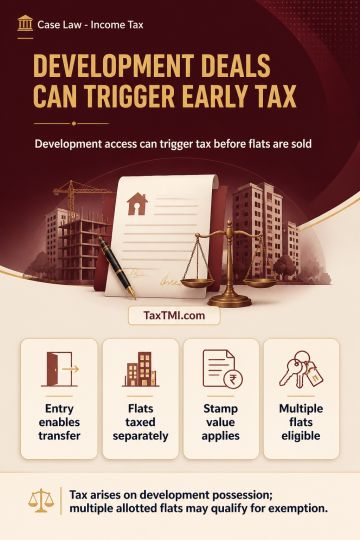
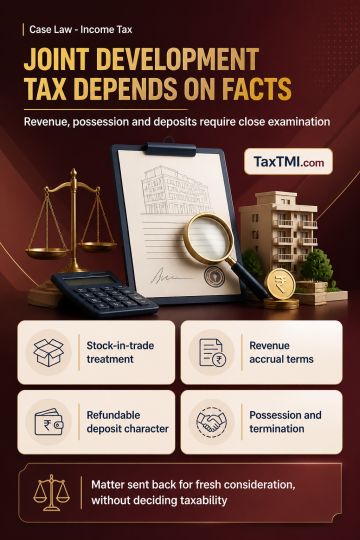
Receipt of immovable property requires actual possession or enjoyment; redevelopment allotments exchanged for tenancy rights fall outside deemed incom...
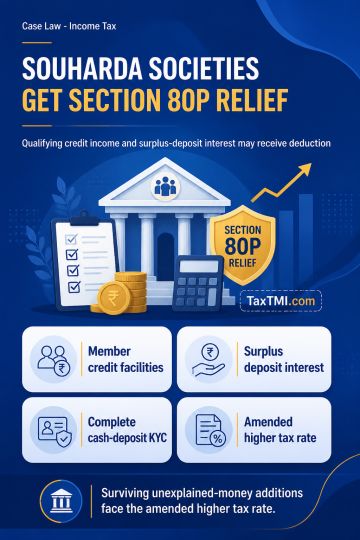
Section 80P deduction covers Souharda credit societies, including qualifying surplus-deposit interest, subject to member KYC verification for cash dep...
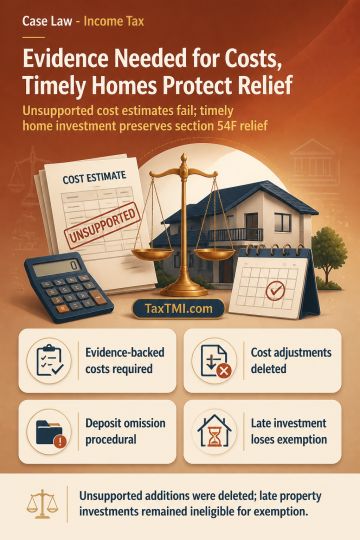
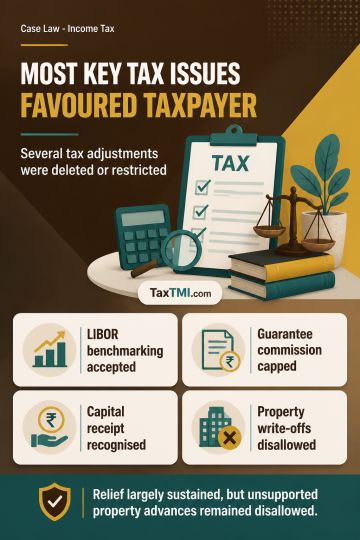
Transfer-pricing benchmarking and capital-receipt principles sustained taxpayer relief, while unsupported property-advance write-offs remained disallo...
The High Court held that once the Income Tax Appellate Tribunal (ITAT) found no cogent or convincing evidence from the Revenue to allege bogus purchases, it was wrong to expect the assessee to prove its innocence. The ITAT erred in upholding the Commissioner of Income Tax (Appeals) (CIT-A)'s ad hoc disallowance of 10% of the total purchases as bogus, without analyzing the reasonableness or justification for such disallowance. The ITAT's approach of adopting a middle ground by endorsing the 10% disallowance, despite finding no cogent evidence from the Revenue, gave credence to the proposition that the law can demand proof of the negative from the assessee. The High Court opined that such an approach is repugnant and cannot be endorsed as a process known to law to disallow expenses on the premise of being bogus. Consequently, the High Court ruled in favor of the assessee and against the Revenue.
The High Court held that once the Income Tax Appellate Tribunal (ITAT) found no cogent or convincing evidence from the Revenue to allege bogus purchases, it was wrong to expect the assessee to prove its innocence. The ITAT erred in upholding the Commissioner of Income Tax (Appeals) (CIT-A)'s ad hoc disallowance of 10% of the total purchases as bogus, without analyzing the reasonableness or justification for such disallowance. The ITAT's approach of adopting a middle ground by endorsing the 10% disallowance, despite finding no cogent evidence from the Revenue, gave credence to the proposition that the law can demand proof of the negative from the assessee. The High Court opined that such an approach is repugnant and cannot be endorsed as a process known to law to disallow expenses on the premise of being bogus. Consequently, the High Court ruled in favor of the assessee and against the Revenue.
Note: It is a system-generated summary and is for quick reference only.
 TaxTMI
 of 4798



 Join Channel


 TaxTMI