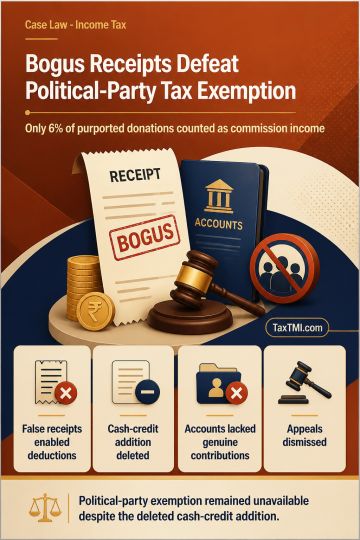
Bogus donation receipts justified commission income assessment and defeated political-party tax exemption for inaccurate accounts and reporting failur...
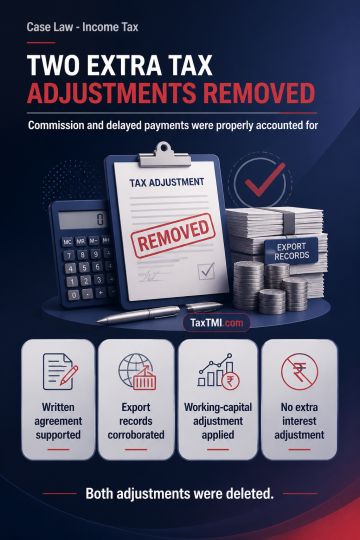
Pure reimbursement without income element escapes tax withholding, while delayed withholding and unsupported provisions face deferred or renewed scrut...
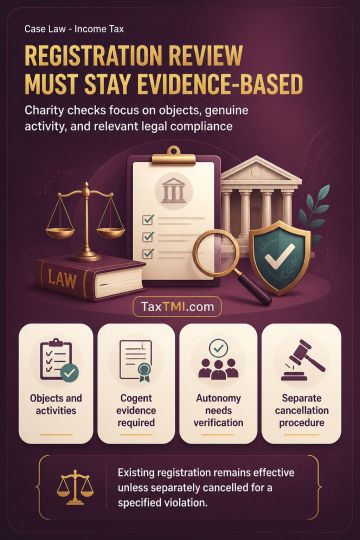
Public benefit requirement defeats charitable registration where residents' association services are reciprocal, member-only facilities governed by mu...
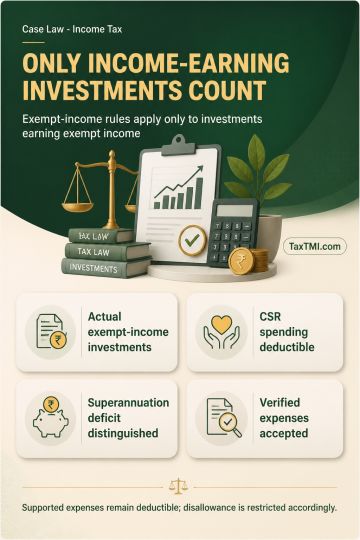
Exempt-income expenditure disallowance is confined to investments that actually generated exempt income, while supported business expenses remain dedu...
The High Court held that once the Income Tax Appellate Tribunal (ITAT) found no cogent or convincing evidence from the Revenue to allege bogus purchases, it was wrong to expect the assessee to prove its innocence. The ITAT erred in upholding the Commissioner of Income Tax (Appeals) (CIT-A)'s ad hoc disallowance of 10% of the total purchases as bogus, without analyzing the reasonableness or justification for such disallowance. The ITAT's approach of adopting a middle ground by endorsing the 10% disallowance, despite finding no cogent evidence from the Revenue, gave credence to the proposition that the law can demand proof of the negative from the assessee. The High Court opined that such an approach is repugnant and cannot be endorsed as a process known to law to disallow expenses on the premise of being bogus. Consequently, the High Court ruled in favor of the assessee and against the Revenue.
The High Court held that once the Income Tax Appellate Tribunal (ITAT) found no cogent or convincing evidence from the Revenue to allege bogus purchases, it was wrong to expect the assessee to prove its innocence. The ITAT erred in upholding the Commissioner of Income Tax (Appeals) (CIT-A)'s ad hoc disallowance of 10% of the total purchases as bogus, without analyzing the reasonableness or justification for such disallowance. The ITAT's approach of adopting a middle ground by endorsing the 10% disallowance, despite finding no cogent evidence from the Revenue, gave credence to the proposition that the law can demand proof of the negative from the assessee. The High Court opined that such an approach is repugnant and cannot be endorsed as a process known to law to disallow expenses on the premise of being bogus. Consequently, the High Court ruled in favor of the assessee and against the Revenue.
Note: It is a system-generated summary and is for quick reference only.
 TaxTMI
 of 4792










 Join Channel


 TaxTMI