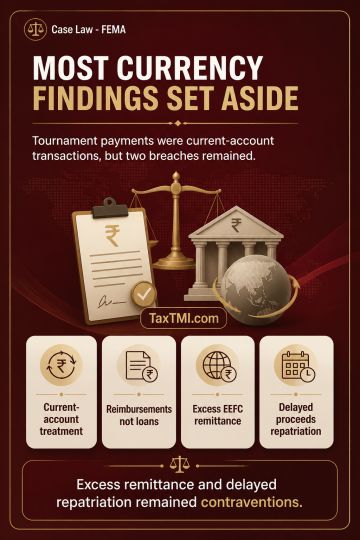
Current account treatment of overseas tournament services removed most FEMA findings, but excess EEFC remittance and delayed repatriation remained bre...
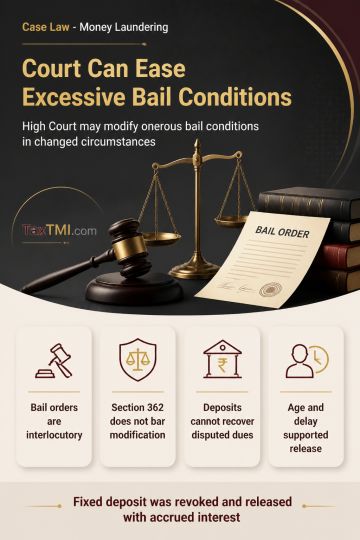
Modification of bail conditions remains available through inherent jurisdiction where onerous deposits undermine justice and cannot recover disputed d...
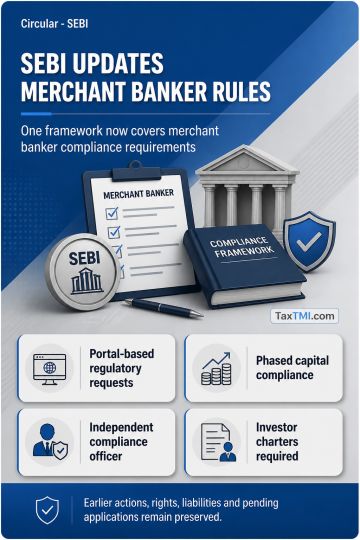
Merchant banker regulation consolidates registration, governance, capital, reporting, outsourcing and investor-protection requirements under an update...
The High Court held that once the Income Tax Appellate Tribunal (ITAT) found no cogent or convincing evidence from the Revenue to allege bogus purchases, it was wrong to expect the assessee to prove its innocence. The ITAT erred in upholding the Commissioner of Income Tax (Appeals) (CIT-A)'s ad hoc disallowance of 10% of the total purchases as bogus, without analyzing the reasonableness or justification for such disallowance. The ITAT's approach of adopting a middle ground by endorsing the 10% disallowance, despite finding no cogent evidence from the Revenue, gave credence to the proposition that the law can demand proof of the negative from the assessee. The High Court opined that such an approach is repugnant and cannot be endorsed as a process known to law to disallow expenses on the premise of being bogus. Consequently, the High Court ruled in favor of the assessee and against the Revenue.
The High Court held that once the Income Tax Appellate Tribunal (ITAT) found no cogent or convincing evidence from the Revenue to allege bogus purchases, it was wrong to expect the assessee to prove its innocence. The ITAT erred in upholding the Commissioner of Income Tax (Appeals) (CIT-A)'s ad hoc disallowance of 10% of the total purchases as bogus, without analyzing the reasonableness or justification for such disallowance. The ITAT's approach of adopting a middle ground by endorsing the 10% disallowance, despite finding no cogent evidence from the Revenue, gave credence to the proposition that the law can demand proof of the negative from the assessee. The High Court opined that such an approach is repugnant and cannot be endorsed as a process known to law to disallow expenses on the premise of being bogus. Consequently, the High Court ruled in favor of the assessee and against the Revenue.
Note: It is a system-generated summary and is for quick reference only.
 TaxTMI
 of 4792




 Join Channel


 TaxTMI