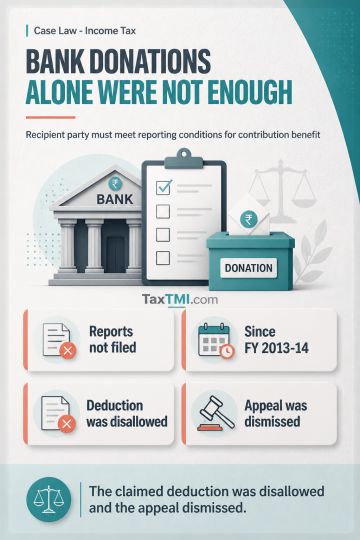
Political contribution deductions require recipient party compliance with contribution-reporting conditions; banking-channel donations alone do not qu...
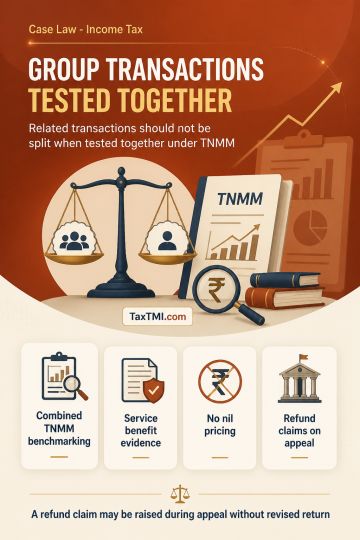
Aggregation under TNMM prevents selective testing of intra-group services without comparable uncontrolled transactions, while appellate additional cla...
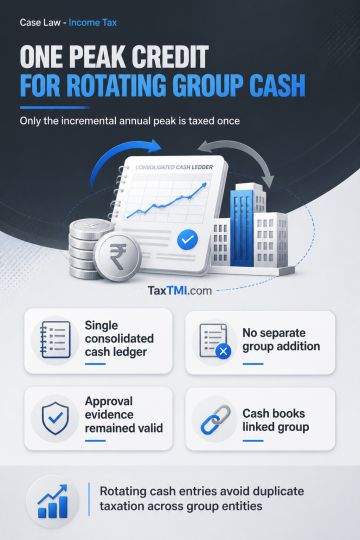
Protective assessment cannot duplicate identical receipts under competing characterisations; remote services did not establish a taxable permanent est...
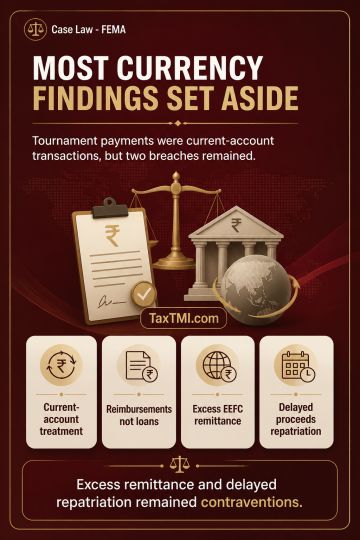
Current account treatment of overseas tournament services removed most FEMA findings, but excess EEFC remittance and delayed repatriation remained bre...
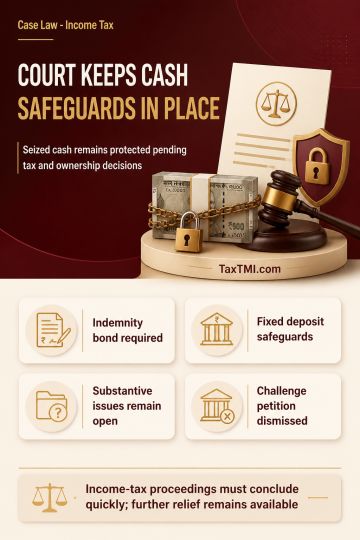
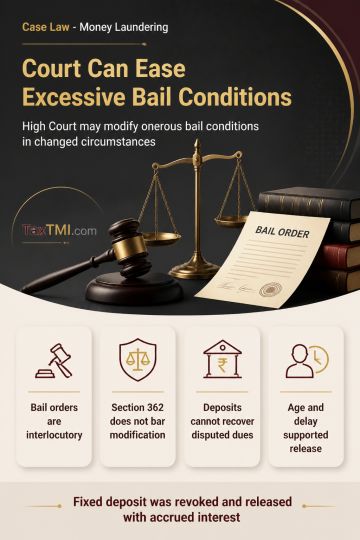
Modification of bail conditions remains available through inherent jurisdiction where onerous deposits undermine justice and cannot recover disputed d...
The Appellate Tribunal upheld the Commissioner of Income Tax (Appeals) [CIT(A)]'s exercise of suo moto power u/s 154 to rectify their earlier order. The CIT(A) had not considered the Supreme Court's ratio decidendi in Saurashtra Kutch Stock Exchange Ltd., which amounts to a mistake apparent on record. The assessee club claimed interest income as non-taxable based on mutuality principles, but the Assessing Officer rejected this claim after allowing 10% deduction for expenses. The Tribunal found the assessee did not raise this claim before the AO or CIT(A) initially, nor provide evidence to substantiate their case aligning with the Bangalore Club judgments. Therefore, the AO rightly moved for rectification before CIT(A) in light of the Madras High Court's binding order in the assessee's own case, which concurred with the Bangalore Club ratio upheld by the Supreme Court. Consequently, the Tribunal dismissed the assessee's appeals as devoid of merit.
The Appellate Tribunal upheld the Commissioner of Income Tax (Appeals) [CIT(A)]'s exercise of suo moto power u/s 154 to rectify their earlier order. The CIT(A) had not considered the Supreme Court's ratio decidendi in Saurashtra Kutch Stock Exchange Ltd., which amounts to a mistake apparent on record. The assessee club claimed interest income as non-taxable based on mutuality principles, but the Assessing Officer rejected this claim after allowing 10% deduction for expenses. The Tribunal found the assessee did not raise this claim before the AO or CIT(A) initially, nor provide evidence to substantiate their case aligning with the Bangalore Club judgments. Therefore, the AO rightly moved for rectification before CIT(A) in light of the Madras High Court's binding order in the assessee's own case, which concurred with the Bangalore Club ratio upheld by the Supreme Court. Consequently, the Tribunal dismissed the assessee's appeals as devoid of merit.
Note: It is a system-generated summary and is for quick reference only.
 TaxTMI
 of 4796












 Join Channel


 TaxTMI
