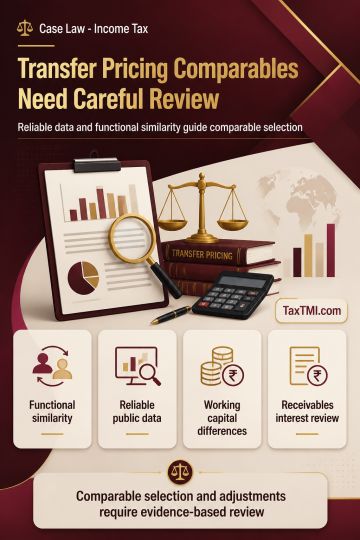
Transfer pricing comparability requires functional alignment, reliable financial data, and careful review of working capital and receivables adjustmen...
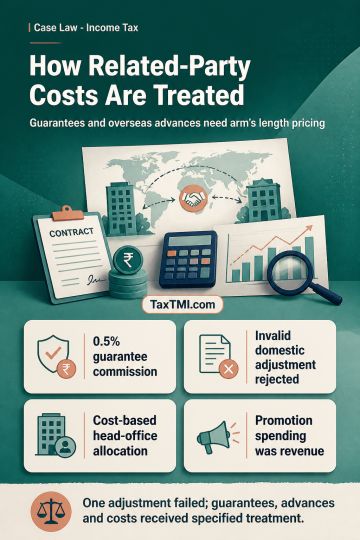
Transfer pricing rules require benchmarking corporate guarantees and associated-enterprise advances, while invalid domestic-transaction adjustments ca...
Prospective sugar export prohibition required registered letters of credit; private contracts and export quotas created no enforceable continuation ri...
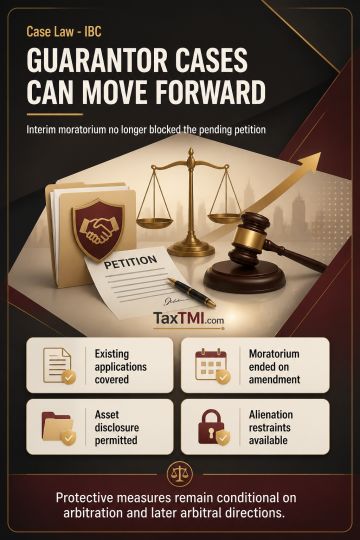
Retroactive interim-moratorium exclusion permits protective asset disclosure and preservation measures against personal guarantors pending arbitration...
The Appellate Tribunal upheld the Commissioner of Income Tax (Appeals) [CIT(A)]'s exercise of suo moto power u/s 154 to rectify their earlier order. The CIT(A) had not considered the Supreme Court's ratio decidendi in Saurashtra Kutch Stock Exchange Ltd., which amounts to a mistake apparent on record. The assessee club claimed interest income as non-taxable based on mutuality principles, but the Assessing Officer rejected this claim after allowing 10% deduction for expenses. The Tribunal found the assessee did not raise this claim before the AO or CIT(A) initially, nor provide evidence to substantiate their case aligning with the Bangalore Club judgments. Therefore, the AO rightly moved for rectification before CIT(A) in light of the Madras High Court's binding order in the assessee's own case, which concurred with the Bangalore Club ratio upheld by the Supreme Court. Consequently, the Tribunal dismissed the assessee's appeals as devoid of merit.
The Appellate Tribunal upheld the Commissioner of Income Tax (Appeals) [CIT(A)]'s exercise of suo moto power u/s 154 to rectify their earlier order. The CIT(A) had not considered the Supreme Court's ratio decidendi in Saurashtra Kutch Stock Exchange Ltd., which amounts to a mistake apparent on record. The assessee club claimed interest income as non-taxable based on mutuality principles, but the Assessing Officer rejected this claim after allowing 10% deduction for expenses. The Tribunal found the assessee did not raise this claim before the AO or CIT(A) initially, nor provide evidence to substantiate their case aligning with the Bangalore Club judgments. Therefore, the AO rightly moved for rectification before CIT(A) in light of the Madras High Court's binding order in the assessee's own case, which concurred with the Bangalore Club ratio upheld by the Supreme Court. Consequently, the Tribunal dismissed the assessee's appeals as devoid of merit.
Note: It is a system-generated summary and is for quick reference only.
 TaxTMI
 of 4792












 Join Channel


 TaxTMI