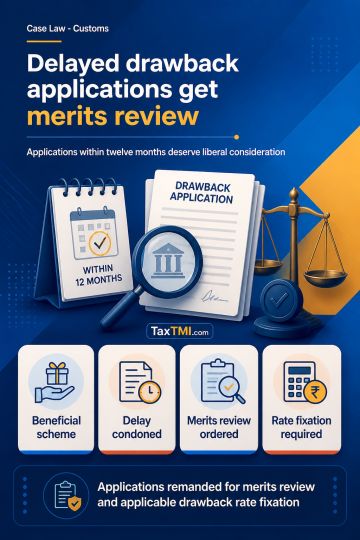
Transaction value rejection requires reliable corroboration; refundable VAT is excluded and temporary registration does not defeat new-vehicle exempti...
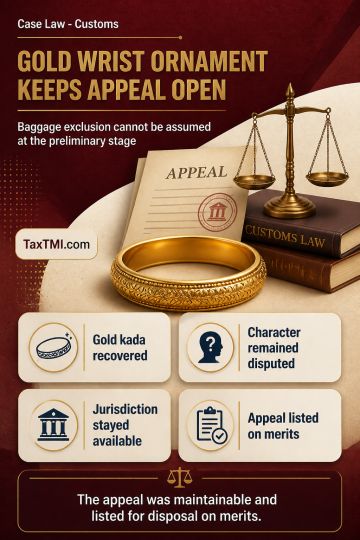
Appellate jurisdiction remains available where a wrist-worn gold ornament cannot conclusively be characterised as imported baggage at the preliminary ...
Written complaint requirement bars cognizance on police reports for securities offences, while unsupported breach of trust and cheating allegations fa...
Risk-based postal import clearance standardises electronic assessment, document requests, duty realisation and delivery controls at Foreign Post Offic...
Customs Cargo Service Provider appointment extends custodianship to additional terminal land, subject to cargo-control, security and licence condition...
The Appellate Tribunal upheld the Commissioner of Income Tax (Appeals) [CIT(A)]'s exercise of suo moto power u/s 154 to rectify their earlier order. The CIT(A) had not considered the Supreme Court's ratio decidendi in Saurashtra Kutch Stock Exchange Ltd., which amounts to a mistake apparent on record. The assessee club claimed interest income as non-taxable based on mutuality principles, but the Assessing Officer rejected this claim after allowing 10% deduction for expenses. The Tribunal found the assessee did not raise this claim before the AO or CIT(A) initially, nor provide evidence to substantiate their case aligning with the Bangalore Club judgments. Therefore, the AO rightly moved for rectification before CIT(A) in light of the Madras High Court's binding order in the assessee's own case, which concurred with the Bangalore Club ratio upheld by the Supreme Court. Consequently, the Tribunal dismissed the assessee's appeals as devoid of merit.
The Appellate Tribunal upheld the Commissioner of Income Tax (Appeals) [CIT(A)]'s exercise of suo moto power u/s 154 to rectify their earlier order. The CIT(A) had not considered the Supreme Court's ratio decidendi in Saurashtra Kutch Stock Exchange Ltd., which amounts to a mistake apparent on record. The assessee club claimed interest income as non-taxable based on mutuality principles, but the Assessing Officer rejected this claim after allowing 10% deduction for expenses. The Tribunal found the assessee did not raise this claim before the AO or CIT(A) initially, nor provide evidence to substantiate their case aligning with the Bangalore Club judgments. Therefore, the AO rightly moved for rectification before CIT(A) in light of the Madras High Court's binding order in the assessee's own case, which concurred with the Bangalore Club ratio upheld by the Supreme Court. Consequently, the Tribunal dismissed the assessee's appeals as devoid of merit.
Note: It is a system-generated summary and is for quick reference only.
 TaxTMI
 of 4792










 Join Channel


 TaxTMI