Transfer pricing and tax deductions upheld on established principles, while employee contributions and warranty provisions returned for fresh examinat...
Captive transfer pricing relies on industrial consumer tariffs, while genuine quotations can benchmark effluent treatment transfers under the Other Me...
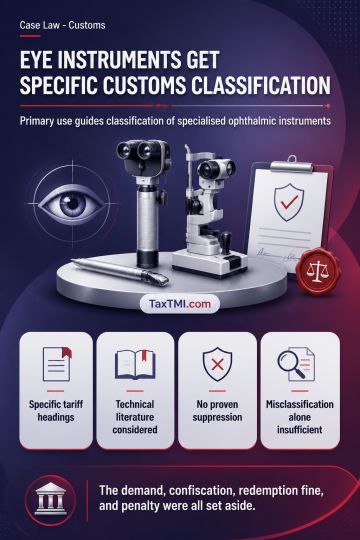
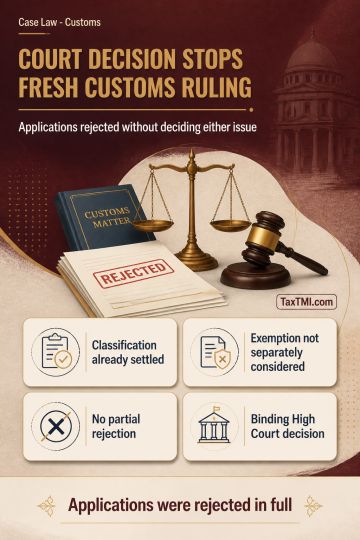
Specific tariff classification for ophthalmic instruments and extended limitation principles determine the treatment of duty demands, confiscation, an...
Integrated golf function determines classification, placing launch monitors and simulators under other golf equipment rather than measuring instrument...
Public servant status under anti-corruption law extends to recognised stock exchange leadership; constitutional and sanction challenges do not succeed...
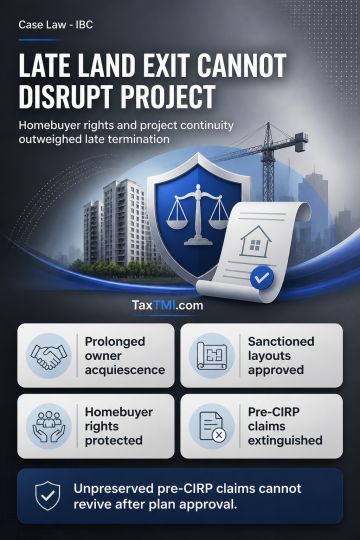
Acquiescence, homebuyer protection and clean-slate resolution principles prevent landowners from disrupting an integrated project through late termina...
The assessee failed to demonstrate that the financial assistance availed on interest was utilized for business purposes without diversion. Where an assessee has interest-free and interest-laden funds, advances made to subsidiaries, family, or friends are presumed from interest-free funds if sufficient. The AO cannot question commercial wisdom but can examine if interest-free funds meet interest-free advances. The CIT-DR rightly argued against relying on previous decisions due to factual differences each year. However, the CIT(A) found identical facts to the previous year's Tribunal order favoring the assessee. The assessee had sufficient interest-free funds to cover related party advances except for one at 9% interest. Other related parties were charged 12%. For unrelated advances at 9%, promoter/director relationship existed. Consequential disallowances of brokerage, commission, and bank charges were deleted upon deleting interest disallowance. The decision favored the assessee against the revenue.
The assessee failed to demonstrate that the financial assistance availed on interest was utilized for business purposes without diversion. Where an assessee has interest-free and interest-laden funds, advances made to subsidiaries, family, or friends are presumed from interest-free funds if sufficient. The AO cannot question commercial wisdom but can examine if interest-free funds meet interest-free advances. The CIT-DR rightly argued against relying on previous decisions due to factual differences each year. However, the CIT(A) found identical facts to the previous year's Tribunal order favoring the assessee. The assessee had sufficient interest-free funds to cover related party advances except for one at 9% interest. Other related parties were charged 12%. For unrelated advances at 9%, promoter/director relationship existed. Consequential disallowances of brokerage, commission, and bank charges were deleted upon deleting interest disallowance. The decision favored the assessee against the revenue.
Note: It is a system-generated summary and is for quick reference only.
 TaxTMI
 of 4803











 Join Channel


 TaxTMI