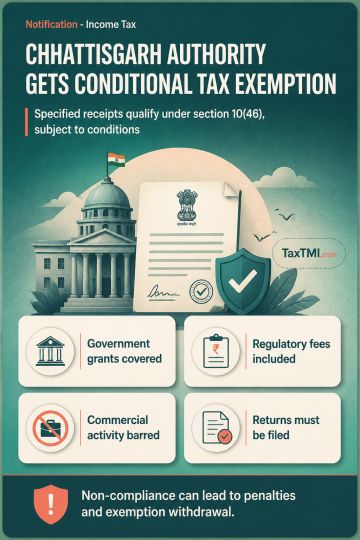
Specified regulatory authority income receives conditional tax exemption, subject to non-commercial activity, unchanged income character, and return f...
Tax exemption for regulatory authority income applies retrospectively, subject to non-commercial activity, unchanged income sources, and return-filing...
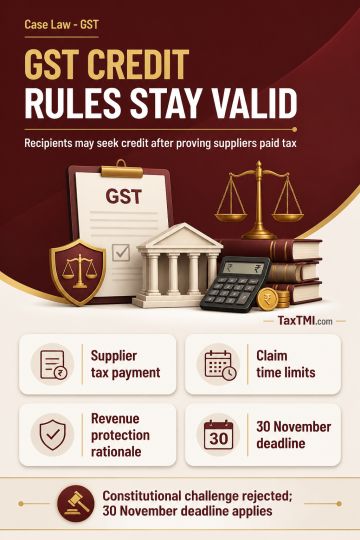
Input tax credit conditions remain constitutionally valid, with eligible recipient claims considered under GST circulars and retrospective filing dead...
Bogus donation receipts justified commission income assessment and defeated political-party tax exemption for inaccurate accounts and reporting failur...
Pure reimbursement without income element escapes tax withholding, while delayed withholding and unsupported provisions face deferred or renewed scrut...
Public benefit requirement defeats charitable registration where residents' association services are reciprocal, member-only facilities governed by mu...
The assessee failed to demonstrate that the financial assistance availed on interest was utilized for business purposes without diversion. Where an assessee has interest-free and interest-laden funds, advances made to subsidiaries, family, or friends are presumed from interest-free funds if sufficient. The AO cannot question commercial wisdom but can examine if interest-free funds meet interest-free advances. The CIT-DR rightly argued against relying on previous decisions due to factual differences each year. However, the CIT(A) found identical facts to the previous year's Tribunal order favoring the assessee. The assessee had sufficient interest-free funds to cover related party advances except for one at 9% interest. Other related parties were charged 12%. For unrelated advances at 9%, promoter/director relationship existed. Consequential disallowances of brokerage, commission, and bank charges were deleted upon deleting interest disallowance. The decision favored the assessee against the revenue.
The assessee failed to demonstrate that the financial assistance availed on interest was utilized for business purposes without diversion. Where an assessee has interest-free and interest-laden funds, advances made to subsidiaries, family, or friends are presumed from interest-free funds if sufficient. The AO cannot question commercial wisdom but can examine if interest-free funds meet interest-free advances. The CIT-DR rightly argued against relying on previous decisions due to factual differences each year. However, the CIT(A) found identical facts to the previous year's Tribunal order favoring the assessee. The assessee had sufficient interest-free funds to cover related party advances except for one at 9% interest. Other related parties were charged 12%. For unrelated advances at 9%, promoter/director relationship existed. Consequential disallowances of brokerage, commission, and bank charges were deleted upon deleting interest disallowance. The decision favored the assessee against the revenue.
Note: It is a system-generated summary and is for quick reference only.
 TaxTMI
 of 4800















 Join Channel


 TaxTMI

