Specified regulatory authority income receives conditional tax exemption, subject to non-commercial activity, unchanged income character, and return f...
Tax exemption for regulatory authority income applies retrospectively, subject to non-commercial activity, unchanged income sources, and return-filing...
Input tax credit conditions remain constitutionally valid, with eligible recipient claims considered under GST circulars and retrospective filing dead...
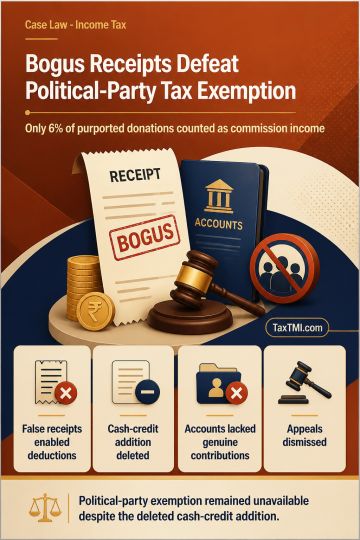
Bogus donation receipts justified commission income assessment and defeated political-party tax exemption for inaccurate accounts and reporting failur...
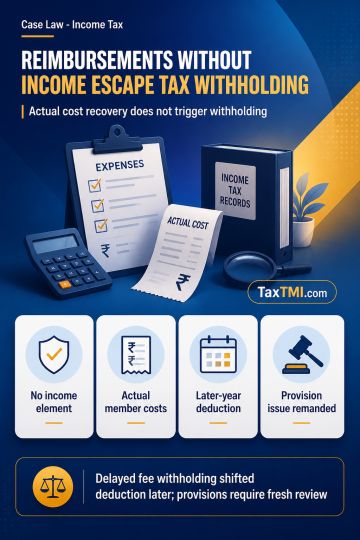
Pure reimbursement without income element escapes tax withholding, while delayed withholding and unsupported provisions face deferred or renewed scrut...
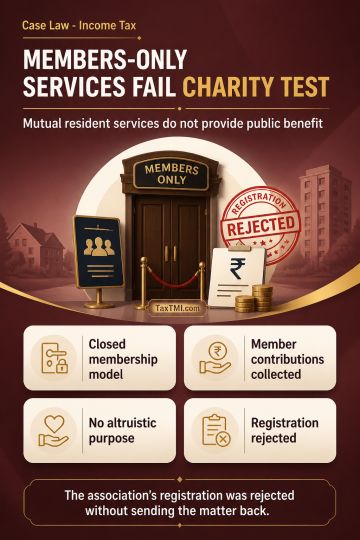
Public benefit requirement defeats charitable registration where residents' association services are reciprocal, member-only facilities governed by mu...
Admission of a Section 7 application under the Insolvency and Bankruptcy Code, 2016, concerning the classification of a debt as a Financial Debt within the meaning of Section 5(8). The key points are: The debt arose from a Development Agreement involving the payment of a Security Deposit and an additional amount carrying interest at 18% per annum, compounded quarterly, indicating the time value of money. The Corporate Debtor acknowledged the interest liability in its balance sheet. The Adjudicating Authority correctly held that the debt qualified as a Financial Debt, and the creditor was a Financial Creditor, not an Operational Creditor. The NCLAT upheld the Adjudicating Authority's order, finding no error in admitting the Section 7 application and classifying the debt as a Financial Debt. The appeal was dismissed.
Admission of a Section 7 application under the Insolvency and Bankruptcy Code, 2016, concerning the classification of a debt as a Financial Debt within the meaning of Section 5(8). The key points are: The debt arose from a Development Agreement involving the payment of a Security Deposit and an additional amount carrying interest at 18% per annum, compounded quarterly, indicating the time value of money. The Corporate Debtor acknowledged the interest liability in its balance sheet. The Adjudicating Authority correctly held that the debt qualified as a Financial Debt, and the creditor was a Financial Creditor, not an Operational Creditor. The NCLAT upheld the Adjudicating Authority's order, finding no error in admitting the Section 7 application and classifying the debt as a Financial Debt. The appeal was dismissed.
Note: It is a system-generated summary and is for quick reference only.
 TaxTMI
 of 4800














 Join Channel


 TaxTMI