Additional evidence in transfer pricing dispute leads to fresh examination, while tax deductions, TDS credit, fee and refund interest require verifica...
Category II AIF pass-through taxation preserves non-business income character; investment receipts cannot be reclassified without applying recognised ...
Mutual fund maturity rules require proper rollover, redemption, disclosure, and due diligence; investor gains cannot excuse regulatory breaches or pen...
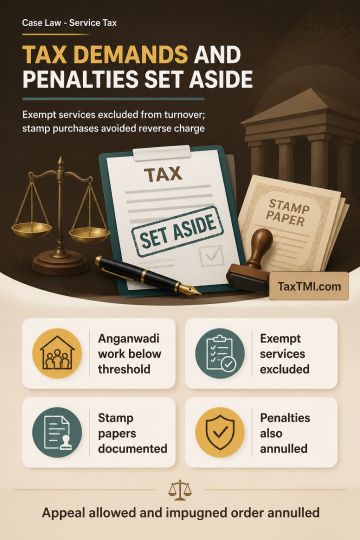
Threshold exemption excludes exempt services, while stamp-paper purchases avoid reverse charge; consequential service tax penalties were also set asid...
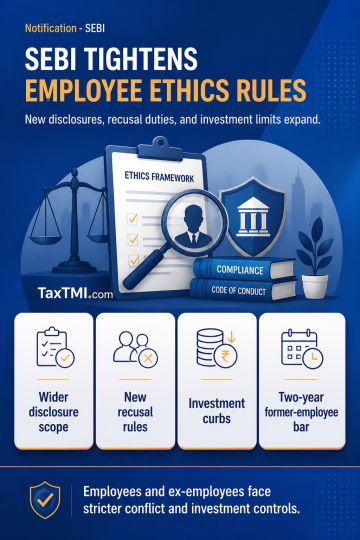
Employee conflict disclosures and investment restrictions expand with new recusal duties, post-employment limits, and compliance reporting requirement...
The NCLAT considered the applicability of time limitation for filing an appeal and whether there was sufficient cause for condonation of delay. It held that when an order is not pronounced in open court, the limitation period for filing an appeal does not commence, as per the Supreme Court's judgment in Sanjay Pandurang Kalate. Although the appellant claimed the order was not uploaded until 20.02.2024, the liquidator had communicated the order to the appellant on 25.01.2024. Therefore, the appellant could not claim that the limitation period would not begin at least from 25.01.2024. The expression "sufficient cause" is elastic, allowing courts to apply the law meaningfully to serve the ends of justice. The Supreme Court in Sheo Raj Singh vs. Union of India held that condonation of delay is a discretionary power, and its exercise depends on the sufficiency of the cause shown and the acceptability of the explanation, regardless of the length of delay. In the present case, no date of uploading was brought on record, so the limitation period could not be pegged to the date of uploading. However, since the appeal was filed on 02.03.2024, within 45 days from 25.01.2024 when the order was communicated, the NCLAT found sufficient cause to condone the delay.
The NCLAT considered the applicability of time limitation for filing an appeal and whether there was sufficient cause for condonation of delay. It held that when an order is not pronounced in open court, the limitation period for filing an appeal does not commence, as per the Supreme Court's judgment in Sanjay Pandurang Kalate. Although the appellant claimed the order was not uploaded until 20.02.2024, the liquidator had communicated the order to the appellant on 25.01.2024. Therefore, the appellant could not claim that the limitation period would not begin at least from 25.01.2024. The expression "sufficient cause" is elastic, allowing courts to apply the law meaningfully to serve the ends of justice. The Supreme Court in Sheo Raj Singh vs. Union of India held that condonation of delay is a discretionary power, and its exercise depends on the sufficiency of the cause shown and the acceptability of the explanation, regardless of the length of delay. In the present case, no date of uploading was brought on record, so the limitation period could not be pegged to the date of uploading. However, since the appeal was filed on 02.03.2024, within 45 days from 25.01.2024 when the order was communicated, the NCLAT found sufficient cause to condone the delay.
Note: It is a system-generated summary and is for quick reference only.
 TaxTMI
 of 4803
















 Join Channel


 TaxTMI
