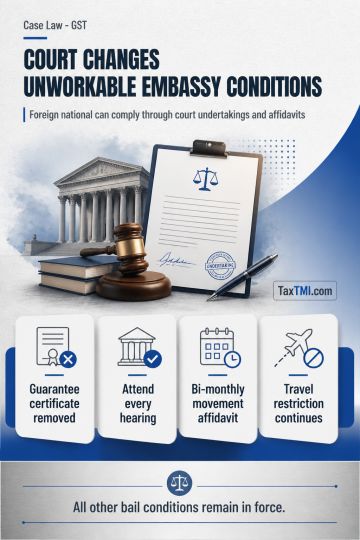
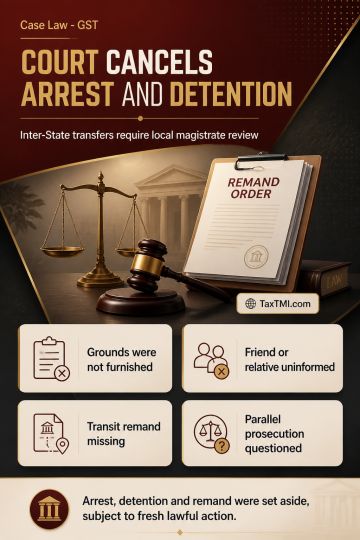
Arrest safeguards and transit remand requirements invalidated detention following inter-State transfer without communicated grounds or magistrate auth...
Arrest safeguards require disclosed grounds, relative intimation and transit remand, while duplicate prosecution under the CGST framework is unsustain...
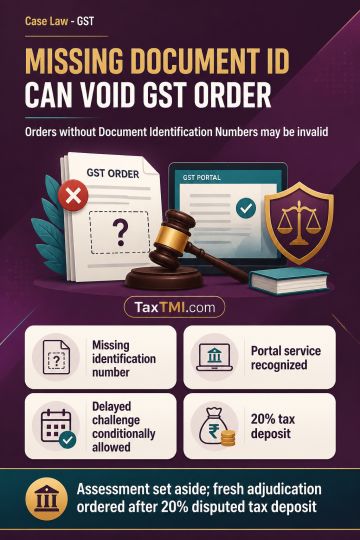
Document Identification Number defects can invalidate GST assessments, with delayed challenges entertained conditionally where patent irregularities e...
Windmill commissioning evidence supported higher depreciation where grid connection and electricity generation proved operational use before the relev...
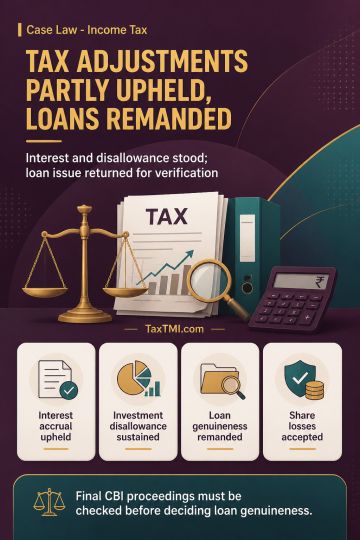
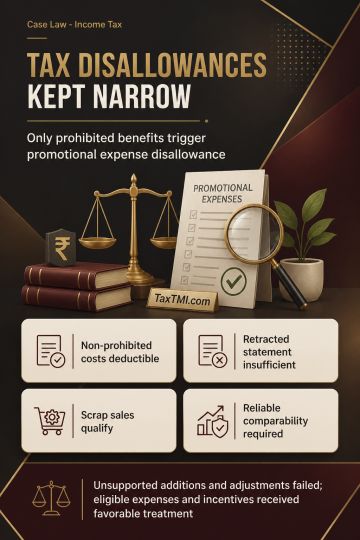
Pharmaceutical promotion and transfer-pricing comparability principles limited disallowances, while uncorroborated search allegations and unsupported ...
The appellant, engaged in manufacturing soda ash, availed CENVAT credit amounting to Rs. 46,27,417/- for the period 03.12.2005 to 31.03.2012 on input services utilized at salt pans for procuring salt, a raw material for soda ash production. The department rejected the credit on the grounds that it was availed beyond one year from the date of invoice, relying on Sections 11A and 11B of the CENVAT Credit Rules, 2004. However, these sections do not prescribe any time limit for availing credit. The amendment introducing the one-year time limit was made on 11.07.2014, after the relevant period. Relying on the Roquette Riddhi Siddhi case, the Tribunal held that credit can be availed even after one year for invoices issued before 01.09.2014. Regarding the second issue, the Tribunal, relying on precedents like Parry Engineering, held that credit cannot be denied merely because the input service was utilized outside the factory premises, as long as it has a nexus with manufacturing activity. Since salt procurement from salt pans is directly related to soda ash manufacturing, the appellant is entitled to the CENVAT credit on such input services.
The appellant, engaged in manufacturing soda ash, availed CENVAT credit amounting to Rs. 46,27,417/- for the period 03.12.2005 to 31.03.2012 on input services utilized at salt pans for procuring salt, a raw material for soda ash production. The department rejected the credit on the grounds that it was availed beyond one year from the date of invoice, relying on Sections 11A and 11B of the CENVAT Credit Rules, 2004. However, these sections do not prescribe any time limit for availing credit. The amendment introducing the one-year time limit was made on 11.07.2014, after the relevant period. Relying on the Roquette Riddhi Siddhi case, the Tribunal held that credit can be availed even after one year for invoices issued before 01.09.2014. Regarding the second issue, the Tribunal, relying on precedents like Parry Engineering, held that credit cannot be denied merely because the input service was utilized outside the factory premises, as long as it has a nexus with manufacturing activity. Since salt procurement from salt pans is directly related to soda ash manufacturing, the appellant is entitled to the CENVAT credit on such input services.
Note: It is a system-generated summary and is for quick reference only.
 TaxTMI
 of 4798









 Join Channel


 TaxTMI