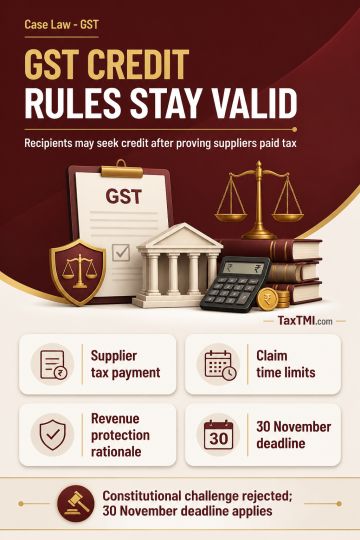
Input tax credit conditions remain constitutionally valid, with eligible recipient claims considered under GST circulars and retrospective filing dead...
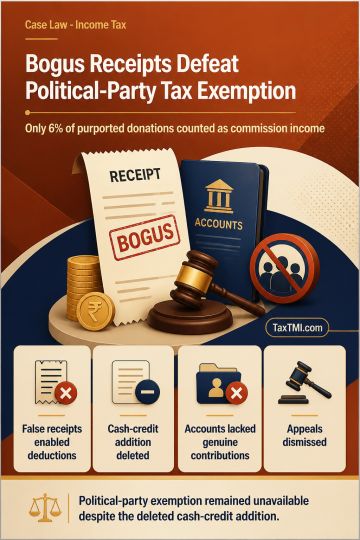
Bogus donation receipts justified commission income assessment and defeated political-party tax exemption for inaccurate accounts and reporting failur...
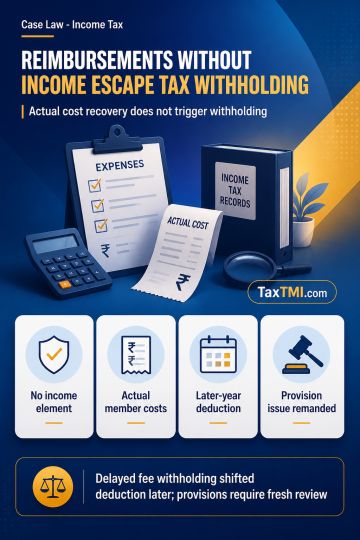
Pure reimbursement without income element escapes tax withholding, while delayed withholding and unsupported provisions face deferred or renewed scrut...
Public benefit requirement defeats charitable registration where residents' association services are reciprocal, member-only facilities governed by mu...
Exempt-income expenditure disallowance is confined to investments that actually generated exempt income, while supported business expenses remain dedu...
This is a case regarding levy of Central Excise Duty on Ready Mix Concrete (RMC) manufactured at construction sites by the appellant. The key points are: The appellant was manufacturing RMC at the site of the builder using raw materials provided by the builder, making it a job-work activity. The ownership of plant and machinery is irrelevant in determining job-work; the relationship between material supplier and processor is crucial. As the appellant was clearing goods manufactured on behalf of the builder, duty was payable by the appellant even as a job-worker. Regarding the extended period of limitation, it was held that due to a change in opinion based on a Supreme Court decision, the extended period could not be invoked, and the demand was confined to the normal period as correctly decided by the Commissioner (Appeals). The appellant's claim for concessional duty rate, if excess duty was due, was to be considered by the Original Adjudicating Authority. The appeal was dismissed, upholding the impugned order.
This is a case regarding levy of Central Excise Duty on Ready Mix Concrete (RMC) manufactured at construction sites by the appellant. The key points are: The appellant was manufacturing RMC at the site of the builder using raw materials provided by the builder, making it a job-work activity. The ownership of plant and machinery is irrelevant in determining job-work; the relationship between material supplier and processor is crucial. As the appellant was clearing goods manufactured on behalf of the builder, duty was payable by the appellant even as a job-worker. Regarding the extended period of limitation, it was held that due to a change in opinion based on a Supreme Court decision, the extended period could not be invoked, and the demand was confined to the normal period as correctly decided by the Commissioner (Appeals). The appellant's claim for concessional duty rate, if excess duty was due, was to be considered by the Original Adjudicating Authority. The appeal was dismissed, upholding the impugned order.
Note: It is a system-generated summary and is for quick reference only.
 TaxTMI
 of 4798









 Join Channel


 TaxTMI
