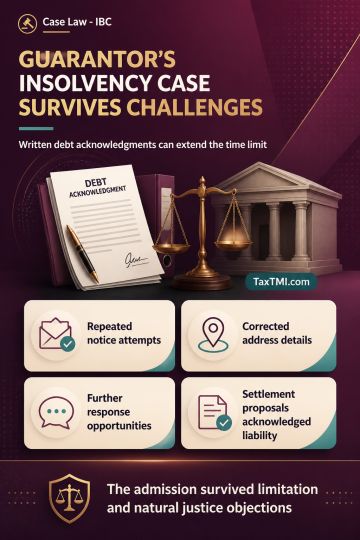
Service of notice and contractual debt acknowledgment preserved insolvency admission against a corporate guarantor despite limitation and natural just...
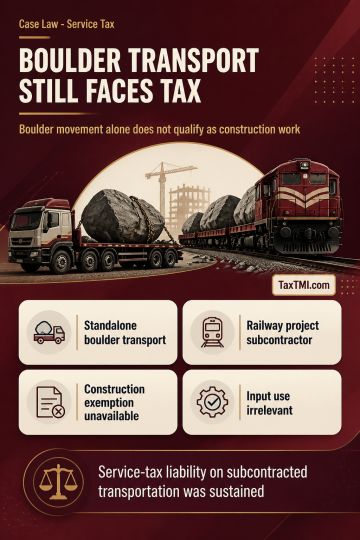
Original works exemption excludes standalone boulder transportation, leaving subcontracted railway-project transport services subject to service tax l...
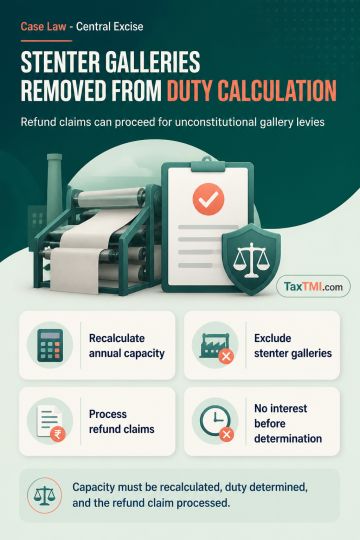
Annual production capacity determinations excluding stenter galleries support refunds for unconstitutional excise levies without an unjust-enrichment ...
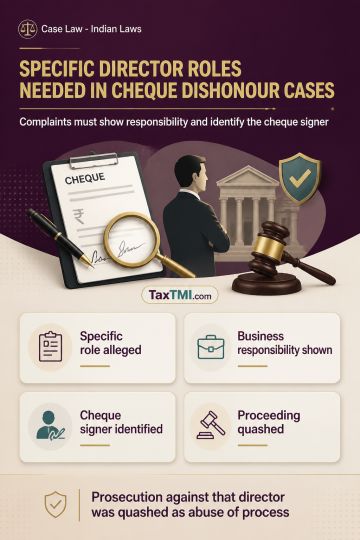
Vicarious liability for cheque dishonour requires specific allegations of responsibility and cheque signatory; generic director allegations cannot sus...
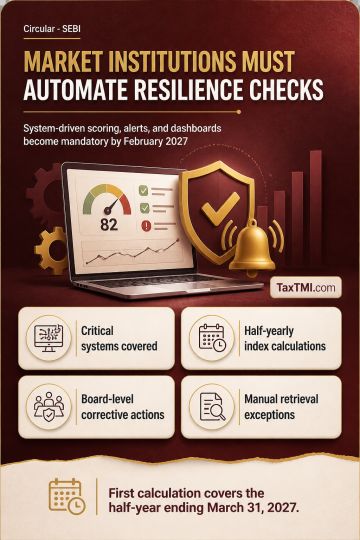
IT Resilience Index requires market infrastructure institutions to automate resilience scoring, early warnings, and continuous service-delivery monito...
Transfer pricing adjustment for comparable selection was challenged due to functional dissimilarity. The assessee provided IT-enabled services and back-end credit card operations, while the comparables suggested were involved in Knowledge Process Outsourcing activities, leading to their exclusion. Regarding the nature of expenses for license fees, the Assessing Officer treated it as a capital asset or intangible asset. However, the court held that the right to use the software did not provide enduring benefit, and the payment was merely license fees, not acquisition of a capital asset. The assessee did not acquire ownership of the software, and after termination, rights remained with the licensor. Relying on previous decisions, the license fees paid were considered revenue expenditure deductible u/s 37. No substantial question of law was raised.
Transfer pricing adjustment for comparable selection was challenged due to functional dissimilarity. The assessee provided IT-enabled services and back-end credit card operations, while the comparables suggested were involved in Knowledge Process Outsourcing activities, leading to their exclusion. Regarding the nature of expenses for license fees, the Assessing Officer treated it as a capital asset or intangible asset. However, the court held that the right to use the software did not provide enduring benefit, and the payment was merely license fees, not acquisition of a capital asset. The assessee did not acquire ownership of the software, and after termination, rights remained with the licensor. Relying on previous decisions, the license fees paid were considered revenue expenditure deductible u/s 37. No substantial question of law was raised.
Note: It is a system-generated summary and is for quick reference only.
 TaxTMI
  TaxTMI
 of 4828



 Join Channel