Original works exemption excludes standalone boulder transportation, leaving subcontracted railway-project transport services subject to service tax l...
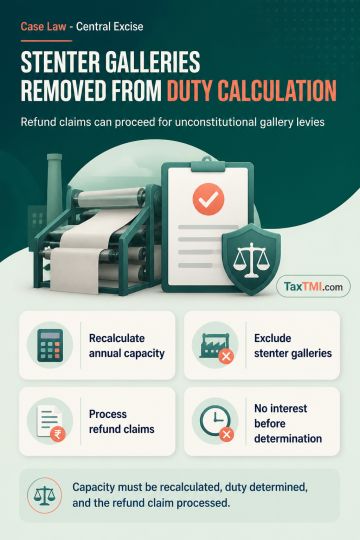
Annual production capacity determinations excluding stenter galleries support refunds for unconstitutional excise levies without an unjust-enrichment ...
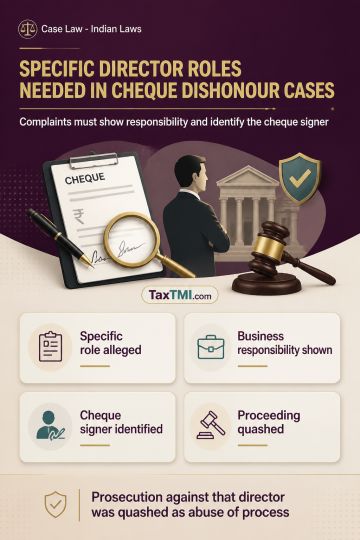
Vicarious liability for cheque dishonour requires specific allegations of responsibility and cheque signatory; generic director allegations cannot sus...
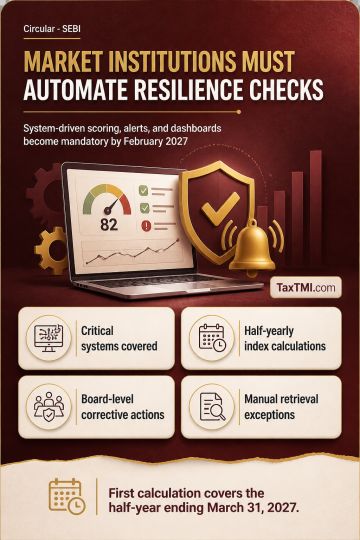
IT Resilience Index requires market infrastructure institutions to automate resilience scoring, early warnings, and continuous service-delivery monito...
The case pertains to the validity of an assessment order against a company that had already undergone amalgamation. The key points are: The assessment order was passed on a non-existent company, as it had been amalgamated. However, in an amalgamation, the corporate entity continues within the transferee company, unlike winding up where it ceases to exist. The Supreme Court has held that the business and venture live on within the new corporate residence, i.e., the transferee company. Therefore, the liability continues to be shouldered by the transferee company. The transferor company had filed an appeal before the CIT(Appeals) after the merger, indicating knowledge of the liability. A notice was issued to the assessee at its Chennai address, but there was no response. The AO proceeded with the assessment as the ITAT had remitted the matter back. While the assessment order cannot be deemed a nullity, the rejection of the long-term capital gain claim without an effective hearing to the transferee company renders the order invalid to that extent. The decision was in favor of the revenue.
The case pertains to the validity of an assessment order against a company that had already undergone amalgamation. The key points are: The assessment order was passed on a non-existent company, as it had been amalgamated. However, in an amalgamation, the corporate entity continues within the transferee company, unlike winding up where it ceases to exist. The Supreme Court has held that the business and venture live on within the new corporate residence, i.e., the transferee company. Therefore, the liability continues to be shouldered by the transferee company. The transferor company had filed an appeal before the CIT(Appeals) after the merger, indicating knowledge of the liability. A notice was issued to the assessee at its Chennai address, but there was no response. The AO proceeded with the assessment as the ITAT had remitted the matter back. While the assessment order cannot be deemed a nullity, the rejection of the long-term capital gain claim without an effective hearing to the transferee company renders the order invalid to that extent. The decision was in favor of the revenue.
Note: It is a system-generated summary and is for quick reference only.
 TaxTMI
  TaxTMI
 of 4830







 Join Channel


