Dispute Resolution Panel objections must reach both prescribed forums; otherwise assessment may proceed and statutory appeal remains the proper remedy...
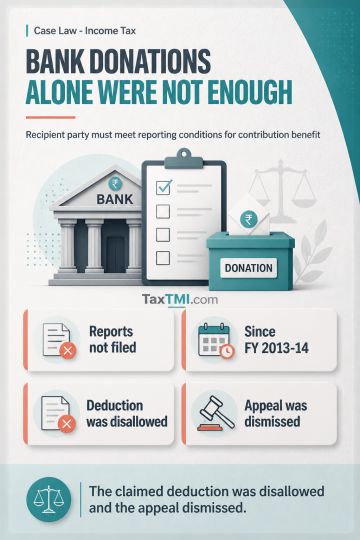
Political contribution deductions require recipient party compliance with contribution-reporting conditions; banking-channel donations alone do not qu...
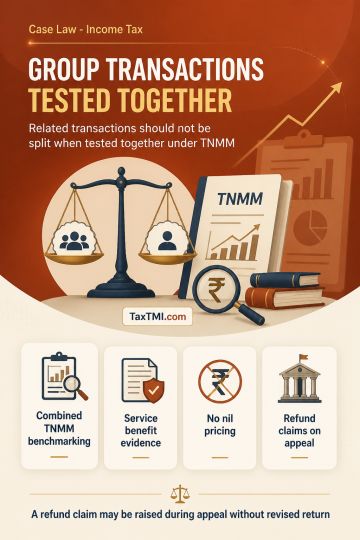
Aggregation under TNMM prevents selective testing of intra-group services without comparable uncontrolled transactions, while appellate additional cla...
Protective assessment cannot duplicate identical receipts under competing characterisations; remote services did not establish a taxable permanent est...
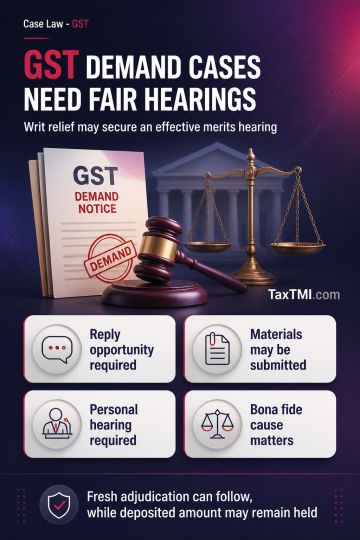
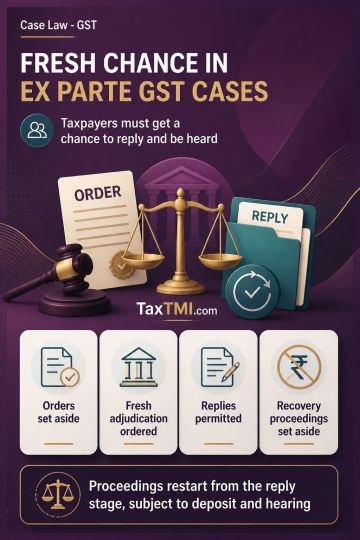
The court set aside the impugned order passed by the respondent u/s 73 of the Tamil Nadu General Sales Tax Act, 2017, imposing a liability of Rs. 10.72 lakhs towards tax, interest, and penalty on the petitioner due to a discrepancy between Forms GSTR 3B and GSTR 1. The petitioner claimed a violation of natural justice as they were unaware of the proceedings initiated by the respondent, with communication sent only through the portal. The court found sufficient materials to substantiate the petitioner's defense that there was no mismatch between the outward supplies turnover declared in GSTR-1 and GSTR-3B. Consistent with a previous case, the matter was remanded to the respondent for fresh consideration, subject to the petitioner paying 10% of the total demand within four weeks. The petition was allowed by way of remand.
The court set aside the impugned order passed by the respondent u/s 73 of the Tamil Nadu General Sales Tax Act, 2017, imposing a liability of Rs. 10.72 lakhs towards tax, interest, and penalty on the petitioner due to a discrepancy between Forms GSTR 3B and GSTR 1. The petitioner claimed a violation of natural justice as they were unaware of the proceedings initiated by the respondent, with communication sent only through the portal. The court found sufficient materials to substantiate the petitioner's defense that there was no mismatch between the outward supplies turnover declared in GSTR-1 and GSTR-3B. Consistent with a previous case, the matter was remanded to the respondent for fresh consideration, subject to the petitioner paying 10% of the total demand within four weeks. The petition was allowed by way of remand.
Note: It is a system-generated summary and is for quick reference only.
 TaxTMI
 of 4805












 Join Channel


 TaxTMI
