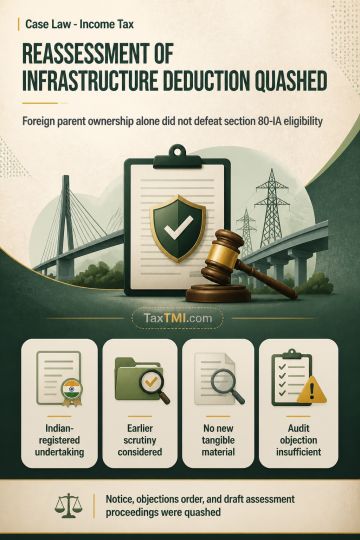
Defined public benefit can retain charitable character; registration renewal requires examining genuine activities and legal compliance, not surplus a...
Capital reduction is distinct from share buy-back, preventing buy-back tax; restructuring interest and related business deductions also survive scruti...
Transfer pricing and tax deductions upheld on established principles, while employee contributions and warranty provisions returned for fresh examinat...
Captive transfer pricing relies on industrial consumer tariffs, while genuine quotations can benchmark effluent treatment transfers under the Other Me...
Specific tariff classification for ophthalmic instruments and extended limitation principles determine the treatment of duty demands, confiscation, an...
The notification amends the earlier Notification No. 5/2017-Central Tax to exclude persons engaged in the supply of metal scrap falling under Chapters 72 to 81 of the Customs Tariff Act, 1975 from the exemption from GST registration if their entire supply is under reverse charge mechanism. The amendment comes into force from 10th October 2024. It mandates GST registration for metal scrap suppliers, irrespective of the applicability of reverse charge mechanism on their supplies.
The notification amends the earlier Notification No. 5/2017-Central Tax to exclude persons engaged in the supply of metal scrap falling under Chapters 72 to 81 of the Customs Tariff Act, 1975 from the exemption from GST registration if their entire supply is under reverse charge mechanism. The amendment comes into force from 10th October 2024. It mandates GST registration for metal scrap suppliers, irrespective of the applicability of reverse charge mechanism on their supplies.
Note: It is a system-generated summary and is for quick reference only.
 TaxTMI
  TaxTMI
 of 4807


















 Join Channel




