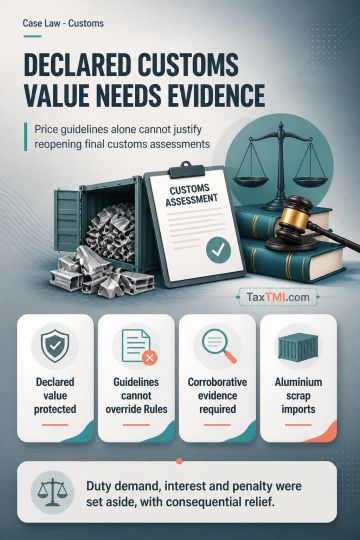
Transaction value cannot be rejected solely on non-statutory valuation guidelines without corroborative evidence supporting reassessment of final cust...
Cross-examination rights and corroborated evidence limit customs penalties for misdeclaration in genuine import transactions involving documented clea...
Tariff classification of vehicle gear components follows the specific gearing entry, displacing motor-vehicle parts classification and related liabili...
Necessary-party requirements limit impleadment of independent entities, while deferred consideration does not create an appealable adverse determinati...
Food supplement classification requires common parlance and authoritative tests, preventing treatment as proprietary Ayurvedic medicines without suppo...
The High Court examined the recovery of wrongly availed credit with penalty for wrongful availment during transition to GST regime. The petitioner's branches were not registered, and there was no correlation between invoices and claims made. The Court analyzed the registration status u/r 9 of Central Excise Rules, 2002, which allows exemption granted through a 2010 notification. The petitioner produced a centralized registration certificate covering various branches. The correlation between claims and invoices was remanded to the original authority for verification after setting aside the orders. The authorities were directed to determine credit eligibility after verifying branch registration coverage. The writ petition was disposed of through remand.
The High Court examined the recovery of wrongly availed credit with penalty for wrongful availment during transition to GST regime. The petitioner's branches were not registered, and there was no correlation between invoices and claims made. The Court analyzed the registration status u/r 9 of Central Excise Rules, 2002, which allows exemption granted through a 2010 notification. The petitioner produced a centralized registration certificate covering various branches. The correlation between claims and invoices was remanded to the original authority for verification after setting aside the orders. The authorities were directed to determine credit eligibility after verifying branch registration coverage. The writ petition was disposed of through remand.
Note: It is a system-generated summary and is for quick reference only.
 TaxTMI
 of 4805


















 Join Channel


 TaxTMI
