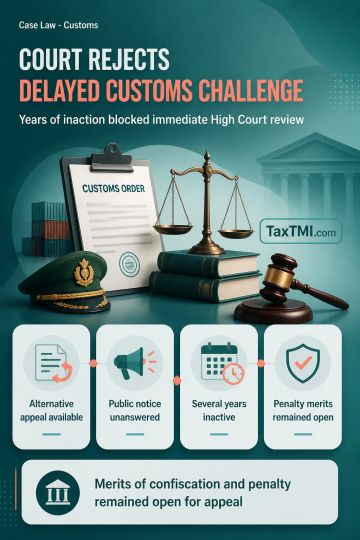
Alternative statutory remedy and unexplained delay barred writ review of customs confiscation adjudication, leaving merits for appellate consideration...
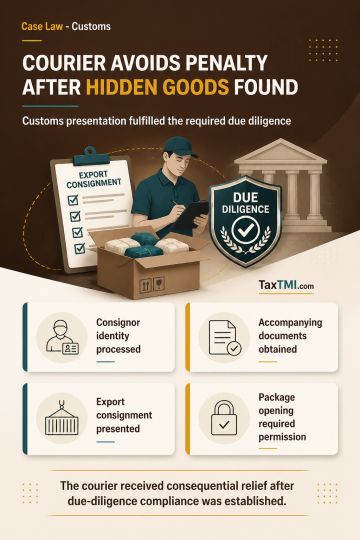
Authorised courier due diligence protects against penalties where declared exports conceal prohibited goods despite proper documentation and customs p...
Customs-controlled container movement now extends to DP World facilities, subject to segregation, inspections, reconciliation, and EXIM cargo priority...
The assessee, a pharmaceutical company, claimed deduction u/s 80-IE for its units located in Sikkim. The Assessing Officer (AO) allocated the Research and Development (R&D) expenditure incurred by the assessee among the 80-IE units and non-80-IE units based on the percentage of sales. The Commissioner of Income Tax (Appeals) [CIT(A)] held that the AO's allocation was incorrect as the assessee had produced evidence that the R&D expenditure was unrelated to the products manufactured in the 80-IE units. The Tribunal observed that the R&D activities were focused on future products and innovations, not the current products manufactured. The products developed in R&D undergo a process of 6-10 years before manufacturing, involving testing and approvals. Thus, the R&D expenditure during the year was not directly related to the products manufactured in the eligible units that year. The Tribunal upheld the CIT(A)'s decision to delete the allocation of R&D expenditure to the 80-IE units, ruling in favor of the assessee.
The assessee, a pharmaceutical company, claimed deduction u/s 80-IE for its units located in Sikkim. The Assessing Officer (AO) allocated the Research and Development (R&D) expenditure incurred by the assessee among the 80-IE units and non-80-IE units based on the percentage of sales. The Commissioner of Income Tax (Appeals) [CIT(A)] held that the AO's allocation was incorrect as the assessee had produced evidence that the R&D expenditure was unrelated to the products manufactured in the 80-IE units. The Tribunal observed that the R&D activities were focused on future products and innovations, not the current products manufactured. The products developed in R&D undergo a process of 6-10 years before manufacturing, involving testing and approvals. Thus, the R&D expenditure during the year was not directly related to the products manufactured in the eligible units that year. The Tribunal upheld the CIT(A)'s decision to delete the allocation of R&D expenditure to the 80-IE units, ruling in favor of the assessee.
Note: It is a system-generated summary and is for quick reference only.
 TaxTMI
  TaxTMI
 of 4828











 Join Channel


