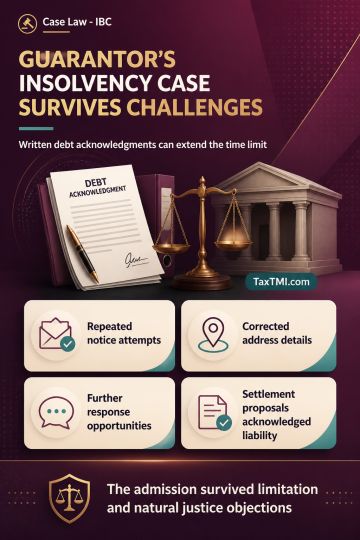
Service of notice and contractual debt acknowledgment preserved insolvency admission against a corporate guarantor despite limitation and natural just...
Original works exemption excludes standalone boulder transportation, leaving subcontracted railway-project transport services subject to service tax l...
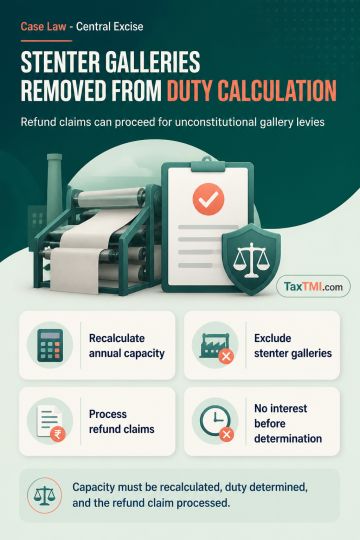
Annual production capacity determinations excluding stenter galleries support refunds for unconstitutional excise levies without an unjust-enrichment ...
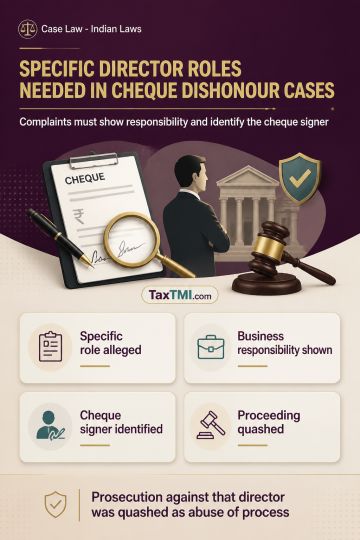
Vicarious liability for cheque dishonour requires specific allegations of responsibility and cheque signatory; generic director allegations cannot sus...
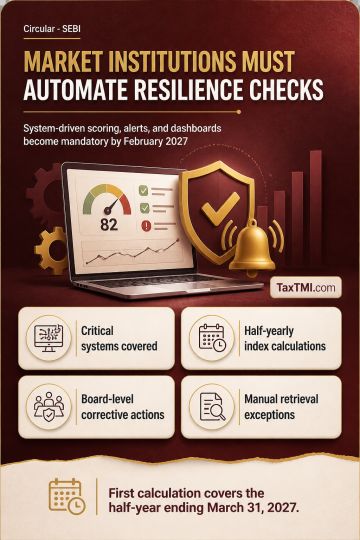
IT Resilience Index requires market infrastructure institutions to automate resilience scoring, early warnings, and continuous service-delivery monito...
The case pertains to the taxability of a reserve arising from an amalgamation u/s 28(iv) and Section 56(2)(x)(c) of the Income Tax Act. The key points are: The appointed date for amalgamation was 01.04.2017, making Section 56(2)(viia) inapplicable. The assessee received assets worth Rs. 149.29 crore without consideration due to the amalgamation. The Assessing Officer sought to tax this amount u/s 28(iv) as a benefit/perquisite arising from business. However, the prerequisites for Section 28(iv) were not met as there was no benefit/perquisite, it did not arise from the assessee's business, and the receipt was capital in nature. The amalgamation reserve was created for accounting purposes and did not result from business activities. The CIT(A) correctly held that the capital reserve cannot be treated as income u/s 28(iv). The ITAT upheld the CIT(A)'s order, deciding against the revenue authorities.
The case pertains to the taxability of a reserve arising from an amalgamation u/s 28(iv) and Section 56(2)(x)(c) of the Income Tax Act. The key points are: The appointed date for amalgamation was 01.04.2017, making Section 56(2)(viia) inapplicable. The assessee received assets worth Rs. 149.29 crore without consideration due to the amalgamation. The Assessing Officer sought to tax this amount u/s 28(iv) as a benefit/perquisite arising from business. However, the prerequisites for Section 28(iv) were not met as there was no benefit/perquisite, it did not arise from the assessee's business, and the receipt was capital in nature. The amalgamation reserve was created for accounting purposes and did not result from business activities. The CIT(A) correctly held that the capital reserve cannot be treated as income u/s 28(iv). The ITAT upheld the CIT(A)'s order, deciding against the revenue authorities.
Note: It is a system-generated summary and is for quick reference only.
 TaxTMI
  TaxTMI
 of 4828








 Join Channel