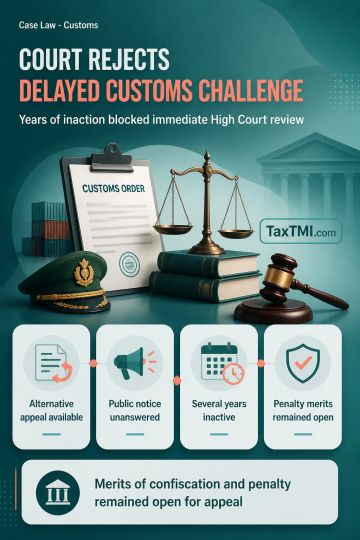
Alternative statutory remedy and unexplained delay barred writ review of customs confiscation adjudication, leaving merits for appellate consideration...
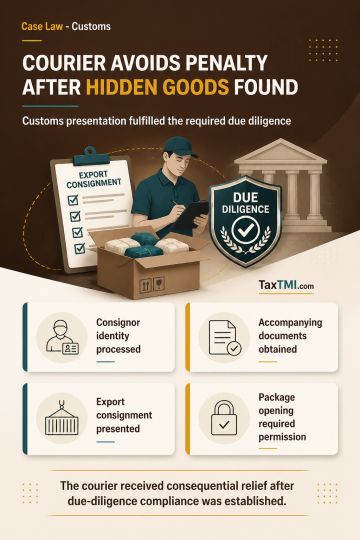
Authorised courier due diligence protects against penalties where declared exports conceal prohibited goods despite proper documentation and customs p...
Customs-controlled container movement now extends to DP World facilities, subject to segregation, inspections, reconciliation, and EXIM cargo priority...
Violation of principles of natural justice - opportunity for cross-examination. Evidentiary value of statements recorded u/s 14 of the Central Excise Act, 1944 cannot be relied upon unless the procedure prescribed u/s 9D is followed. Section 9D(1)(b) provides conditions for admitting such statements as evidence. Courts have consistently held that if a statement is used against the appellant, the right to cross-examine the individual who made the statement is fundamental. If the person is available, they should be presented for cross-examination when requested. Failing to provide this opportunity would violate principles of natural justice. The Delhi High Court clarified that if the department relies on a previously recorded statement during an inquiry, the opposing party must be allowed to cross-examine that person to challenge the statement's veracity. In the instant case, the appellant did not seek cross-examination at the original adjudication stage, but requested it before the Tribunal. Cross-examination u/s 9D(1)(b) is a right that cannot be denied. The matter is remanded to the Commissioner (Appeals) to re-adjudicate, giving the appellant an opportunity to cross-examine all witnesses whose statements were relied upon.
Violation of principles of natural justice - opportunity for cross-examination. Evidentiary value of statements recorded u/s 14 of the Central Excise Act, 1944 cannot be relied upon unless the procedure prescribed u/s 9D is followed. Section 9D(1)(b) provides conditions for admitting such statements as evidence. Courts have consistently held that if a statement is used against the appellant, the right to cross-examine the individual who made the statement is fundamental. If the person is available, they should be presented for cross-examination when requested. Failing to provide this opportunity would violate principles of natural justice. The Delhi High Court clarified that if the department relies on a previously recorded statement during an inquiry, the opposing party must be allowed to cross-examine that person to challenge the statement's veracity. In the instant case, the appellant did not seek cross-examination at the original adjudication stage, but requested it before the Tribunal. Cross-examination u/s 9D(1)(b) is a right that cannot be denied. The matter is remanded to the Commissioner (Appeals) to re-adjudicate, giving the appellant an opportunity to cross-examine all witnesses whose statements were relied upon.
Note: It is a system-generated summary and is for quick reference only.
 TaxTMI
  TaxTMI
 of 4828












 Join Channel


