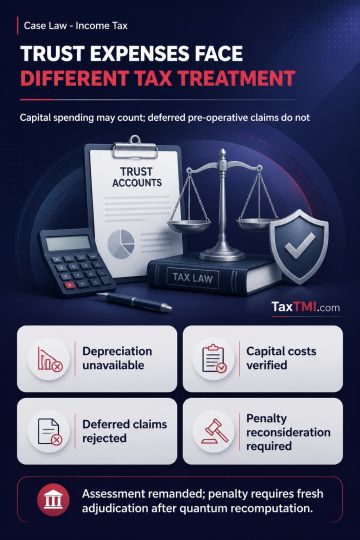
Charitable trust income application permits verified capital expenditure but rejects deferred pre-operative claims and requires reconsideration of con...
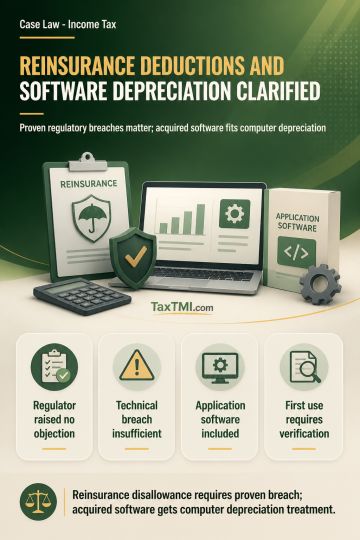
Reinsurance premium deductions require established regulatory breaches, while independently acquired software qualifies within the computer depreciati...
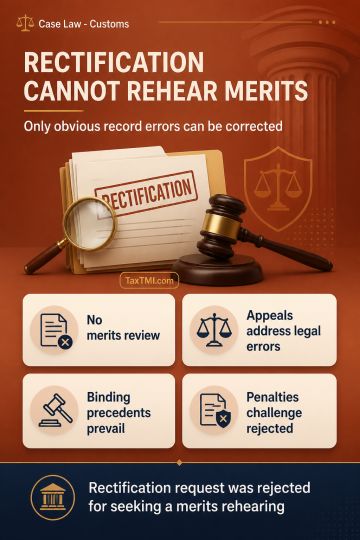
Rectification of mistake remains limited to self-evident record errors, preventing merits review through miscellaneous applications and preserving fin...
Tender creditworthiness conditions may extend to de facto Promoter Directors, with post-participation challenges generally barred absent arbitrariness...
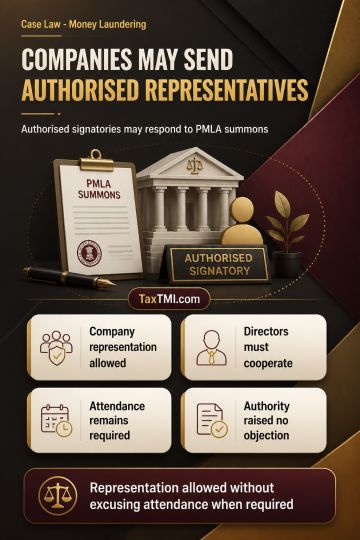
Corporate representation in PMLA summons proceedings permitted through an authorised signatory, subject to directors' continuing cooperation and atten...
The High Court held that the revenue authorities committed grave illegality by not granting pre-decisional hearing to the appellants before blocking their Electronic Credit Ledger u/r 86A of CGST Rules, violating principles of natural justice. The Court observed that although Rule 86A doesn't expressly provide for pre-decisional hearing, it has to be read into the provision when serious civil consequences arise. The authorities passed orders solely based on communication from another officer without independently analyzing if Input Tax Credit was on account of fake invoices, which is impermissible. The orders lacked valid material constituting 'reasons to believe' and were passed on borrowed satisfaction, rendering them bald, vague, and unreasoned. Quashing the impugned orders, the Court allowed the appeals, holding that the mandatory requirements for invoking Rule 86A were not fulfilled by the revenue authorities.
The High Court held that the revenue authorities committed grave illegality by not granting pre-decisional hearing to the appellants before blocking their Electronic Credit Ledger u/r 86A of CGST Rules, violating principles of natural justice. The Court observed that although Rule 86A doesn't expressly provide for pre-decisional hearing, it has to be read into the provision when serious civil consequences arise. The authorities passed orders solely based on communication from another officer without independently analyzing if Input Tax Credit was on account of fake invoices, which is impermissible. The orders lacked valid material constituting 'reasons to believe' and were passed on borrowed satisfaction, rendering them bald, vague, and unreasoned. Quashing the impugned orders, the Court allowed the appeals, holding that the mandatory requirements for invoking Rule 86A were not fulfilled by the revenue authorities.
Note: It is a system-generated summary and is for quick reference only.
 TaxTMI
 of 4805






 Join Channel


 TaxTMI
