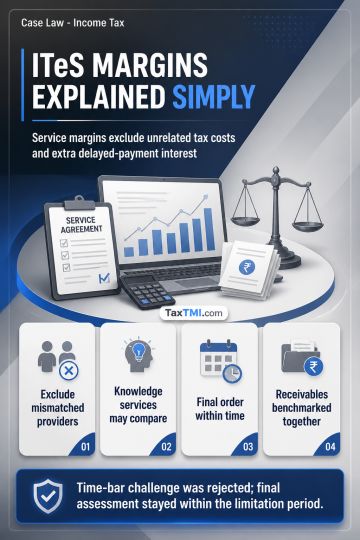
Transfer-pricing treatment of ITeS margins excludes pass-through tax recoveries and separate delayed-receivables interest after working-capital adjust...
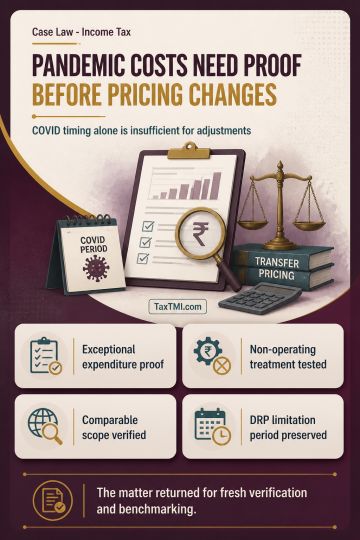
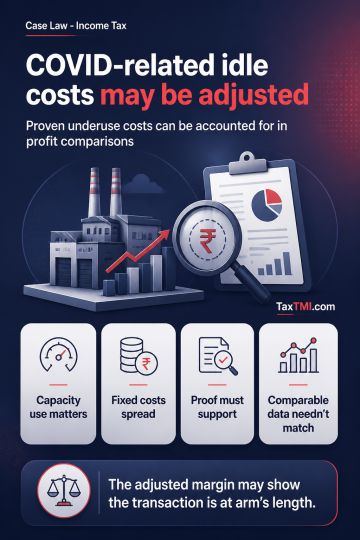
Capacity-utilisation adjustments under TNMM can neutralise substantiated COVID-related idle costs where underutilisation materially affects profitabil...
TNMM functional comparability requires excluding rice manufacturers from a pure Basmati rice trader's benchmark and recognising operating export recei...
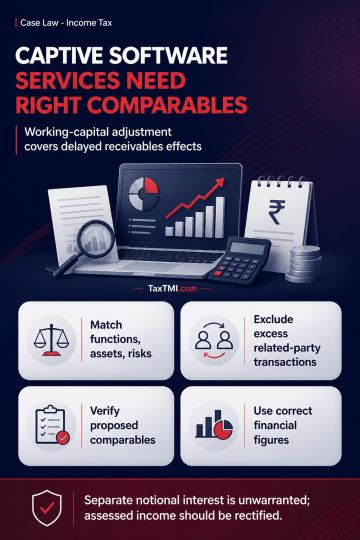
Working-capital adjustment subsumes delayed-receivable effects in TNMM benchmarking of captive software-development services, avoiding separate notion...
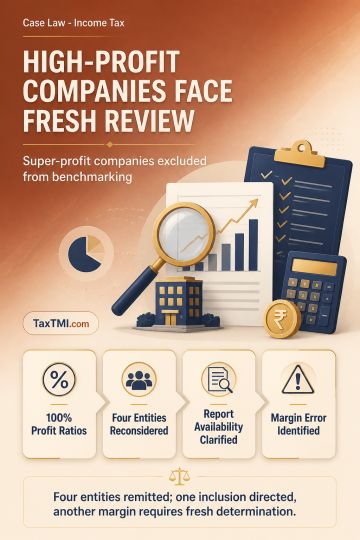
Transfer-pricing comparability requires exclusion of financially illogical super-profit comparables and correction of unsupported annual-report and ma...
Charitable character assessment preserves Section 80G approval despite inclusive spiritual teachings and incidental religious expenditure within the s...
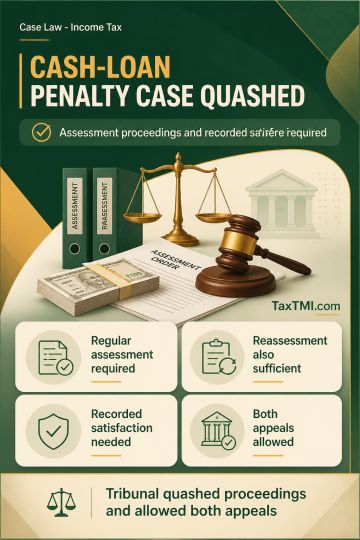
Penalty proceedings for cash-loan acceptance require assessment proceedings and recorded Assessing Officer satisfaction; absent these, the proceedings...
Page of 4828
Press 'Enter' after typing page number.
161 to 180 of 96556 Results
❮
❯
❯❯
0 / 200
Expand Note
Add to Folder
No Folders have been created
+
Are you sure you want to delete "My most important" ?
The notification GSR 383(E) dated 19.04.2018 amended the clause, which came into effect on the same date. The respondent Directorate had 90 days from 19.04.2018 to file the prosecution complaint. The prosecution complaint was filed on 16.07.2018, within the limitation period of 90 days from 19.04.2018. The Supreme Court in Sree Sankaracharya University of Sanskrit case clarified that a subsequent amendment can be considered clarificatory or declaratory of the previous law only if the pre-amended law was vague or ambiguous, and it was impossible to reasonably interpret the provision without the amendment. In the present case, neither the amendment stated it was clarificatory nor any such implication arose, and no difficulty existed in interpreting the PMLA, 2002 provisions without the amendment. The appellant's contention that the provisionally attached properties were liable to be released due to the respondent's failure to file a prosecution complaint within 90 days of the AA's order dated 19.01.2015 is without merit. The 90-day period commenced from 19.04.2018, and the respondent complied by filing the prosecution complaint within this period. The continued attachment of properties during the pendency of proceedings arising from the prosecution complaint is not illegal. The appeal is.
The notification GSR 383(E) dated 19.04.2018 amended the clause, which came into effect on the same date. The respondent Directorate had 90 days from 19.04.2018 to file the prosecution complaint. The prosecution complaint was filed on 16.07.2018, within the limitation period of 90 days from 19.04.2018. The Supreme Court in Sree Sankaracharya University of Sanskrit case clarified that a subsequent amendment can be considered clarificatory or declaratory of the previous law only if the pre-amended law was vague or ambiguous, and it was impossible to reasonably interpret the provision without the amendment. In the present case, neither the amendment stated it was clarificatory nor any such implication arose, and no difficulty existed in interpreting the PMLA, 2002 provisions without the amendment. The appellant's contention that the provisionally attached properties were liable to be released due to the respondent's failure to file a prosecution complaint within 90 days of the AA's order dated 19.01.2015 is without merit. The 90-day period commenced from 19.04.2018, and the respondent complied by filing the prosecution complaint within this period. The continued attachment of properties during the pendency of proceedings arising from the prosecution complaint is not illegal. The appeal is.
Note: It is a system-generated summary and is for quick reference only.
 TaxTMI
  TaxTMI
 of 4828






 Join Channel