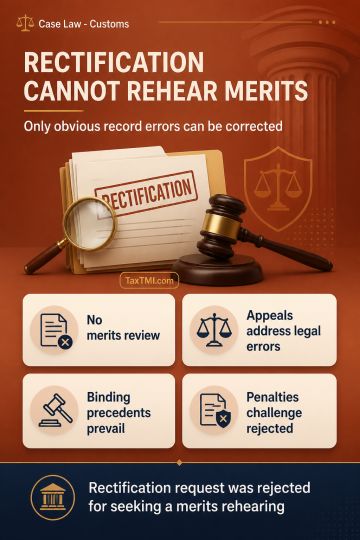
Rectification of mistake remains limited to self-evident record errors, preventing merits review through miscellaneous applications and preserving fin...
Tender creditworthiness conditions may extend to de facto Promoter Directors, with post-participation challenges generally barred absent arbitrariness...
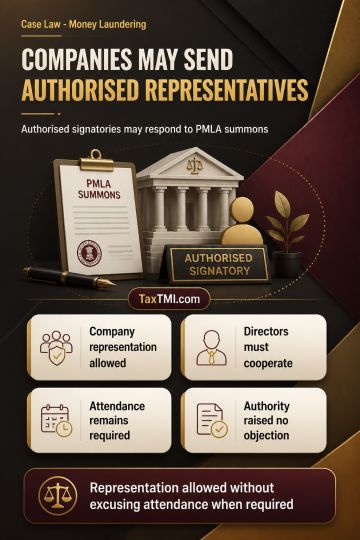
Corporate representation in PMLA summons proceedings permitted through an authorised signatory, subject to directors' continuing cooperation and atten...
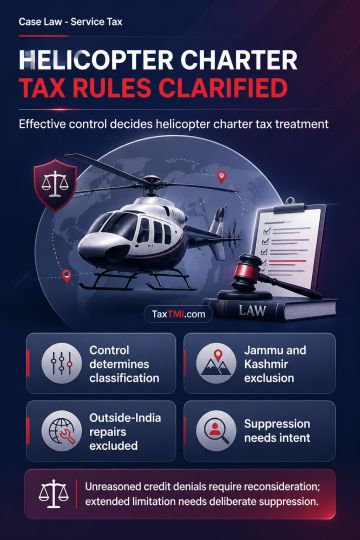
Helicopter charter classification requires effective control analysis, while territorial performance, reasoned credit orders and wilful suppression de...
Specified fund definition expands PAN exemption eligibility for registered alternative investment funds and qualifying International Financial Service...
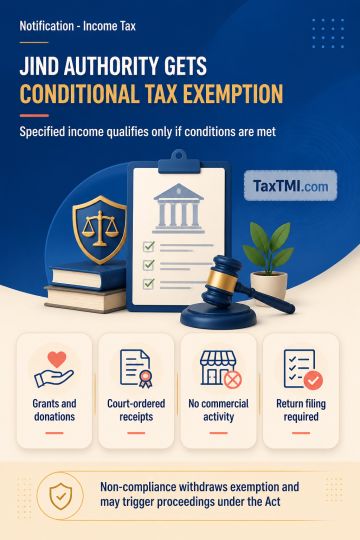
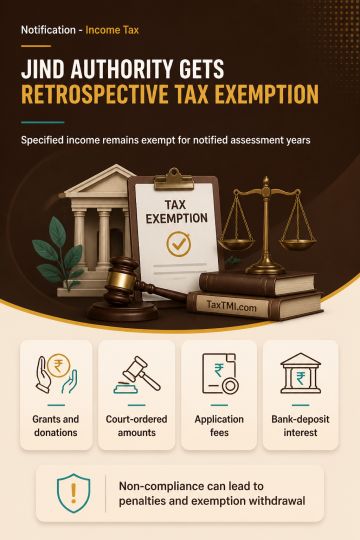
Tax exemption for specified legal-services authority income applies retrospectively, subject to non-commercial activity, unchanged income sources, and...
The High Court addressed the issue of refund of unutilized Input Tax Credit where remittances were received in a different branch's bank account. The Court held that establishments should be treated as distinct persons under the CGST Act, even if they are part of the same entity. The petitioner had initially not provided bank account details for its Delhi branch but later updated them, including a Bangalore bank account where remittances were credited. The Court observed that these remittances were clearly connected to services rendered by the Delhi branch, and the objection raised was overly technical and unsustainable. The Court clarified that the CGST Act contemplates entities having multiple establishments across states, and Section 25(4) and (5) override the principle of branch offices not being separate juridical entities. Consequently, the High Court quashed the impugned orders and allowed the petition.
The High Court addressed the issue of refund of unutilized Input Tax Credit where remittances were received in a different branch's bank account. The Court held that establishments should be treated as distinct persons under the CGST Act, even if they are part of the same entity. The petitioner had initially not provided bank account details for its Delhi branch but later updated them, including a Bangalore bank account where remittances were credited. The Court observed that these remittances were clearly connected to services rendered by the Delhi branch, and the objection raised was overly technical and unsustainable. The Court clarified that the CGST Act contemplates entities having multiple establishments across states, and Section 25(4) and (5) override the principle of branch offices not being separate juridical entities. Consequently, the High Court quashed the impugned orders and allowed the petition.
Note: It is a system-generated summary and is for quick reference only.
 TaxTMI
 of 4805











 Join Channel


 TaxTMI