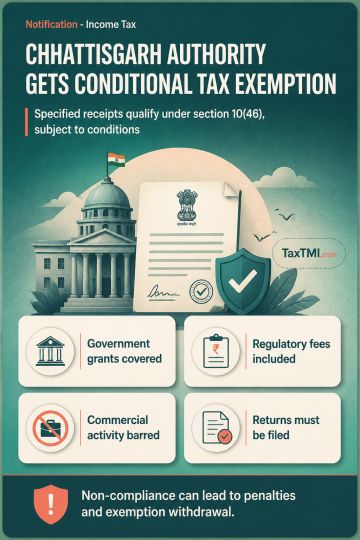
Specified regulatory authority income receives conditional tax exemption, subject to non-commercial activity, unchanged income character, and return f...
Tax exemption for regulatory authority income applies retrospectively, subject to non-commercial activity, unchanged income sources, and return-filing...
Input tax credit conditions remain constitutionally valid, with eligible recipient claims considered under GST circulars and retrospective filing dead...
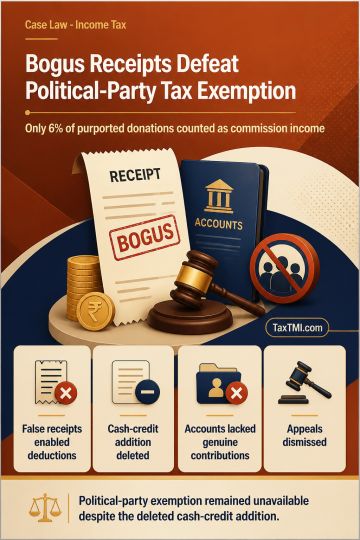
Bogus donation receipts justified commission income assessment and defeated political-party tax exemption for inaccurate accounts and reporting failur...
Pure reimbursement without income element escapes tax withholding, while delayed withholding and unsupported provisions face deferred or renewed scrut...
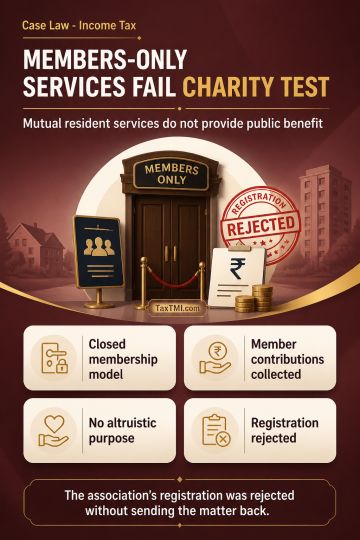
Public benefit requirement defeats charitable registration where residents' association services are reciprocal, member-only facilities governed by mu...
The High Court upheld the validity of reopening assessment u/s 147, finding no jurisdictional error or failure to meet statutory preconditions. Regarding the existence of a fixed place PE and DAPE, the Court relied on its previous binding decision against the appellant, citing principles of consistency and the appellant's failure to establish any fundamental change in facts. The attribution of 35% profits to marketing activities and 75% thereof to the appellant's PE in India by the ITAT was modified, with the HC attributing 26% of total profits to operations carried out by the PE based on its estimate of marketing efforts. The HC found the ITAT's conclusions unexceptionable, dismissing the appellant's challenge.
The High Court upheld the validity of reopening assessment u/s 147, finding no jurisdictional error or failure to meet statutory preconditions. Regarding the existence of a fixed place PE and DAPE, the Court relied on its previous binding decision against the appellant, citing principles of consistency and the appellant's failure to establish any fundamental change in facts. The attribution of 35% profits to marketing activities and 75% thereof to the appellant's PE in India by the ITAT was modified, with the HC attributing 26% of total profits to operations carried out by the PE based on its estimate of marketing efforts. The HC found the ITAT's conclusions unexceptionable, dismissing the appellant's challenge.
Note: It is a system-generated summary and is for quick reference only.
 TaxTMI
  TaxTMI
 of 4807













 Join Channel