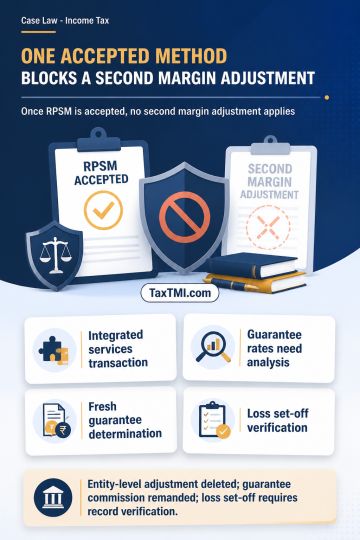
Opportunity to furnish unsecured-loan confirmations is required before reassessment initiation; proceedings require fresh consideration after taxpayer...
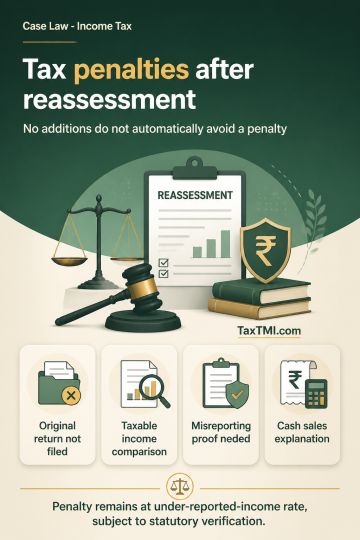
Under-reporting on a first reassessment return attracts penalty, while enhanced misreporting penalty requires proof of a statutory misreporting catego...
The High Court upheld the validity of reopening assessment u/s 147, finding no jurisdictional error or failure to meet statutory preconditions. Regarding the existence of a fixed place PE and DAPE, the Court relied on its previous binding decision against the appellant, citing principles of consistency and the appellant's failure to establish any fundamental change in facts. The attribution of 35% profits to marketing activities and 75% thereof to the appellant's PE in India by the ITAT was modified, with the HC attributing 26% of total profits to operations carried out by the PE based on its estimate of marketing efforts. The HC found the ITAT's conclusions unexceptionable, dismissing the appellant's challenge.
The High Court upheld the validity of reopening assessment u/s 147, finding no jurisdictional error or failure to meet statutory preconditions. Regarding the existence of a fixed place PE and DAPE, the Court relied on its previous binding decision against the appellant, citing principles of consistency and the appellant's failure to establish any fundamental change in facts. The attribution of 35% profits to marketing activities and 75% thereof to the appellant's PE in India by the ITAT was modified, with the HC attributing 26% of total profits to operations carried out by the PE based on its estimate of marketing efforts. The HC found the ITAT's conclusions unexceptionable, dismissing the appellant's challenge.
Note: It is a system-generated summary and is for quick reference only.
 TaxTMI
  TaxTMI
 of 4915