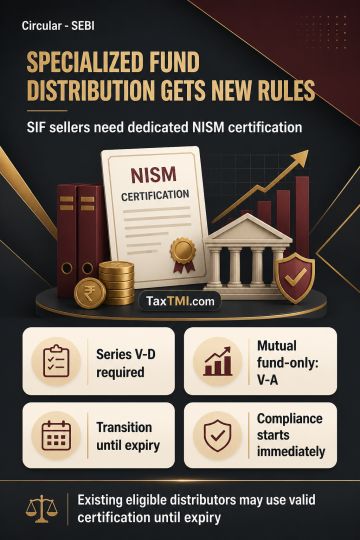
Specialized Investment Fund distribution now requires dedicated certification, while transitional recognition preserves existing qualified distributor...
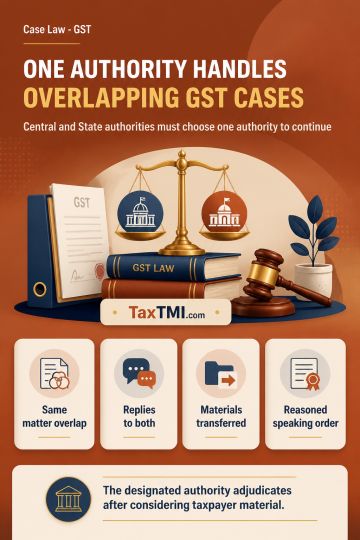
Overlapping GST proceedings require Central and State authorities to designate one competent authority for coordinated adjudication of the same matter...
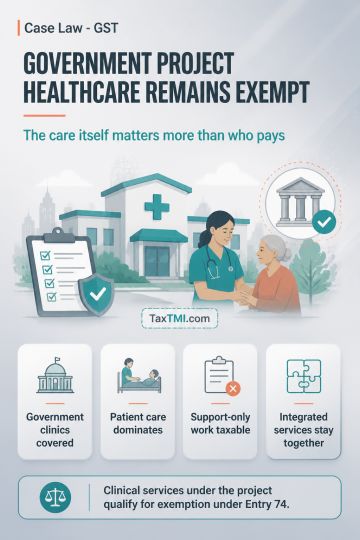
Composite healthcare supplies retain exemption when patient care is the contract's essential character, despite payment through an implementing agency...
This case deals with transfer pricing adjustments made by the tax authorities regarding international transactions involving sale of Paclitaxel, Disodium Pamidronate, and purchase of Methylene Chloride Soluble (MCS). The tax officer rejected the Transactional Net Margin Method (TNMM) adopted by the assessee and applied the Comparable Uncontrolled Price Method (CUP). The appellate authorities upheld the assessee's use of TNMM for Paclitaxel and Disodium Pamidronate, considering factors u/r 10B(2) of the Income Tax Rules. For MCS, the tax officer determined the cost price per kg as Rs. 32, while the assessee claimed Rs. 4648 per kg based on a cost certificate. The appellate authorities accepted the assessee's cost certificate in the absence of any material challenging its veracity. The High Court found no substantial question of law arising from the factual findings of the lower authorities.
This case deals with transfer pricing adjustments made by the tax authorities regarding international transactions involving sale of Paclitaxel, Disodium Pamidronate, and purchase of Methylene Chloride Soluble (MCS). The tax officer rejected the Transactional Net Margin Method (TNMM) adopted by the assessee and applied the Comparable Uncontrolled Price Method (CUP). The appellate authorities upheld the assessee's use of TNMM for Paclitaxel and Disodium Pamidronate, considering factors u/r 10B(2) of the Income Tax Rules. For MCS, the tax officer determined the cost price per kg as Rs. 32, while the assessee claimed Rs. 4648 per kg based on a cost certificate. The appellate authorities accepted the assessee's cost certificate in the absence of any material challenging its veracity. The High Court found no substantial question of law arising from the factual findings of the lower authorities.
Note: It is a system-generated summary and is for quick reference only.
 TaxTMI
  TaxTMI
 of 4809






 Join Channel


