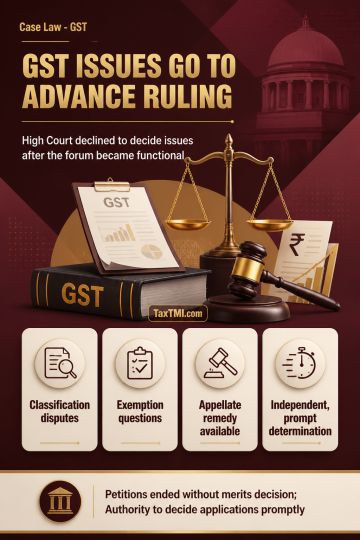
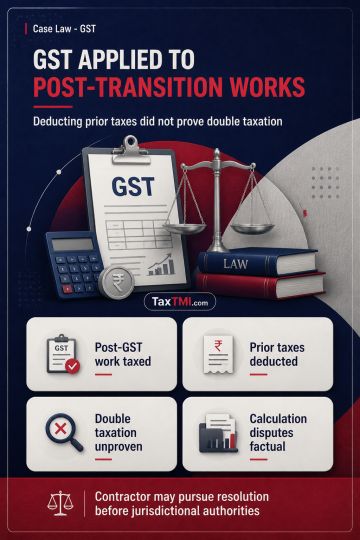
Advance-ruling mechanism governs pending GST classification, exemption and taxability disputes, limiting writ review once the specialised forum functi...
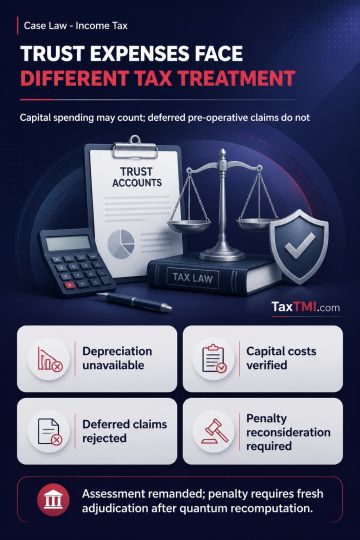
Charitable trust income application permits verified capital expenditure but rejects deferred pre-operative claims and requires reconsideration of con...
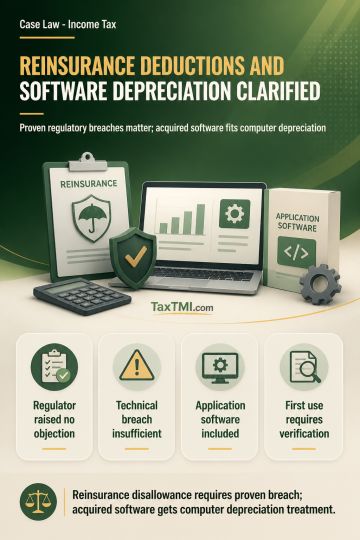
Reinsurance premium deductions require established regulatory breaches, while independently acquired software qualifies within the computer depreciati...
This case deals with transfer pricing adjustments made by the tax authorities regarding international transactions involving sale of Paclitaxel, Disodium Pamidronate, and purchase of Methylene Chloride Soluble (MCS). The tax officer rejected the Transactional Net Margin Method (TNMM) adopted by the assessee and applied the Comparable Uncontrolled Price Method (CUP). The appellate authorities upheld the assessee's use of TNMM for Paclitaxel and Disodium Pamidronate, considering factors u/r 10B(2) of the Income Tax Rules. For MCS, the tax officer determined the cost price per kg as Rs. 32, while the assessee claimed Rs. 4648 per kg based on a cost certificate. The appellate authorities accepted the assessee's cost certificate in the absence of any material challenging its veracity. The High Court found no substantial question of law arising from the factual findings of the lower authorities.
This case deals with transfer pricing adjustments made by the tax authorities regarding international transactions involving sale of Paclitaxel, Disodium Pamidronate, and purchase of Methylene Chloride Soluble (MCS). The tax officer rejected the Transactional Net Margin Method (TNMM) adopted by the assessee and applied the Comparable Uncontrolled Price Method (CUP). The appellate authorities upheld the assessee's use of TNMM for Paclitaxel and Disodium Pamidronate, considering factors u/r 10B(2) of the Income Tax Rules. For MCS, the tax officer determined the cost price per kg as Rs. 32, while the assessee claimed Rs. 4648 per kg based on a cost certificate. The appellate authorities accepted the assessee's cost certificate in the absence of any material challenging its veracity. The High Court found no substantial question of law arising from the factual findings of the lower authorities.
Note: It is a system-generated summary and is for quick reference only.
 TaxTMI
  TaxTMI
 of 4809






 Join Channel


