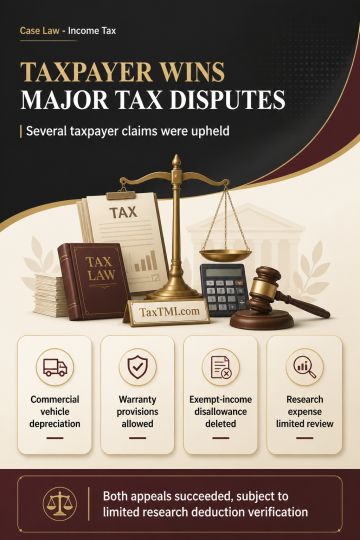
Commercial vehicle depreciation, scientifically determined warranty provisions and exempt-income disallowances were resolved in favour of the taxpayer...
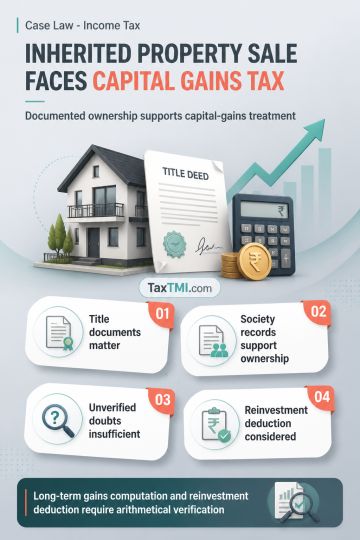
Inherited property sale proceeds require capital-gains treatment where ownership is supported by evidence, not suspicion or unverified signature doubt...
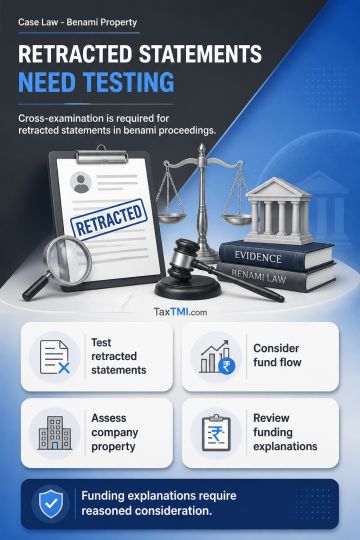
Cross-examination of retracted statements is essential where foundational evidence supports a benami allegation and documented funding explanations re...
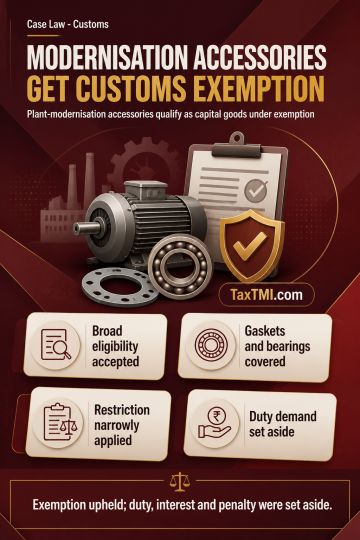
Capital-goods exemption covers plant-modernisation accessories, while the import restriction applies only to earlier capital-goods components and spar...
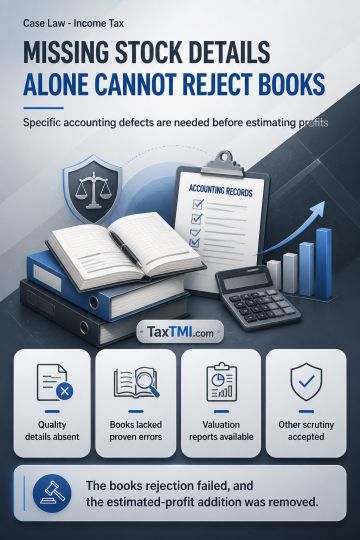
Rejection of books of accounts u/s 145 - Addition u/ss 68/69A with 115BBE - cash deposited during demonetization as unexplained credit. The Assessing Officer did not reject the books or pass an order u/s 144. The CIT(A) rejected the books based on mere surmise and conjecture, without satisfying the conditions u/s 145(3) or pointing out defects. The assessee produced all required details, and the authorities did not find the records defective. Mere suspicion on sales of excavated stone, with part amount considered explained and part unexplained for the same records, is not a valid reason to invoke Section 145(3). Section 145(3) can only be invoked when accounts are incorrect/incomplete, accounting methods u/s 145(1) are not followed, or accounting standards u/s 145(2) are not followed. None of these conditions were satisfied, and the assessment was completed u/s 143(3) instead of Section 144, which is incorrect. Treating part of cash sales as unexplained money u/s 69A or unexplained cash credits u/s 68 is also incorrect when the sales transactions are already recorded in books and reflected in the profit and loss account. Cash deposited from sales proceeds cannot be considered u/ss 68 or 69A.
Rejection of books of accounts u/s 145 - Addition u/ss 68/69A with 115BBE - cash deposited during demonetization as unexplained credit. The Assessing Officer did not reject the books or pass an order u/s 144. The CIT(A) rejected the books based on mere surmise and conjecture, without satisfying the conditions u/s 145(3) or pointing out defects. The assessee produced all required details, and the authorities did not find the records defective. Mere suspicion on sales of excavated stone, with part amount considered explained and part unexplained for the same records, is not a valid reason to invoke Section 145(3). Section 145(3) can only be invoked when accounts are incorrect/incomplete, accounting methods u/s 145(1) are not followed, or accounting standards u/s 145(2) are not followed. None of these conditions were satisfied, and the assessment was completed u/s 143(3) instead of Section 144, which is incorrect. Treating part of cash sales as unexplained money u/s 69A or unexplained cash credits u/s 68 is also incorrect when the sales transactions are already recorded in books and reflected in the profit and loss account. Cash deposited from sales proceeds cannot be considered u/ss 68 or 69A.
Note: It is a system-generated summary and is for quick reference only.
 TaxTMI
 of 4805



 Join Channel


 TaxTMI