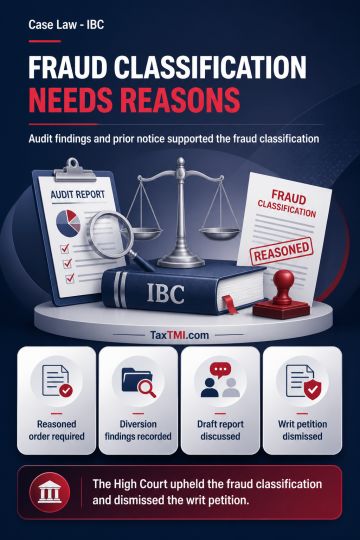
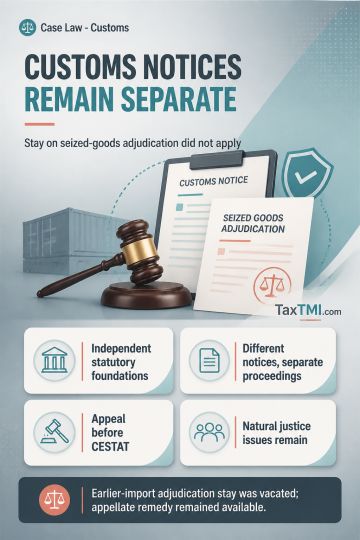
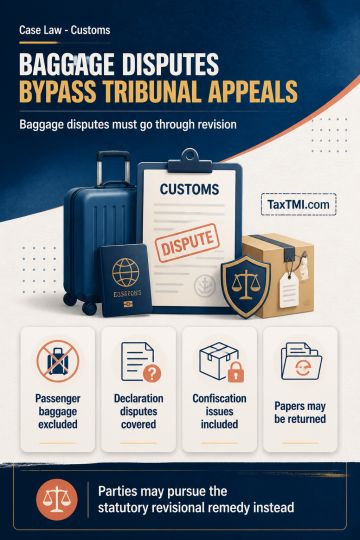
Independent show-cause notices remain separate proceedings, while customs adjudication challenges should ordinarily follow the statutory appellate rem...
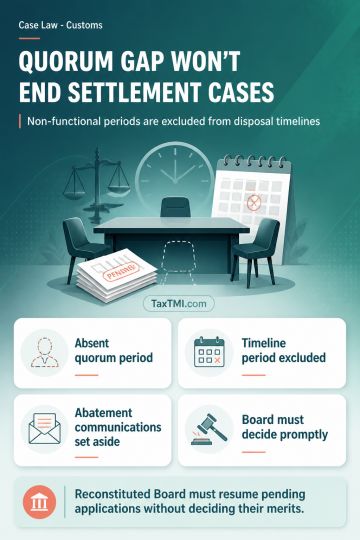
Institutional incapacity in customs settlement proceedings excludes non-functional quorum periods from statutory disposal timelines, preventing automa...
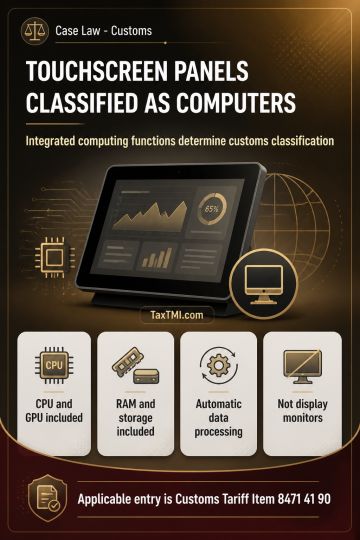
Interactive touchscreen panels with integrated computing functions fall under automatic data-processing machines rather than display monitors for cust...
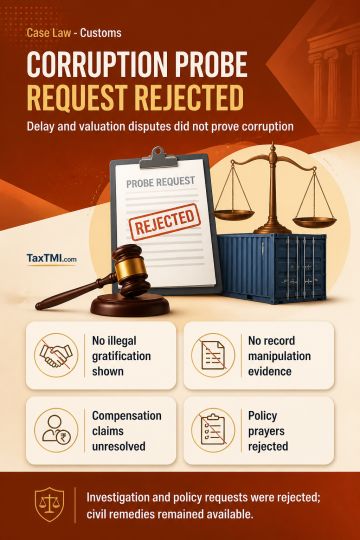
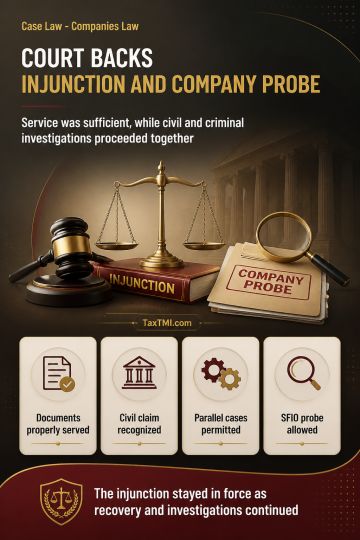
Ex parte injunction service requirements were substantially met, while civil recovery and SFIO investigation into provident fund defalcation continued...
Rejection of books of accounts u/s 145 - Addition u/ss 68/69A with 115BBE - cash deposited during demonetization as unexplained credit. The Assessing Officer did not reject the books or pass an order u/s 144. The CIT(A) rejected the books based on mere surmise and conjecture, without satisfying the conditions u/s 145(3) or pointing out defects. The assessee produced all required details, and the authorities did not find the records defective. Mere suspicion on sales of excavated stone, with part amount considered explained and part unexplained for the same records, is not a valid reason to invoke Section 145(3). Section 145(3) can only be invoked when accounts are incorrect/incomplete, accounting methods u/s 145(1) are not followed, or accounting standards u/s 145(2) are not followed. None of these conditions were satisfied, and the assessment was completed u/s 143(3) instead of Section 144, which is incorrect. Treating part of cash sales as unexplained money u/s 69A or unexplained cash credits u/s 68 is also incorrect when the sales transactions are already recorded in books and reflected in the profit and loss account. Cash deposited from sales proceeds cannot be considered u/ss 68 or 69A.
Rejection of books of accounts u/s 145 - Addition u/ss 68/69A with 115BBE - cash deposited during demonetization as unexplained credit. The Assessing Officer did not reject the books or pass an order u/s 144. The CIT(A) rejected the books based on mere surmise and conjecture, without satisfying the conditions u/s 145(3) or pointing out defects. The assessee produced all required details, and the authorities did not find the records defective. Mere suspicion on sales of excavated stone, with part amount considered explained and part unexplained for the same records, is not a valid reason to invoke Section 145(3). Section 145(3) can only be invoked when accounts are incorrect/incomplete, accounting methods u/s 145(1) are not followed, or accounting standards u/s 145(2) are not followed. None of these conditions were satisfied, and the assessment was completed u/s 143(3) instead of Section 144, which is incorrect. Treating part of cash sales as unexplained money u/s 69A or unexplained cash credits u/s 68 is also incorrect when the sales transactions are already recorded in books and reflected in the profit and loss account. Cash deposited from sales proceeds cannot be considered u/ss 68 or 69A.
Note: It is a system-generated summary and is for quick reference only.
 TaxTMI
 of 4805



 Join Channel


 TaxTMI