Specialized Investment Fund distribution now requires dedicated certification, while transitional recognition preserves existing qualified distributor...
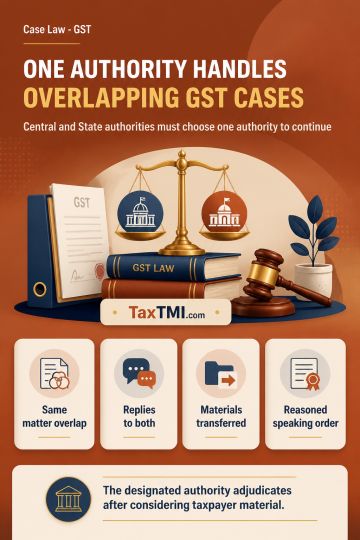
Overlapping GST proceedings require Central and State authorities to designate one competent authority for coordinated adjudication of the same matter...
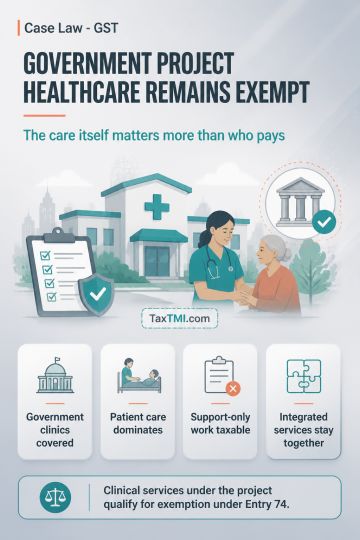
Composite healthcare supplies retain exemption when patient care is the contract's essential character, despite payment through an implementing agency...
The assessing officer made an addition u/s 41(1) on the grounds that the assessee had ceased trading liabilities, even though the assessee did not respond to notices/summons issued u/ss 133(6)/131. The assessee contended that no remission or cessation of liabilities had occurred and no benefit was received, hence the liability cannot be considered income. The ITAT, relying on the Rajasthan High Court's decision in CIT vs. Narendra Mohan Mathur, held that the onus is on the assessing officer to conclusively prove that the liabilities ceased to exist or the assessee obtained any amount/benefit concerning such liabilities. As the assessing officer failed to discharge this onus, the ITAT directed deletion of the addition made u/s 41(1).
The assessing officer made an addition u/s 41(1) on the grounds that the assessee had ceased trading liabilities, even though the assessee did not respond to notices/summons issued u/ss 133(6)/131. The assessee contended that no remission or cessation of liabilities had occurred and no benefit was received, hence the liability cannot be considered income. The ITAT, relying on the Rajasthan High Court's decision in CIT vs. Narendra Mohan Mathur, held that the onus is on the assessing officer to conclusively prove that the liabilities ceased to exist or the assessee obtained any amount/benefit concerning such liabilities. As the assessing officer failed to discharge this onus, the ITAT directed deletion of the addition made u/s 41(1).
Note: It is a system-generated summary and is for quick reference only.
 TaxTMI
  TaxTMI
 of 4809








 Join Channel


