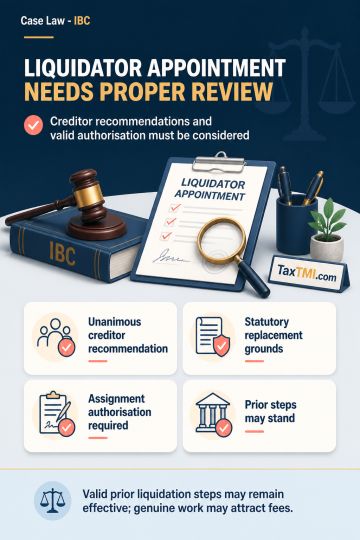
Liquidator appointment under Section 34 requires consideration of creditor recommendations, valid professional authorisation, and preservation of vali...
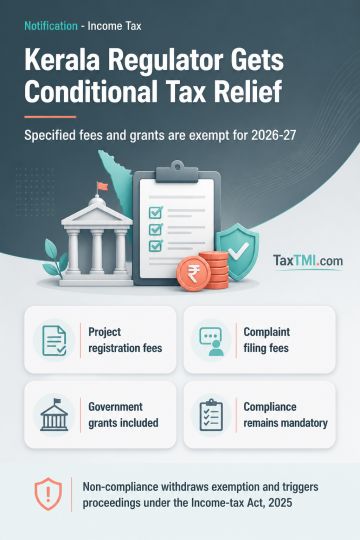
Income-tax exemption for specified regulatory fees and government grants applies subject to non-commercial activity and continuing compliance conditio...
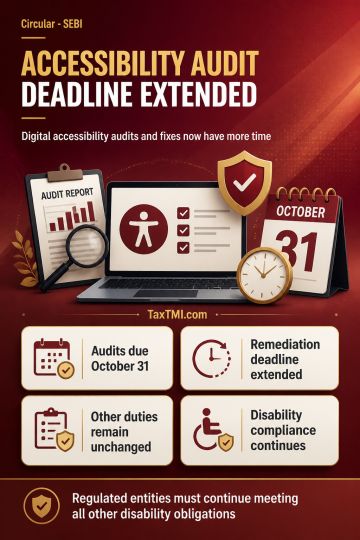
Digital accessibility audit and remediation deadlines extended, while all other disability-compliance obligations for regulated entities remain unchan...
The assessing officer made an addition u/s 41(1) on the grounds that the assessee had ceased trading liabilities, even though the assessee did not respond to notices/summons issued u/ss 133(6)/131. The assessee contended that no remission or cessation of liabilities had occurred and no benefit was received, hence the liability cannot be considered income. The ITAT, relying on the Rajasthan High Court's decision in CIT vs. Narendra Mohan Mathur, held that the onus is on the assessing officer to conclusively prove that the liabilities ceased to exist or the assessee obtained any amount/benefit concerning such liabilities. As the assessing officer failed to discharge this onus, the ITAT directed deletion of the addition made u/s 41(1).
The assessing officer made an addition u/s 41(1) on the grounds that the assessee had ceased trading liabilities, even though the assessee did not respond to notices/summons issued u/ss 133(6)/131. The assessee contended that no remission or cessation of liabilities had occurred and no benefit was received, hence the liability cannot be considered income. The ITAT, relying on the Rajasthan High Court's decision in CIT vs. Narendra Mohan Mathur, held that the onus is on the assessing officer to conclusively prove that the liabilities ceased to exist or the assessee obtained any amount/benefit concerning such liabilities. As the assessing officer failed to discharge this onus, the ITAT directed deletion of the addition made u/s 41(1).
Note: It is a system-generated summary and is for quick reference only.
 TaxTMI
 of 4805




 Join Channel


 TaxTMI