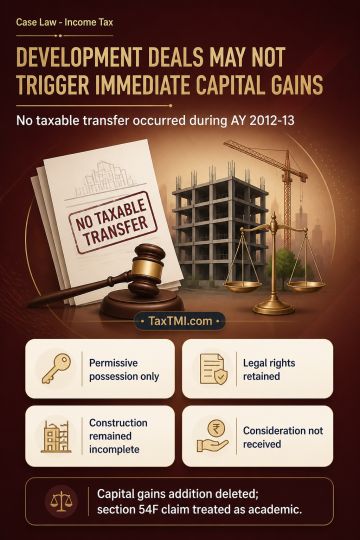
Development agreements require legal possession or effective enjoyment for capital gains transfer; permissive possession and deferred consideration de...
Prolonged sterilisation of development rights supports capital-gains treatment, while business-income disallowances cannot govern capital-gains comput...
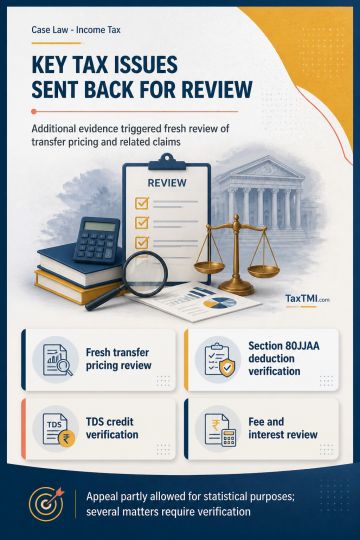
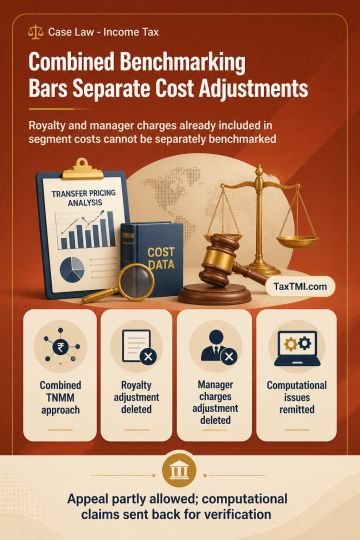
Additional evidence in transfer pricing dispute leads to fresh examination, while tax deductions, TDS credit, fee and refund interest require verifica...
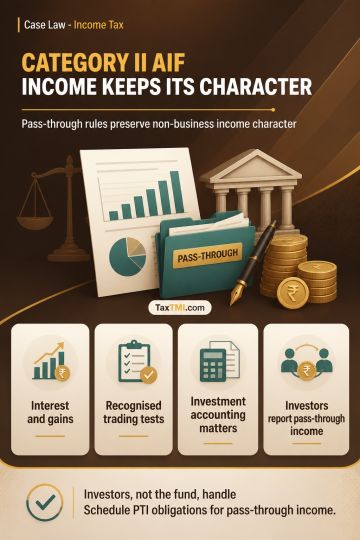
Category II AIF pass-through taxation preserves non-business income character; investment receipts cannot be reclassified without applying recognised ...
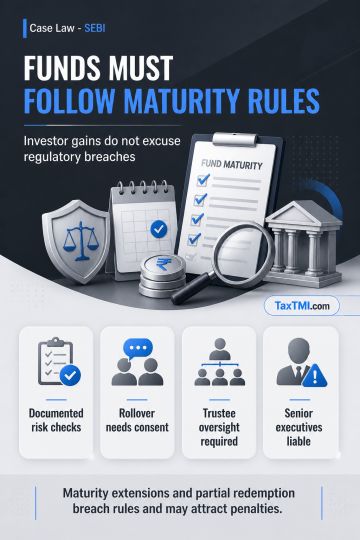
Mutual fund maturity rules require proper rollover, redemption, disclosure, and due diligence; investor gains cannot excuse regulatory breaches or pen...
Page of 4809
Press 'Enter' after typing page number.
1381 to 1400 of 96177 Results
❮
❯
❯❯
0 / 200
Expand Note
Add to Folder
No Folders have been created
+
Are you sure you want to delete "My most important" ?
The crux revolves around the interpretation of Sections 10(10A) and 10(10AA) regarding exemptions for employees of the "State Government". The assessees claimed employer-employee relationship with the Maharashtra State Government by virtue of their employment with the erstwhile Maharashtra State Electricity Board (MSEB). The Revenue contested this claim. However, the Tribunal held that per Section 133 of the Electricity Act, the services of MSEB employees first vested in the State Government upon reorganization, before being transferred to the newly formed generation, transmission, and distribution companies. Crucially, Section 133(2) protected the service conditions of these employees. Since the assessees underwent this reorganization process culminating in their superannuation, they were deemed eligible for exemptions u/ss 10(10A) and 10(10AA) as employees of the "State Government" by virtue of the "grand-fathering" clause in Section 133. Consequently, the assessees' claims for exemptions were upheld.
The crux revolves around the interpretation of Sections 10(10A) and 10(10AA) regarding exemptions for employees of the "State Government". The assessees claimed employer-employee relationship with the Maharashtra State Government by virtue of their employment with the erstwhile Maharashtra State Electricity Board (MSEB). The Revenue contested this claim. However, the Tribunal held that per Section 133 of the Electricity Act, the services of MSEB employees first vested in the State Government upon reorganization, before being transferred to the newly formed generation, transmission, and distribution companies. Crucially, Section 133(2) protected the service conditions of these employees. Since the assessees underwent this reorganization process culminating in their superannuation, they were deemed eligible for exemptions u/ss 10(10A) and 10(10AA) as employees of the "State Government" by virtue of the "grand-fathering" clause in Section 133. Consequently, the assessees' claims for exemptions were upheld.
Note: It is a system-generated summary and is for quick reference only.
 TaxTMI
  TaxTMI
 of 4809




 Join Channel