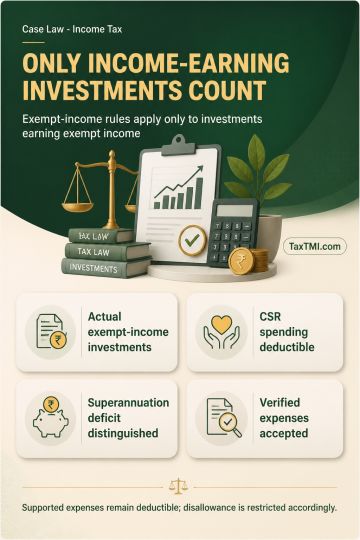
Exempt-income expenditure disallowance is confined to investments that actually generated exempt income, while supported business expenses remain dedu...
Objective characteristics and principal use govern mining-tyre classification, while fresh advance ruling applications may rely on additional technica...
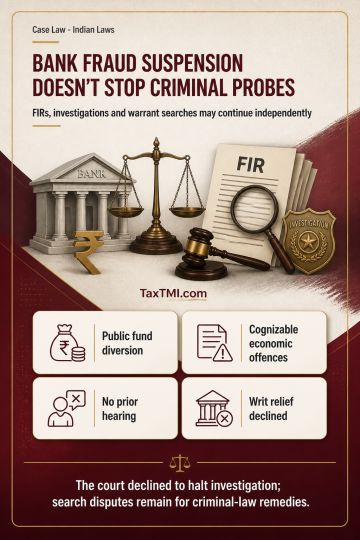
Administrative fraud classification suspension does not halt independent criminal investigation or warrant-based searches into alleged economic offenc...
Priority of dues between the Central Excise Department and secured creditors in cases of attachment of properties for recovery. The Supreme Court held that the Central Excise Act, 1944 does not provide for a first charge on the assessee's property, giving priority to secured creditors' dues over excise dues. However, in the case of Sales Tax and VAT, the Supreme Court ruled that the State is a secured creditor under the Insolvency and Bankruptcy Code, 2016. The Debt Recovery Tribunal correctly dismissed the objections raised by the company regarding the order of attachment for recovery of dues by attaching properties, considering the legal position on priority of dues.
Priority of dues between the Central Excise Department and secured creditors in cases of attachment of properties for recovery. The Supreme Court held that the Central Excise Act, 1944 does not provide for a first charge on the assessee's property, giving priority to secured creditors' dues over excise dues. However, in the case of Sales Tax and VAT, the Supreme Court ruled that the State is a secured creditor under the Insolvency and Bankruptcy Code, 2016. The Debt Recovery Tribunal correctly dismissed the objections raised by the company regarding the order of attachment for recovery of dues by attaching properties, considering the legal position on priority of dues.
Note: It is a system-generated summary and is for quick reference only.
 TaxTMI
 of 4805





 Join Channel


 TaxTMI