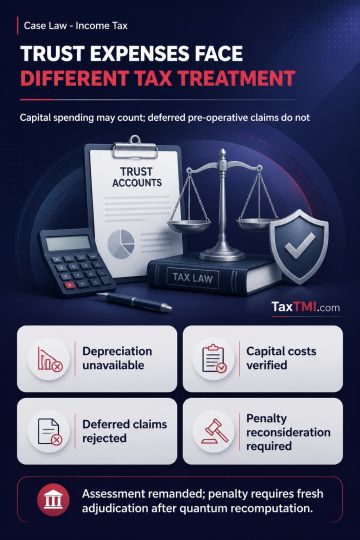
Charitable trust income application permits verified capital expenditure but rejects deferred pre-operative claims and requires reconsideration of con...
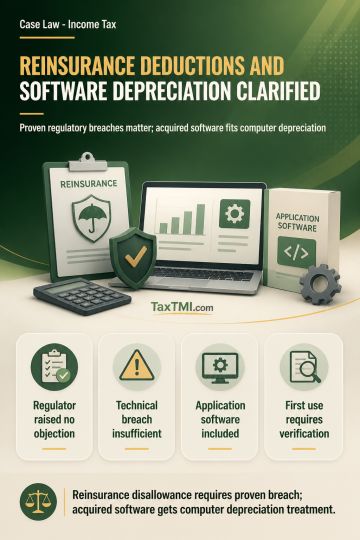
Reinsurance premium deductions require established regulatory breaches, while independently acquired software qualifies within the computer depreciati...
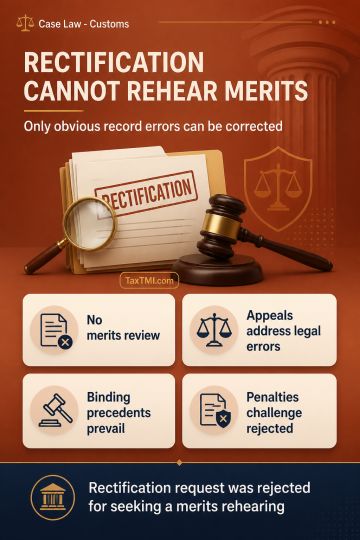
Rectification of mistake remains limited to self-evident record errors, preventing merits review through miscellaneous applications and preserving fin...
Tender creditworthiness conditions may extend to de facto Promoter Directors, with post-participation challenges generally barred absent arbitrariness...
Corporate representation in PMLA summons proceedings permitted through an authorised signatory, subject to directors' continuing cooperation and atten...
The Appellate Tribunal found the Interim Resolution Professional's (IRP) conduct to be biased, premeditated, and authoritarian, violating the core objectives and principles of the Insolvency and Bankruptcy Code (IBC). The IRP prematurely admitted the claim of a creditor and reconstituted the Committee of Creditors (CoC) after being voted out, enabling the new creditor to appoint him as the Resolution Professional (RP). This collusive practice compromised the integrity and transparency of the insolvency resolution process. The Tribunal held that such conduct goes against the objectives of the IBC and could enable erstwhile promoters' re-entry into the corporate debtor. Consequently, the appeal was dismissed, emphasizing the need for neutrality and impartiality in CIRP proceedings to uphold the IBC's principles.
The Appellate Tribunal found the Interim Resolution Professional's (IRP) conduct to be biased, premeditated, and authoritarian, violating the core objectives and principles of the Insolvency and Bankruptcy Code (IBC). The IRP prematurely admitted the claim of a creditor and reconstituted the Committee of Creditors (CoC) after being voted out, enabling the new creditor to appoint him as the Resolution Professional (RP). This collusive practice compromised the integrity and transparency of the insolvency resolution process. The Tribunal held that such conduct goes against the objectives of the IBC and could enable erstwhile promoters' re-entry into the corporate debtor. Consequently, the appeal was dismissed, emphasizing the need for neutrality and impartiality in CIRP proceedings to uphold the IBC's principles.
Note: It is a system-generated summary and is for quick reference only.
 TaxTMI
 of 4805















 Join Channel


 TaxTMI
