Captive power transfer pricing and non-resident export commission rules support deletion of adjustments and withholding disallowance in discussed proc...
Cooperative society deposits, member-interest TDS exemption and credit-facility deduction claims require verification through records and supporting e...
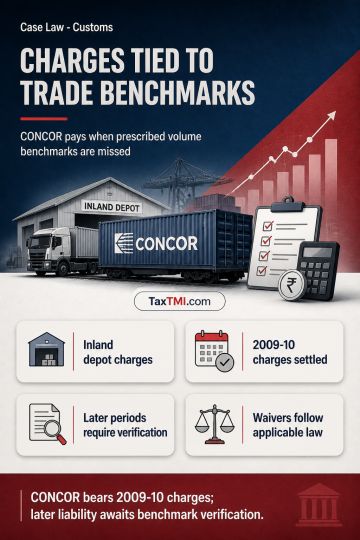
Customs jurisdiction over EPCG condition breaches survives export-obligation discharge certificates, requiring alleged fraud and misdeclaration to be ...
Contractual tolerance requires consideration; breach recoveries, qualifying public infrastructure services and road works escape service tax liability...
The Appellate Tribunal found the Interim Resolution Professional's (IRP) conduct to be biased, premeditated, and authoritarian, violating the core objectives and principles of the Insolvency and Bankruptcy Code (IBC). The IRP prematurely admitted the claim of a creditor and reconstituted the Committee of Creditors (CoC) after being voted out, enabling the new creditor to appoint him as the Resolution Professional (RP). This collusive practice compromised the integrity and transparency of the insolvency resolution process. The Tribunal held that such conduct goes against the objectives of the IBC and could enable erstwhile promoters' re-entry into the corporate debtor. Consequently, the appeal was dismissed, emphasizing the need for neutrality and impartiality in CIRP proceedings to uphold the IBC's principles.
The Appellate Tribunal found the Interim Resolution Professional's (IRP) conduct to be biased, premeditated, and authoritarian, violating the core objectives and principles of the Insolvency and Bankruptcy Code (IBC). The IRP prematurely admitted the claim of a creditor and reconstituted the Committee of Creditors (CoC) after being voted out, enabling the new creditor to appoint him as the Resolution Professional (RP). This collusive practice compromised the integrity and transparency of the insolvency resolution process. The Tribunal held that such conduct goes against the objectives of the IBC and could enable erstwhile promoters' re-entry into the corporate debtor. Consequently, the appeal was dismissed, emphasizing the need for neutrality and impartiality in CIRP proceedings to uphold the IBC's principles.
Note: It is a system-generated summary and is for quick reference only.
 TaxTMI
 of 4805

















 Join Channel


 TaxTMI
