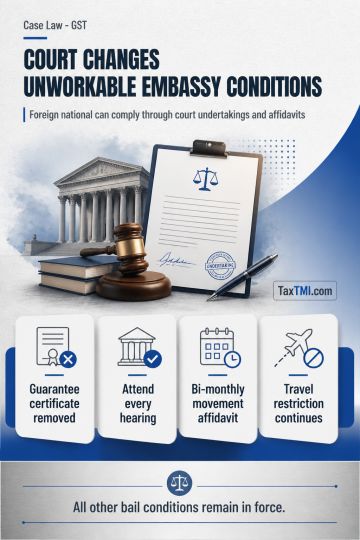
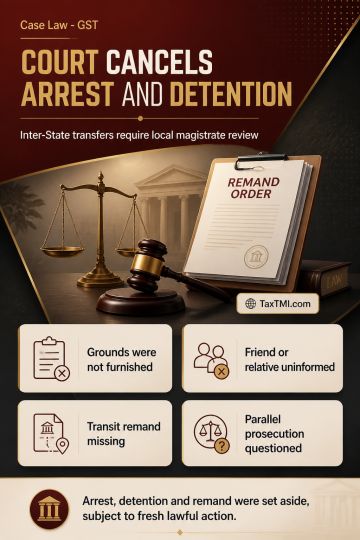
Arrest safeguards and transit remand requirements invalidated detention following inter-State transfer without communicated grounds or magistrate auth...
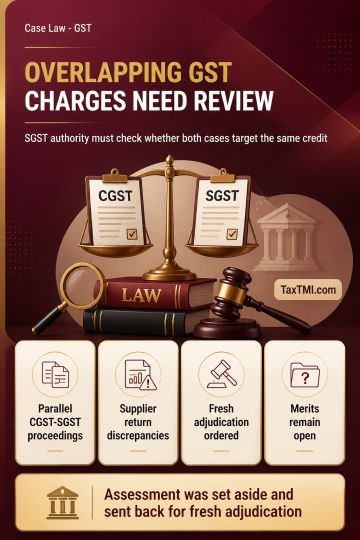
Arrest safeguards require disclosed grounds, relative intimation and transit remand, while duplicate prosecution under the CGST framework is unsustain...
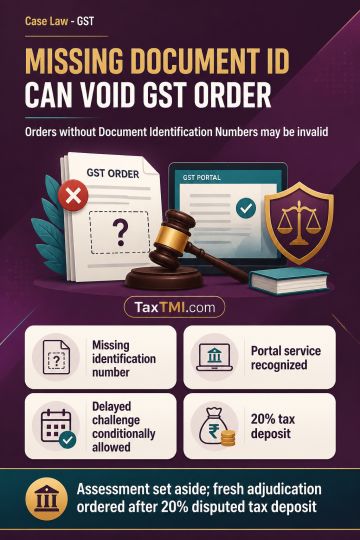
Document Identification Number defects can invalidate GST assessments, with delayed challenges entertained conditionally where patent irregularities e...
Windmill commissioning evidence supported higher depreciation where grid connection and electricity generation proved operational use before the relev...
The Appellate Tribunal found the Interim Resolution Professional's (IRP) conduct to be biased, premeditated, and authoritarian, violating the core objectives and principles of the Insolvency and Bankruptcy Code (IBC). The IRP prematurely admitted the claim of a creditor and reconstituted the Committee of Creditors (CoC) after being voted out, enabling the new creditor to appoint him as the Resolution Professional (RP). This collusive practice compromised the integrity and transparency of the insolvency resolution process. The Tribunal held that such conduct goes against the objectives of the IBC and could enable erstwhile promoters' re-entry into the corporate debtor. Consequently, the appeal was dismissed, emphasizing the need for neutrality and impartiality in CIRP proceedings to uphold the IBC's principles.
The Appellate Tribunal found the Interim Resolution Professional's (IRP) conduct to be biased, premeditated, and authoritarian, violating the core objectives and principles of the Insolvency and Bankruptcy Code (IBC). The IRP prematurely admitted the claim of a creditor and reconstituted the Committee of Creditors (CoC) after being voted out, enabling the new creditor to appoint him as the Resolution Professional (RP). This collusive practice compromised the integrity and transparency of the insolvency resolution process. The Tribunal held that such conduct goes against the objectives of the IBC and could enable erstwhile promoters' re-entry into the corporate debtor. Consequently, the appeal was dismissed, emphasizing the need for neutrality and impartiality in CIRP proceedings to uphold the IBC's principles.
Note: It is a system-generated summary and is for quick reference only.
 TaxTMI
 of 4805














 Join Channel


 TaxTMI
