Independent show-cause notices remain separate proceedings, while customs adjudication challenges should ordinarily follow the statutory appellate rem...
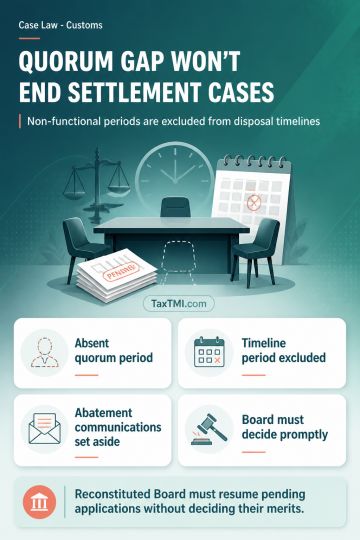
Institutional incapacity in customs settlement proceedings excludes non-functional quorum periods from statutory disposal timelines, preventing automa...
Interactive touchscreen panels with integrated computing functions fall under automatic data-processing machines rather than display monitors for cust...
Ex parte injunction service requirements were substantially met, while civil recovery and SFIO investigation into provident fund defalcation continued...
The Appellate Tribunal found the Interim Resolution Professional's (IRP) conduct to be biased, premeditated, and authoritarian, violating the core objectives and principles of the Insolvency and Bankruptcy Code (IBC). The IRP prematurely admitted the claim of a creditor and reconstituted the Committee of Creditors (CoC) after being voted out, enabling the new creditor to appoint him as the Resolution Professional (RP). This collusive practice compromised the integrity and transparency of the insolvency resolution process. The Tribunal held that such conduct goes against the objectives of the IBC and could enable erstwhile promoters' re-entry into the corporate debtor. Consequently, the appeal was dismissed, emphasizing the need for neutrality and impartiality in CIRP proceedings to uphold the IBC's principles.
The Appellate Tribunal found the Interim Resolution Professional's (IRP) conduct to be biased, premeditated, and authoritarian, violating the core objectives and principles of the Insolvency and Bankruptcy Code (IBC). The IRP prematurely admitted the claim of a creditor and reconstituted the Committee of Creditors (CoC) after being voted out, enabling the new creditor to appoint him as the Resolution Professional (RP). This collusive practice compromised the integrity and transparency of the insolvency resolution process. The Tribunal held that such conduct goes against the objectives of the IBC and could enable erstwhile promoters' re-entry into the corporate debtor. Consequently, the appeal was dismissed, emphasizing the need for neutrality and impartiality in CIRP proceedings to uphold the IBC's principles.
Note: It is a system-generated summary and is for quick reference only.
 TaxTMI
 of 4805















 Join Channel


 TaxTMI