Defined public benefit can retain charitable character; registration renewal requires examining genuine activities and legal compliance, not surplus a...
Capital reduction is distinct from share buy-back, preventing buy-back tax; restructuring interest and related business deductions also survive scruti...
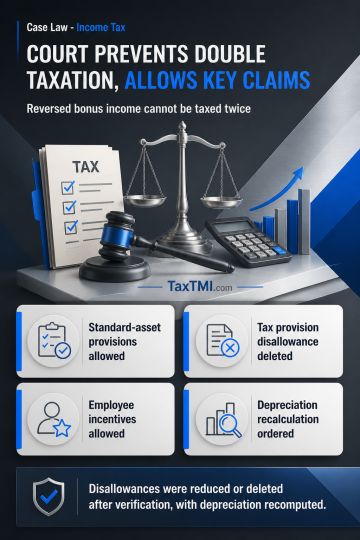
Transfer pricing and tax deductions upheld on established principles, while employee contributions and warranty provisions returned for fresh examinat...
Captive transfer pricing relies on industrial consumer tariffs, while genuine quotations can benchmark effluent treatment transfers under the Other Me...
Specific tariff classification for ophthalmic instruments and extended limitation principles determine the treatment of duty demands, confiscation, an...
Integrated golf function determines classification, placing launch monitors and simulators under other golf equipment rather than measuring instrument...
The Appellate Tribunal affirmed the decision to exclude the Appellant and other unsecured Financial Creditors from the Committee of Creditors (CoC). The key issues were whether the Appellant qualified as a 'related party' and whether its claim as a financial creditor was valid. The Appellant's claim of Rs.195 crores was based on a Deed of Guarantee-cum-Indemnity executed by the Corporate Debtor. However, the Tribunal held that there can be 'financial debt' only when liability or obligation arises from a claim due from any person. Since the Appellant did not disburse the amount of Rs.195 crores to the principal borrower, its claim against the guarantor (Corporate Debtor) could not be admitted. The Tribunal emphasized the statutory requirement of financial statements evidencing the amounts drawn by the Corporate Debtor under a facility to prove the existence of debt. As the Adjudicating Authority had directed a transaction audit report, the parties were given liberty to file fresh applications based on the report's findings regarding the Appellant's status as a 'related party' or a Financial Creditor/secured creditor.
The Appellate Tribunal affirmed the decision to exclude the Appellant and other unsecured Financial Creditors from the Committee of Creditors (CoC). The key issues were whether the Appellant qualified as a 'related party' and whether its claim as a financial creditor was valid. The Appellant's claim of Rs.195 crores was based on a Deed of Guarantee-cum-Indemnity executed by the Corporate Debtor. However, the Tribunal held that there can be 'financial debt' only when liability or obligation arises from a claim due from any person. Since the Appellant did not disburse the amount of Rs.195 crores to the principal borrower, its claim against the guarantor (Corporate Debtor) could not be admitted. The Tribunal emphasized the statutory requirement of financial statements evidencing the amounts drawn by the Corporate Debtor under a facility to prove the existence of debt. As the Adjudicating Authority had directed a transaction audit report, the parties were given liberty to file fresh applications based on the report's findings regarding the Appellant's status as a 'related party' or a Financial Creditor/secured creditor.
Note: It is a system-generated summary and is for quick reference only.
 TaxTMI
  TaxTMI
 of 4809




















 Join Channel