Alternative GST remedy permitted protective writ intervention for ex parte adjudication, preserving independent appellate review of input tax credit d...
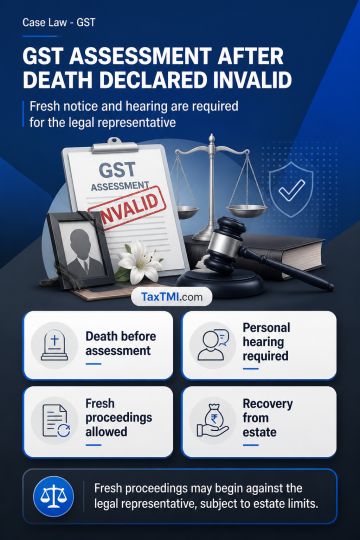
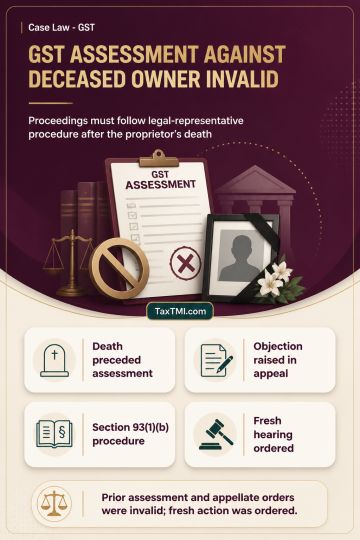
Assessment against deceased sole proprietor requires proceedings against the legal representative, rendering prior assessment and appellate orders inv...
Residential waste collection classification under SAC 999423 defeats composite-supply exemption where facilitating goods are not transferred to the lo...
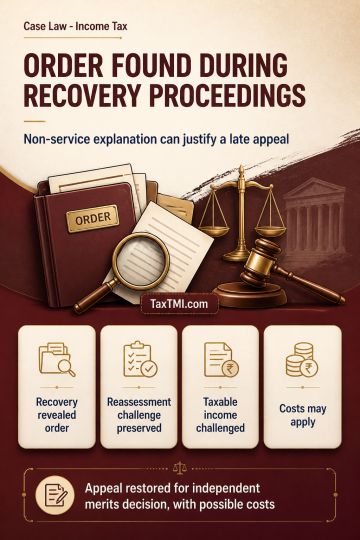
Condonation of delay permits statutory appeal restoration where inadequate service explanation prevented consideration of reassessment and taxable-inc...
The Appellate Tribunal affirmed the decision to exclude the Appellant and other unsecured Financial Creditors from the Committee of Creditors (CoC). The key issues were whether the Appellant qualified as a 'related party' and whether its claim as a financial creditor was valid. The Appellant's claim of Rs.195 crores was based on a Deed of Guarantee-cum-Indemnity executed by the Corporate Debtor. However, the Tribunal held that there can be 'financial debt' only when liability or obligation arises from a claim due from any person. Since the Appellant did not disburse the amount of Rs.195 crores to the principal borrower, its claim against the guarantor (Corporate Debtor) could not be admitted. The Tribunal emphasized the statutory requirement of financial statements evidencing the amounts drawn by the Corporate Debtor under a facility to prove the existence of debt. As the Adjudicating Authority had directed a transaction audit report, the parties were given liberty to file fresh applications based on the report's findings regarding the Appellant's status as a 'related party' or a Financial Creditor/secured creditor.
The Appellate Tribunal affirmed the decision to exclude the Appellant and other unsecured Financial Creditors from the Committee of Creditors (CoC). The key issues were whether the Appellant qualified as a 'related party' and whether its claim as a financial creditor was valid. The Appellant's claim of Rs.195 crores was based on a Deed of Guarantee-cum-Indemnity executed by the Corporate Debtor. However, the Tribunal held that there can be 'financial debt' only when liability or obligation arises from a claim due from any person. Since the Appellant did not disburse the amount of Rs.195 crores to the principal borrower, its claim against the guarantor (Corporate Debtor) could not be admitted. The Tribunal emphasized the statutory requirement of financial statements evidencing the amounts drawn by the Corporate Debtor under a facility to prove the existence of debt. As the Adjudicating Authority had directed a transaction audit report, the parties were given liberty to file fresh applications based on the report's findings regarding the Appellant's status as a 'related party' or a Financial Creditor/secured creditor.
Note: It is a system-generated summary and is for quick reference only.
 TaxTMI
 of 4805












 Join Channel


 TaxTMI
