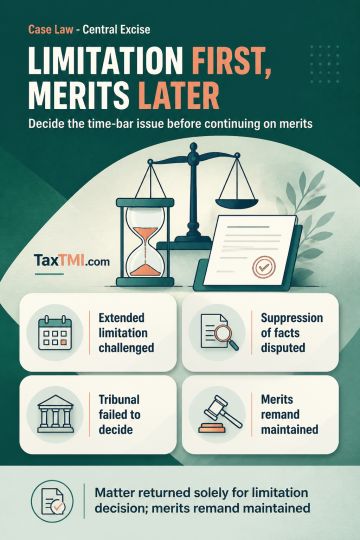
Additional evidence in transfer pricing dispute leads to fresh examination, while tax deductions, TDS credit, fee and refund interest require verifica...
Category II AIF pass-through taxation preserves non-business income character; investment receipts cannot be reclassified without applying recognised ...
Mutual fund maturity rules require proper rollover, redemption, disclosure, and due diligence; investor gains cannot excuse regulatory breaches or pen...
Threshold exemption excludes exempt services, while stamp-paper purchases avoid reverse charge; consequential service tax penalties were also set asid...
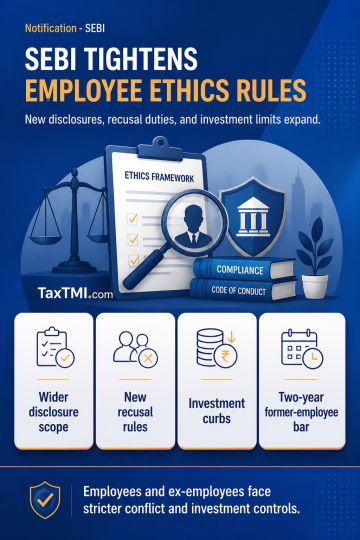
Employee conflict disclosures and investment restrictions expand with new recusal duties, post-employment limits, and compliance reporting requirement...
The summary focuses on the dismissal of an appeal challenging the rejection of an insolvency application u/s 9 of the Insolvency and Bankruptcy Code (IBC). The key points are: 1) The appellant claimed interest on license fees, which was disallowed as interest was not agreed upon in the agreement. 2) A portion of the claimed default fell within the prohibited period u/s 10A of the IBC, which the corporate debtor was entitled to exclude. 3) The appellant argued continuous default before, during, and after the prohibited period, but the tribunal found it to be an artificial creation by inflating claims and omitting revised license fees. 4) After recalculating the actual unpaid amount by excluding the portion protected u/s 10A and improperly calculated interest, the outstanding default was below the Rs 1 crore threshold required u/s 4 of the IBC. 5) The appellate tribunal upheld the adjudicating authority's correct interpretation and application of Section 10A, concluding that the outstanding default did not meet the threshold, and dismissed the appeal.
The summary focuses on the dismissal of an appeal challenging the rejection of an insolvency application u/s 9 of the Insolvency and Bankruptcy Code (IBC). The key points are: 1) The appellant claimed interest on license fees, which was disallowed as interest was not agreed upon in the agreement. 2) A portion of the claimed default fell within the prohibited period u/s 10A of the IBC, which the corporate debtor was entitled to exclude. 3) The appellant argued continuous default before, during, and after the prohibited period, but the tribunal found it to be an artificial creation by inflating claims and omitting revised license fees. 4) After recalculating the actual unpaid amount by excluding the portion protected u/s 10A and improperly calculated interest, the outstanding default was below the Rs 1 crore threshold required u/s 4 of the IBC. 5) The appellate tribunal upheld the adjudicating authority's correct interpretation and application of Section 10A, concluding that the outstanding default did not meet the threshold, and dismissed the appeal.
Note: It is a system-generated summary and is for quick reference only.
 TaxTMI
  TaxTMI
 of 4811

















 Join Channel


