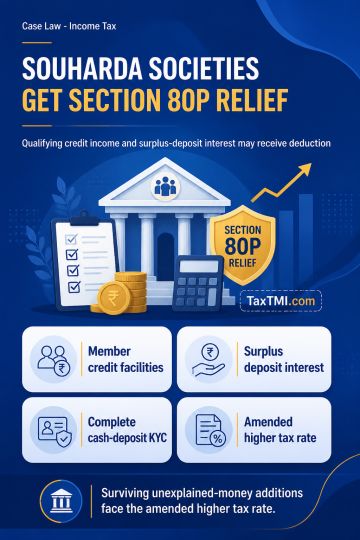
Section 80P deduction covers Souharda credit societies, including qualifying surplus-deposit interest, subject to member KYC verification for cash dep...
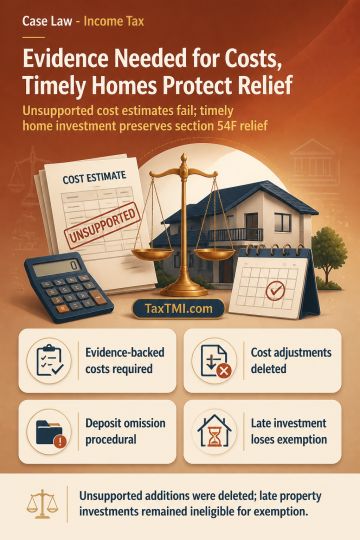
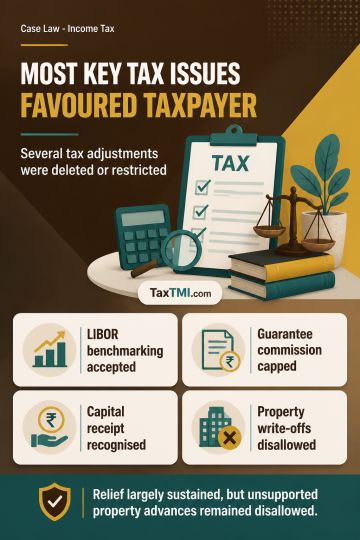
Transfer-pricing benchmarking and capital-receipt principles sustained taxpayer relief, while unsupported property-advance write-offs remained disallo...
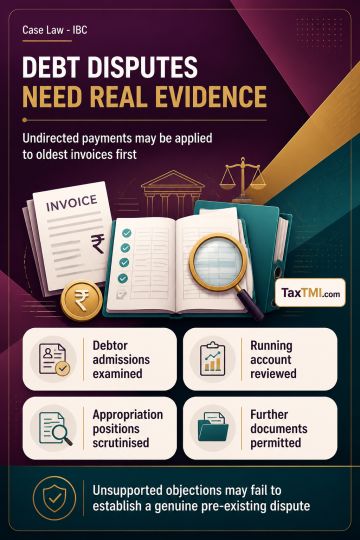
Pre-existing operational debt disputes require genuine evidence, while undirected running-account payments may be appropriated on a first-in-first-out...
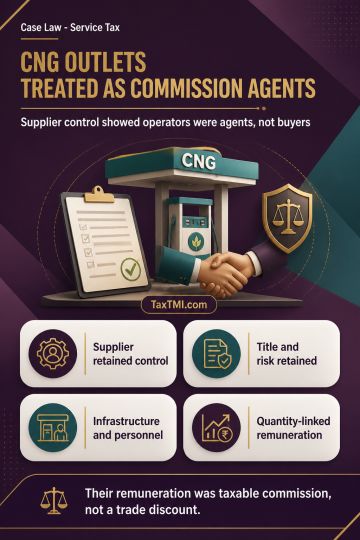
Agency in CNG distribution makes outlet operators commission agents, rendering taxable Business Auxiliary Service rather than purchasing goods for res...
Page of 4809
Press 'Enter' after typing page number.
1121 to 1140 of 96174 Results
❮
❯
❯❯
0 / 200
Expand Note
Add to Folder
No Folders have been created
+
Are you sure you want to delete "My most important" ?
The summary focuses on the dismissal of an appeal challenging the rejection of an insolvency application u/s 9 of the Insolvency and Bankruptcy Code (IBC). The key points are: 1) The appellant claimed interest on license fees, which was disallowed as interest was not agreed upon in the agreement. 2) A portion of the claimed default fell within the prohibited period u/s 10A of the IBC, which the corporate debtor was entitled to exclude. 3) The appellant argued continuous default before, during, and after the prohibited period, but the tribunal found it to be an artificial creation by inflating claims and omitting revised license fees. 4) After recalculating the actual unpaid amount by excluding the portion protected u/s 10A and improperly calculated interest, the outstanding default was below the Rs 1 crore threshold required u/s 4 of the IBC. 5) The appellate tribunal upheld the adjudicating authority's correct interpretation and application of Section 10A, concluding that the outstanding default did not meet the threshold, and dismissed the appeal.
The summary focuses on the dismissal of an appeal challenging the rejection of an insolvency application u/s 9 of the Insolvency and Bankruptcy Code (IBC). The key points are: 1) The appellant claimed interest on license fees, which was disallowed as interest was not agreed upon in the agreement. 2) A portion of the claimed default fell within the prohibited period u/s 10A of the IBC, which the corporate debtor was entitled to exclude. 3) The appellant argued continuous default before, during, and after the prohibited period, but the tribunal found it to be an artificial creation by inflating claims and omitting revised license fees. 4) After recalculating the actual unpaid amount by excluding the portion protected u/s 10A and improperly calculated interest, the outstanding default was below the Rs 1 crore threshold required u/s 4 of the IBC. 5) The appellate tribunal upheld the adjudicating authority's correct interpretation and application of Section 10A, concluding that the outstanding default did not meet the threshold, and dismissed the appeal.
Note: It is a system-generated summary and is for quick reference only.
 TaxTMI
  TaxTMI
 of 4809




 Join Channel