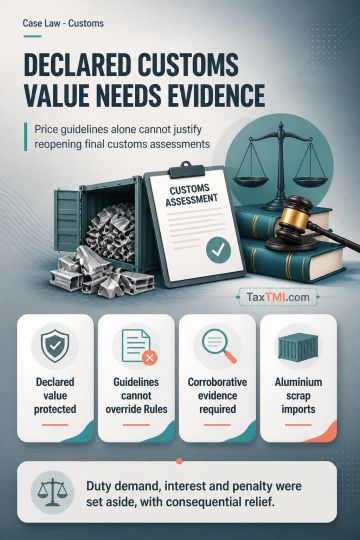
Transaction value cannot be rejected solely on non-statutory valuation guidelines without corroborative evidence supporting reassessment of final cust...
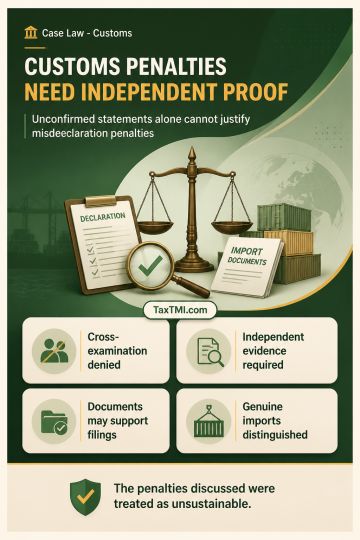
Cross-examination rights and corroborated evidence limit customs penalties for misdeclaration in genuine import transactions involving documented clea...
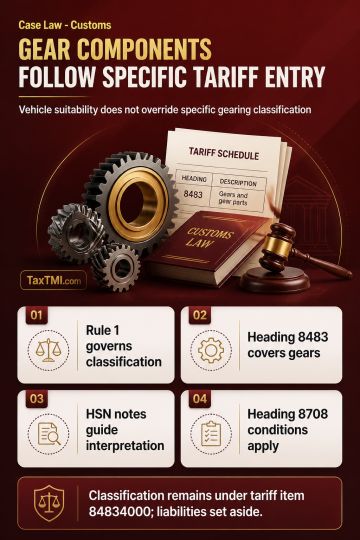
Tariff classification of vehicle gear components follows the specific gearing entry, displacing motor-vehicle parts classification and related liabili...
Necessary-party requirements limit impleadment of independent entities, while deferred consideration does not create an appealable adverse determinati...
Food supplement classification requires common parlance and authoritative tests, preventing treatment as proprietary Ayurvedic medicines without suppo...
The summary focuses on the dismissal of an appeal challenging the rejection of an insolvency application u/s 9 of the Insolvency and Bankruptcy Code (IBC). The key points are: 1) The appellant claimed interest on license fees, which was disallowed as interest was not agreed upon in the agreement. 2) A portion of the claimed default fell within the prohibited period u/s 10A of the IBC, which the corporate debtor was entitled to exclude. 3) The appellant argued continuous default before, during, and after the prohibited period, but the tribunal found it to be an artificial creation by inflating claims and omitting revised license fees. 4) After recalculating the actual unpaid amount by excluding the portion protected u/s 10A and improperly calculated interest, the outstanding default was below the Rs 1 crore threshold required u/s 4 of the IBC. 5) The appellate tribunal upheld the adjudicating authority's correct interpretation and application of Section 10A, concluding that the outstanding default did not meet the threshold, and dismissed the appeal.
The summary focuses on the dismissal of an appeal challenging the rejection of an insolvency application u/s 9 of the Insolvency and Bankruptcy Code (IBC). The key points are: 1) The appellant claimed interest on license fees, which was disallowed as interest was not agreed upon in the agreement. 2) A portion of the claimed default fell within the prohibited period u/s 10A of the IBC, which the corporate debtor was entitled to exclude. 3) The appellant argued continuous default before, during, and after the prohibited period, but the tribunal found it to be an artificial creation by inflating claims and omitting revised license fees. 4) After recalculating the actual unpaid amount by excluding the portion protected u/s 10A and improperly calculated interest, the outstanding default was below the Rs 1 crore threshold required u/s 4 of the IBC. 5) The appellate tribunal upheld the adjudicating authority's correct interpretation and application of Section 10A, concluding that the outstanding default did not meet the threshold, and dismissed the appeal.
Note: It is a system-generated summary and is for quick reference only.
 TaxTMI
 of 4805













 Join Channel


 TaxTMI
