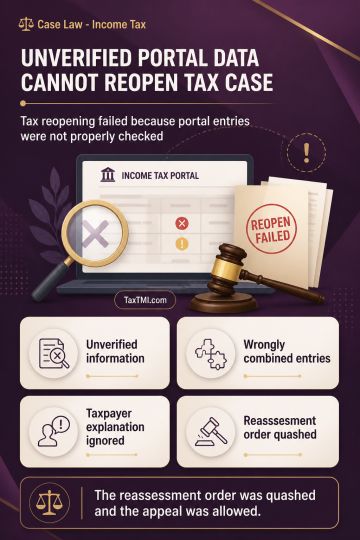
Reassessment jurisdiction fails where unverified portal information is aggregated without examining the taxpayer's explanation or relevance of entries...
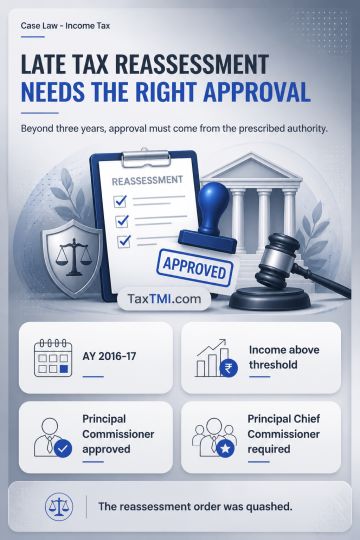
Statutory sanction for delayed reassessment requires approval from the prescribed authority; approval by an inferior authority invalidates jurisdictio...
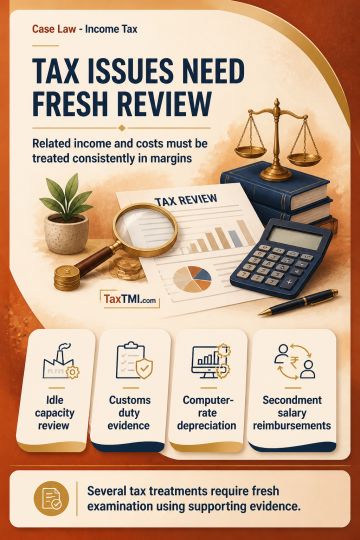
Transfer pricing margin adjustments require matching treatment of non-operating income and related costs, with comparability issues reconsidered on ev...
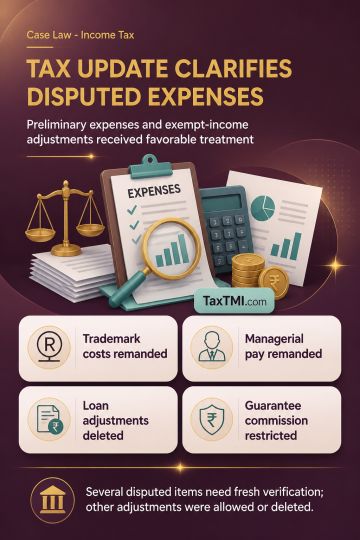
Preliminary-expense amortisation and MAT exempt-income adjustments prevailed, while trademark costs and managerial remuneration require fresh verifica...
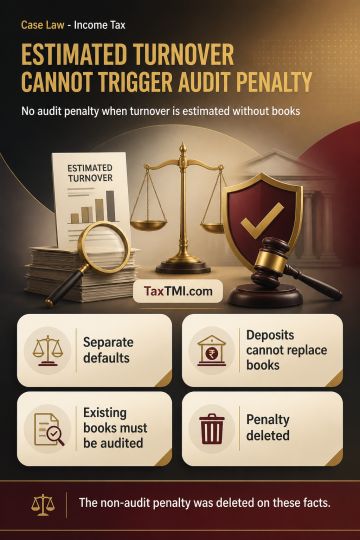
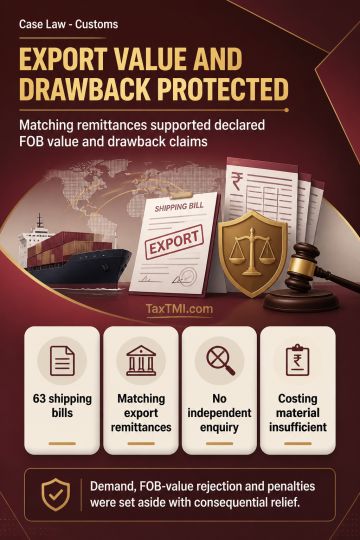
Export valuation requires contemporaneous evidence; unrelated invoices cannot prove overvaluation, and dual penalties on firm and partner are impermis...
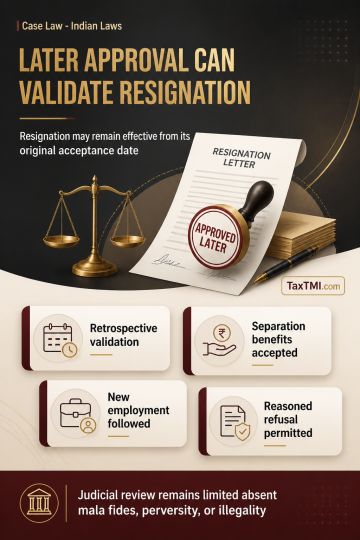
Ratification of resignation acceptance validates separation retrospectively, while withdrawal may be refused through reasoned administrative discretio...
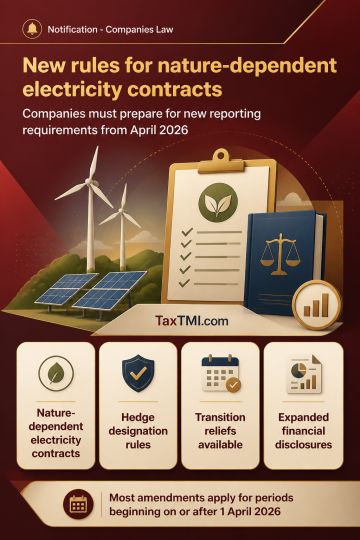
Nature-dependent electricity contracts receive new Ind AS accounting, hedge designation, transition and financial-statement disclosure requirements fr...
Page of 4805
Press 'Enter' after typing page number.
241 to 260 of 96092 Results
❮
❯
❯❯
0 / 200
Expand Note
Add to Folder
No Folders have been created
+
Are you sure you want to delete "My most important" ?
The summary focuses on the dismissal of an appeal challenging the rejection of an insolvency application u/s 9 of the Insolvency and Bankruptcy Code (IBC). The key points are: 1) The appellant claimed interest on license fees, which was disallowed as interest was not agreed upon in the agreement. 2) A portion of the claimed default fell within the prohibited period u/s 10A of the IBC, which the corporate debtor was entitled to exclude. 3) The appellant argued continuous default before, during, and after the prohibited period, but the tribunal found it to be an artificial creation by inflating claims and omitting revised license fees. 4) After recalculating the actual unpaid amount by excluding the portion protected u/s 10A and improperly calculated interest, the outstanding default was below the Rs 1 crore threshold required u/s 4 of the IBC. 5) The appellate tribunal upheld the adjudicating authority's correct interpretation and application of Section 10A, concluding that the outstanding default did not meet the threshold, and dismissed the appeal.
The summary focuses on the dismissal of an appeal challenging the rejection of an insolvency application u/s 9 of the Insolvency and Bankruptcy Code (IBC). The key points are: 1) The appellant claimed interest on license fees, which was disallowed as interest was not agreed upon in the agreement. 2) A portion of the claimed default fell within the prohibited period u/s 10A of the IBC, which the corporate debtor was entitled to exclude. 3) The appellant argued continuous default before, during, and after the prohibited period, but the tribunal found it to be an artificial creation by inflating claims and omitting revised license fees. 4) After recalculating the actual unpaid amount by excluding the portion protected u/s 10A and improperly calculated interest, the outstanding default was below the Rs 1 crore threshold required u/s 4 of the IBC. 5) The appellate tribunal upheld the adjudicating authority's correct interpretation and application of Section 10A, concluding that the outstanding default did not meet the threshold, and dismissed the appeal.
Note: It is a system-generated summary and is for quick reference only.
 TaxTMI
 of 4805





 Join Channel


 TaxTMI