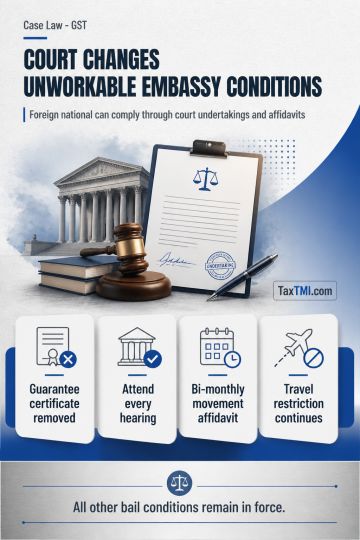
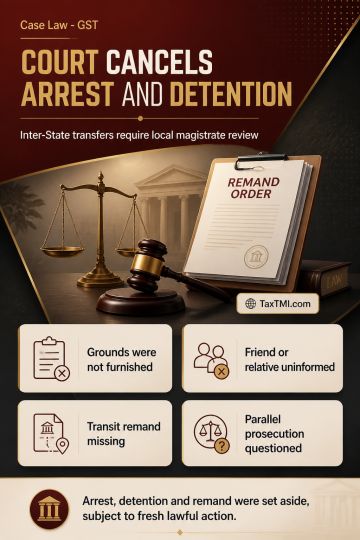
Arrest safeguards and transit remand requirements invalidated detention following inter-State transfer without communicated grounds or magistrate auth...
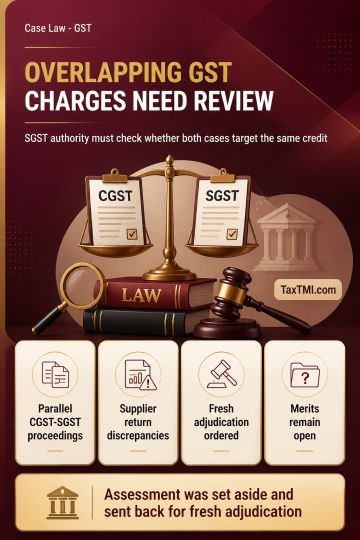
Arrest safeguards require disclosed grounds, relative intimation and transit remand, while duplicate prosecution under the CGST framework is unsustain...
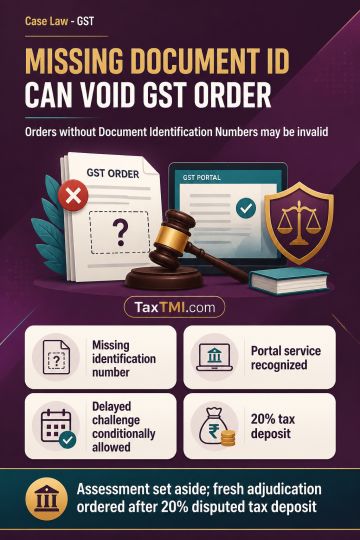
Document Identification Number defects can invalidate GST assessments, with delayed challenges entertained conditionally where patent irregularities e...
Windmill commissioning evidence supported higher depreciation where grid connection and electricity generation proved operational use before the relev...
The High Court examined whether it is appropriate to entertain a writ petition against a Provisional Attachment Order (PAO) issued under the Prevention of Money Laundering Act, 2002, before the statutory period of 30 days when the Adjudicating Authority is required to examine it. The Supreme Court has upheld the validity of Section 5 of the Act, finding adequate safeguards to give an opportunity to the aggrieved person to file objections before the Adjudicating Authority. The PAO is passed by the Director or authorized officer with reasons based on material in possession. Since sufficient remedies are available under the Act, the High Court held it inappropriate to entertain the petition before the 30-day period expires, except in rare and exceptional cases. The petitioner was relegated to avail alternative remedies, and the Adjudicating Authority was directed to expedite the matter without observations on merits.
The High Court examined whether it is appropriate to entertain a writ petition against a Provisional Attachment Order (PAO) issued under the Prevention of Money Laundering Act, 2002, before the statutory period of 30 days when the Adjudicating Authority is required to examine it. The Supreme Court has upheld the validity of Section 5 of the Act, finding adequate safeguards to give an opportunity to the aggrieved person to file objections before the Adjudicating Authority. The PAO is passed by the Director or authorized officer with reasons based on material in possession. Since sufficient remedies are available under the Act, the High Court held it inappropriate to entertain the petition before the 30-day period expires, except in rare and exceptional cases. The petitioner was relegated to avail alternative remedies, and the Adjudicating Authority was directed to expedite the matter without observations on merits.
Note: It is a system-generated summary and is for quick reference only.
 TaxTMI
 of 4805














 Join Channel


 TaxTMI
