Patent-settlement expenditure treated as commercially expedient revenue outlay, with foreign-law restrictions inapplicable before the prospective amen...
International transaction benchmarking restricts transfer pricing adjustments to associated-enterprise dealings, while functional comparability govern...
Joint development agreements defer taxable transfer where possession lacks part performance, while completed flats determine consideration and exempti...
Passenger baggage re-export requires true declaration and cannot be granted indirectly through discretionary redemption of undeclared prohibited goods...
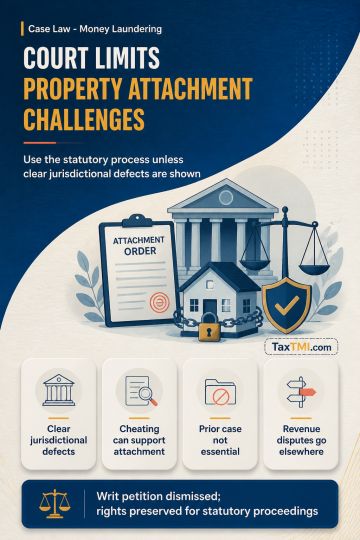
The High Court examined whether it is appropriate to entertain a writ petition against a Provisional Attachment Order (PAO) issued under the Prevention of Money Laundering Act, 2002, before the statutory period of 30 days when the Adjudicating Authority is required to examine it. The Supreme Court has upheld the validity of Section 5 of the Act, finding adequate safeguards to give an opportunity to the aggrieved person to file objections before the Adjudicating Authority. The PAO is passed by the Director or authorized officer with reasons based on material in possession. Since sufficient remedies are available under the Act, the High Court held it inappropriate to entertain the petition before the 30-day period expires, except in rare and exceptional cases. The petitioner was relegated to avail alternative remedies, and the Adjudicating Authority was directed to expedite the matter without observations on merits.
The High Court examined whether it is appropriate to entertain a writ petition against a Provisional Attachment Order (PAO) issued under the Prevention of Money Laundering Act, 2002, before the statutory period of 30 days when the Adjudicating Authority is required to examine it. The Supreme Court has upheld the validity of Section 5 of the Act, finding adequate safeguards to give an opportunity to the aggrieved person to file objections before the Adjudicating Authority. The PAO is passed by the Director or authorized officer with reasons based on material in possession. Since sufficient remedies are available under the Act, the High Court held it inappropriate to entertain the petition before the 30-day period expires, except in rare and exceptional cases. The petitioner was relegated to avail alternative remedies, and the Adjudicating Authority was directed to expedite the matter without observations on merits.
Note: It is a system-generated summary and is for quick reference only.
 TaxTMI
 of 4805

















 Join Channel


 TaxTMI
