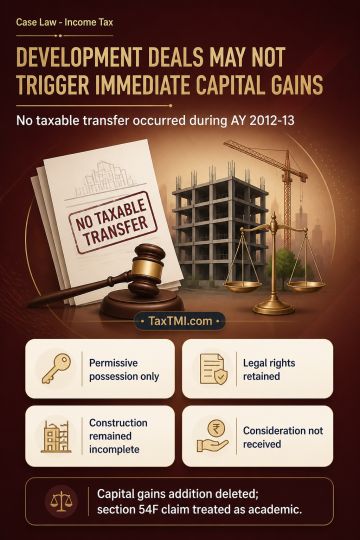
Development agreements require legal possession or effective enjoyment for capital gains transfer; permissive possession and deferred consideration de...
Prolonged sterilisation of development rights supports capital-gains treatment, while business-income disallowances cannot govern capital-gains comput...
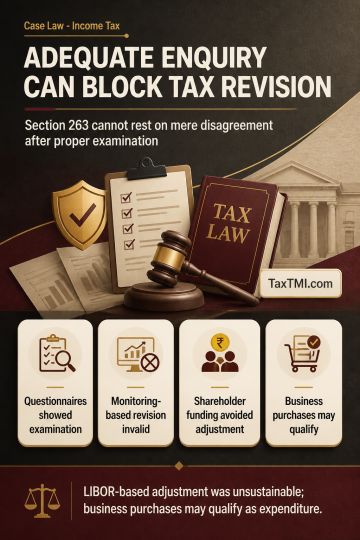
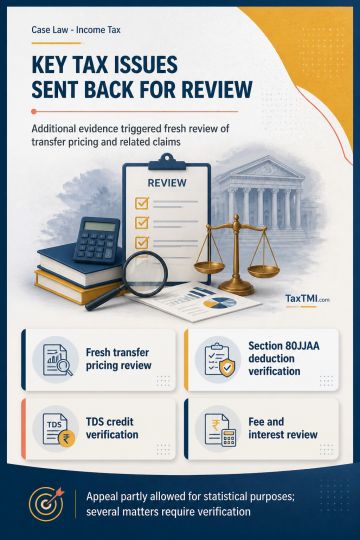
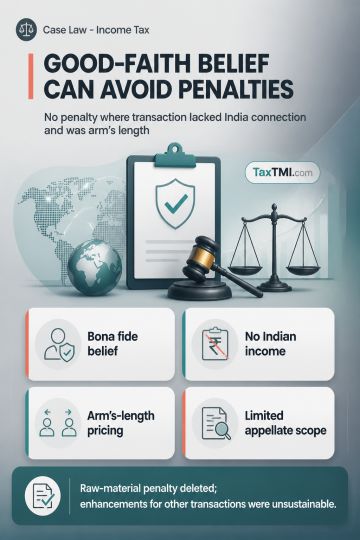
Additional evidence in transfer pricing dispute leads to fresh examination, while tax deductions, TDS credit, fee and refund interest require verifica...
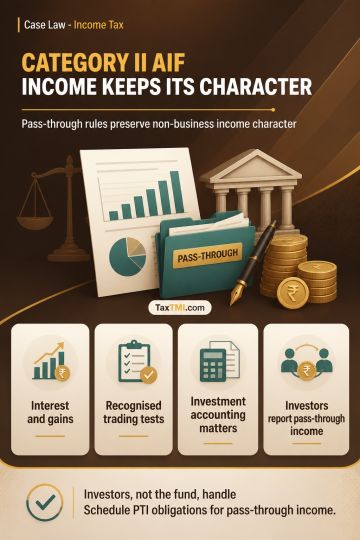
Category II AIF pass-through taxation preserves non-business income character; investment receipts cannot be reclassified without applying recognised ...
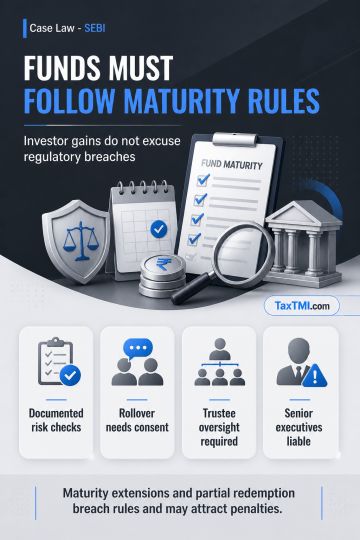
Mutual fund maturity rules require proper rollover, redemption, disclosure, and due diligence; investor gains cannot excuse regulatory breaches or pen...
Page of 4809
Press 'Enter' after typing page number.
1381 to 1400 of 96177 Results
❮
❯
❯❯
0 / 200
Expand Note
Add to Folder
No Folders have been created
+
Are you sure you want to delete "My most important" ?
Dishonor of cheque - presumption that cheque was issued in discharge of legal liability, burden on accused to prove contrary. Supreme Court observations: While deciding appeal against acquittal, High Court should see if evidence was properly appreciated, finding illegal or affected by error of law/fact, and if trial court's view was possible based on material. Presumption of innocence gets concretized on acquittal, higher threshold to rebut in appeal. Accused did not prove cheque issued as security. Statement of account showed subsisting liability when cheque issued. Blank cheque can be filled by holder if liability exists as per Bir Singh case. Once presumption drawn, onus shifts to accused as per Rohit bhai case. Complaint cannot be dismissed for want of evidence on debt/liability if cheque dishonored for account closed as per Rohit bhai case. Notice deemed served if refused as per C.C. Alavi case. Ingredients of Section 138 satisfied, trial court erred in acquitting accused. Judgment set aside, accused convicted u/s 138.
Dishonor of cheque - presumption that cheque was issued in discharge of legal liability, burden on accused to prove contrary. Supreme Court observations: While deciding appeal against acquittal, High Court should see if evidence was properly appreciated, finding illegal or affected by error of law/fact, and if trial court's view was possible based on material. Presumption of innocence gets concretized on acquittal, higher threshold to rebut in appeal. Accused did not prove cheque issued as security. Statement of account showed subsisting liability when cheque issued. Blank cheque can be filled by holder if liability exists as per Bir Singh case. Once presumption drawn, onus shifts to accused as per Rohit bhai case. Complaint cannot be dismissed for want of evidence on debt/liability if cheque dishonored for account closed as per Rohit bhai case. Notice deemed served if refused as per C.C. Alavi case. Ingredients of Section 138 satisfied, trial court erred in acquitting accused. Judgment set aside, accused convicted u/s 138.
Note: It is a system-generated summary and is for quick reference only.
 TaxTMI
  TaxTMI
 of 4809








 Join Channel